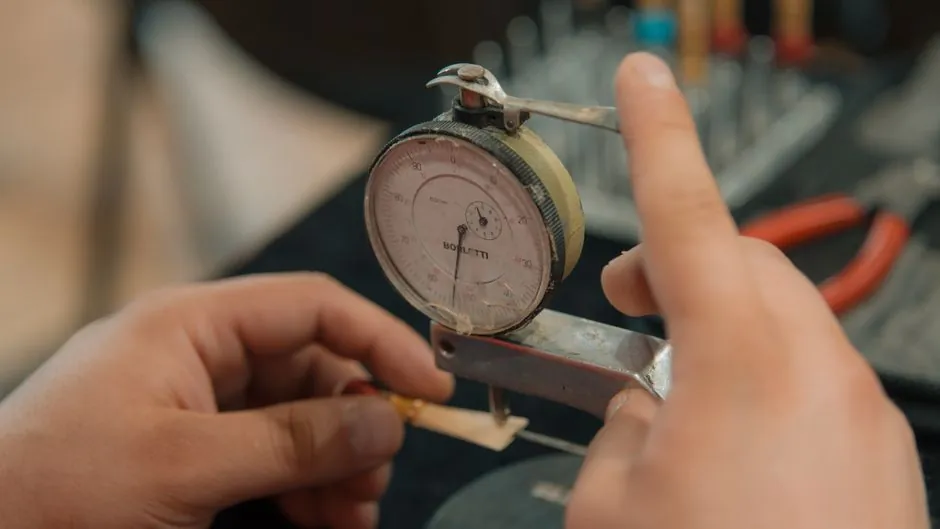
A water treatment skid that runs under negative pressure needs a vacuum gauge selected against four hard constraints: absolute pressure operating range, media compatibility with moist and chemically treated water, signal output protocol, and enclosure rating for the surrounding plant area [S2].
Available sensor families cover the full span a skid will see, from a few millibar at membrane degassing or RO vacuum draw down to atmospheric equalisation events. The vacuum gauge decision is a trade between range, accuracy, and survivability in wet service, not a single best-buy choice.
Operating Range, Units, and Sensor Family Mapping
Vacuum measurement on a water skid is conventionally expressed in absolute pressure units: millibar, Torr, or kilopascal. A typical RO or DAF vacuum pump discharge is monitored between 100 mbar and atmospheric (around 1000 mbar), while a membrane degasser pulls 10–50 mbar absolute on the suction side [S2].
Bourdon and capsule dial gauges cover the 100–1000 mbar span, are inexpensive, and tolerate water vapour carry-over when stainless internals are specified. Below 1 mbar, a Pirani or thermocouple sensor is required; these are heated-element devices whose resistance changes with thermal conductivity of the gas, making them accurate from 10⁻³ mbar to 10 mbar but vulnerable to contamination if exposed to liquid water [S5].
Capacitance manometers (also called diaphragm manometers) sit between those two worlds: 0.01 mbar to 1000 mbar full scale, indifferent to gas composition, and capable of withstanding occasional overpressure to 2 bar absolute, which matches the surge behaviour of liquid-ring vacuum pumps commonly paired with skids.
Media Compatibility, Wetted Materials, and Enclosure Class
Skid vacuum lines are rarely clean dry air. Carry-over from the liquid stream, chlorine or ozone residual, and ambient humidity in outdoor installations all attack sensor internals. Stainless 316L wetted parts with Viton or EPDM seals are the default pairing for chlorinated potable water duty, and PTFE diaphragms are specified when ozone is present. [S3]
Enclosure rating is a separate gate. Indoor skid cabinets typically need IP54 minimum, and outdoor rooftop frames need IP65 or NEMA 4 to keep driving rain out of the gauge head. For hazardous-area skids near chemical dosing rooms, an ATEX-certified head with a 4-20 mA remote transmitter keeps the indicator in the safe zone.
Where the line is exposed to liquid slugs, a siphon loop or condensate trap on the gauge tapping is mandatory; both Bourdon and capacitance gauges can be destroyed by a column of water entering the sensing port. This is the most common field failure mode and is documented across RO skid service notes.
Signal Output, Calibration, and Skid Integration
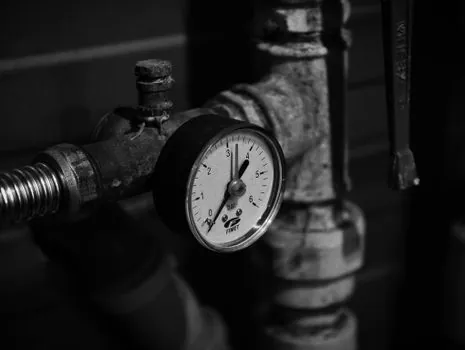
Analogue dial gauges remain standard for local reading, but PLC-monitored skids require a 4-20 mA or HART-output transmitter so the value can be trended and alarm-tripped. HART (Highway Addressable Remote Transducer) layers digital communication on the standard 4-20 mA two-wire loop, so the same pair of wires carries both the process variable and diagnostic data to a vacuum pump skid controller [S5].
Pirani-type sensors are gas-type dependent because thermal conductivity of water vapour differs from dry air; the manufacturer's curve correction factor (typically 0.6–0.8 for moist air) must be applied, or a capacitance manometer substituted where the process gas is wet. Annual re-zero and span check is standard; for skids in GMP water service, six-monthly verification with a primary standard is the working practice.
A typical procurement shortlist for one skid reads: one dial gauge for the operator panel, one 4-20 mA capacitance transmitter to the PLC, and one Pirani gauge (if the skid contains a high-vacuum membrane or lyophiliser-style stage). Trying to serve all three roles with one instrument is the most common specification error.
Selection Criteria Comparison for the Four Common Sensor Types
The four families compare directly on the criteria that drive a buying decision. Bourdon/capsule dials cover 100–1000 mbar, cost $40–150, tolerate water vapour well, but offer no electronic output. Capacitance diaphragm manometers cover 0.01–1000 mbar at higher cost ($400–1500), are gas-independent, and output 4-20 mA or HART, making them the standard wet-service transmitter.
Pirani thermal-conductivity sensors cover 10⁻³–10 mbar, cost $300–900, are inexpensive for fine vacuum, but require gas-type correction and are not suited to wet or dirty lines. Thermocouple (TC) sensors cover 10⁻³–100 mbar at the lowest cost ($50–300) and are standard on rotary-vane and vacuum generator packages, though they are also gas-type dependent and drift faster than Pirani.
Selection logic: if the skid operates above 100 mbar absolute and reads only locally, pick a stainless Bourdon. If it operates below 10 mbar absolute, choose Pirani or TC. If it spans both ranges, or if a 4-20 mA signal is required, choose capacitance manometer. Where the process is wet or unknown composition, capacitance is the only safe answer.
Failure Modes, Maintenance, and Skid Sizing Signals
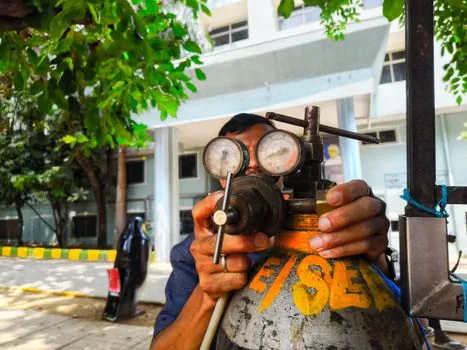
The three recurring failure modes on installed skids are: liquid ingress into the sensor head, diaphragm fatigue from repeated vacuum-to-atmosphere cycles, and electronics failure from condensation inside the enclosure. Each maps to a specification response: siphon trap for ingress, welded-bellows or heavy-diaphragm construction for fatigue, and IP65 plus Gore vent for condensation. [S3]
Calibration drift on Pirani and TC gauges is around 5–15% of reading per year in field service, and most plants adopt a 12-month replacement schedule for those elements. Capacitance manometers drift less (around 0.1% of full scale per year) and are field-recalibratable, which is why total cost of ownership over a 5-year cycle often favours them despite higher purchase price.
Two trackable signals for the next procurement cycle: rising adoption of HART-IP hybrid transmitters that share cabling with Ethernet-APL field networks, and growing use of integrated vacuum-and-flow skids where the gauge and vacuum pump controller share a single display module [S5].
For skids operating in cold-climate or freeze-exposed frames, a heated gauge head or a remote-mounted transmitter with capillary line prevents the water vapour in the line from condensing on the sensor and biasing the reading.
See also our earlier report, POM material selection for oil and gas: when acetal fails and what to use instead.