
A vacuum pump is selected against six quantitative gates before brand is even discussed: gas compatibility, ultimate vacuum margin, pumping-speed multiplier, materials of construction, continuous-duty topology, and total cost of ownership. EVP Vacuum Solution codifies the framework as the "six basic considerations" used by Chinese OEM application engineers [S2].
Specifying engineers who skip those gates typically oversize dry pumps for wet duties, undersize vacuum generators for dusty conveying, or pick lubricated vane pumps for oxygen service. The six gates below prevent all three.
Gate 1: Process Gas and Contaminant Compatibility
First, the chosen pump must handle the released-gas stream without corrosion, condensation, or reaction inside the swept volume [S2]. Flammable, condensable, corrosive, and particulate-laden media each rule out whole pump families.
VMECA's VTR-series Venturi pump is explicitly designed for pneumatic conveying lines where dust and small debris pass through the body — its specification sheet states particles and small debris "pass directly through the pump" rather than accumulating on vanes [S1]. That makes the Venturi topology a fit for granulate handling, while an oil-sealed rotary vane pump in the same duty would fail within hours. Conversely, for acid or alkali vapors, EVP's selection guidance calls for stainless-steel wetted parts or anti-corrosion coatings, and for dusty service a pre-inlet filter or dust collector is added at the suction flange [S2].
Gate 2: Ultimate Vacuum Margin and Working Pressure Band
The pump's ultimate vacuum (the pressure at zero effective pumping speed) must exceed the required working vacuum by at least one order of magnitude, so usable pumping speed remains available across the operating band [S2].
Concretely, a process that needs 5,000 Pa working pressure should be served by a pump whose ultimate vacuum is ≤ 500 Pa, not one rated at 5,000 Pa. VMECA's VTR Venturi data illustrates the spread inside a single family: -85,000 Pa (-85 kPa) ultimate on the high-vacuum end and -45,000 Pa on the high-flow end, with flows from 219 l/min to 6,890 l/min [S1]. Picking the high-flow variant for a 50 kPa duty would leave no margin; picking the high-vacuum variant for a high-flow conveying line would starve the line. The same one-order rule is why laboratory drying ovens, freeze dryers, and rotary evaporators are paired with diaphragm or rotary vane pumps sized for ≤ 10 Pa ultimate rather than the 50 kPa class a Venturi delivers [S6].
Gate 3: Pumping-Speed Multiplier Against Peak Outgassing
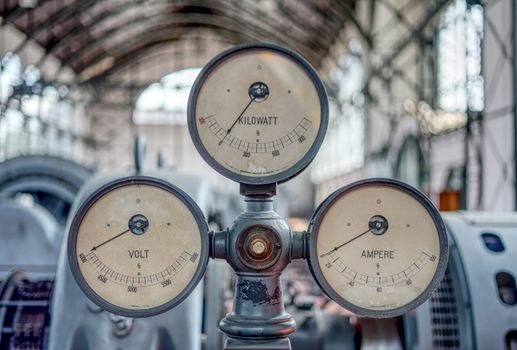
Pumping speed at the working pressure must beat the maximum process gas load, and the standard multiplier when outgassing spikes is 2-3x the peak release rate [S2]. The factor accounts for cold traps, baffles, and sudden bursts that throttle effective speed at the chamber.
If a chemical reactor can vent 500 l/min of vapour at peak load, the system should deliver 1,000-1,500 l/min effective speed at the trap outlet. EVP's liquid-ring and dry-screw systems for petrochemical and chemical-plant service are sized against this rule; the same rule is why Roots blowers are stacked in series with rotary vane fore-pumps in high-vacuum metallurgical or vacuum die casting lines where the booster multiplies the fore-pump speed by 4-10x at the working pressure [S2].
Gate 4: Materials, Seals, and Cleanliness Class
Wetted materials must match the chemistry: stainless steel or fluorocarbon-elastomer seals for corrosive vapour, hard-faced rotors for particulate duty, and oil-free swept volumes for pharmaceutical, food, semiconductor, and medical-air service [S2][S7].
For medical air and vacuum systems in healthcare facilities, oil-mist contamination is a hard disqualifier; dedicated medical-grade dry pumps with HEPA inlet filtration and stainless rotors are specified, and supply houses such as E-MSE distribute purpose-built assemblies for that segment [S7]. For battery and pharmaceutical dry rooms, the same oil-free constraint applies but for different reasons — any hydrocarbon backstreaming contaminates electrolyte or active product. By contrast, VMECA's VTR is described as "lubricated single-stage" — acceptable in dusty factory air but not in cleanroom or medical service [S1].
Gate 5: Continuous-Duty Topology and Redundancy
Continuous processes need either a pump rated for 100% duty or a duty/standby pair with automatic changeover, plus a maintenance pump that takes over as outgassing decays for energy savings [S2].
EVP's liquid-ring and dry-screw product lines are explicitly marketed for oil-and-gas and chemical-industry continuous service with 30+ application engineers supporting specification [S4]. For less critical service, MVP Vacuum's U.S. operation runs a parallel model: rebuilt Stokes 212/412 and 600-series blowers held in stock, with rental pumps dispatched while customer units are in the shop — typically a 1-2 week turnaround on a full rebuild [S3]. Spare-parts pricing in that channel is transparent: a Stokes 412 solid eccentric lists at $1,290, a hollow eccentric at $1,350, a 5-gallon pail of Supervac RP oil at $127, and a 55-gallon drum at $1,150 [S3].
Variant Comparison: Which Pump Class for Which Duty
Five mainstream classes cover roughly 90% of industrial selection, and the right one is fixed by three decision criteria: ultimate pressure needed, wet-versus-dry gas stream, and particulate tolerance. [S2]
For light-duty pick-and-place and pneumatic conveying at -45 to -85 kPa with dusty air, a Venturi vacuum generator wins on cost and on tolerance to debris, with flow up to 6,890 l/min in the VTR family and operating temperatures from -20 °C to +120 °C [S1]. For wet, corrosive vapour at 1,000-10,000 Pa, a liquid-ring pump is the default because the sealing fluid is water or process-compatible liquid; EVP's chemical-industry dry-screw systems sit one tier up for the same chemistry with zero process-fluid carryover [S4]. For high-vacuum metallurgical or coating duty below 1 Pa, a diffusion pump backed by a rotary vane fore-pump remains common, while Roots-boosted dry systems are the modern oil-free alternative. For oxygen-enriched or explosive atmospheres, only oil-free, non-ferrous, ATEX/IECEx-certified variants are acceptable — the certification, not the brand, is the gate. For laboratory vacuum filtration, rotary evaporation, and freeze drying, a diaphragm pump is the workhorse because it is oil-free, quiet, and reaches ≤ 10 Pa ultimate at low flow [S6].
Gate 6: Total Cost of Ownership, Not Catalog Price
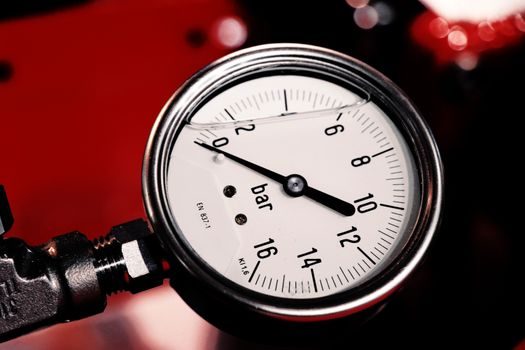
When two or more pump classes meet the first five gates, selection pivots to lifecycle cost: initial purchase, energy per cubic metre pumped, service interval, oil and filter consumption, and mean time between overhaul [S2].
A dry claw or dry screw pump has higher capital cost than an oil-sealed vane pump but eliminates oil backstreaming, oil changes, and disposal — typically paying back inside 18-36 months in continuous semiconductor or pharmaceutical service. A Venturi generator has the lowest capital cost of all because it has no moving parts, but consumes compressed air at 5-10x the electrical energy of an equivalent electric pump, so it loses on TCO whenever the duty cycle exceeds a few hours per shift [S1][S2]. A steam-jet ejector, such as the Tonfun STEAM JECTION UNIT line, is competitive only where low-pressure waste steam is already on site and electricity or compressed air is expensive [S5].
Who Should NOT Pick the Default Oil-Sealed Rotary Vane Pump
Oil-sealed rotary vane pumps are the historical default in many workshops and they remain a strong pick for clean, dry, non-corrosive duty in the 1-100 Pa band — but they are the wrong choice for oxygen service above 23% enrichment, for any flammable or reactive gas mixture without inert diluent, for pharmaceutical API synthesis where hydrocarbon backstreaming is regulated, and for any food-contact or medical vacuum line [S2][S7].
The same disqualifier applies to particulate-loaded streams: vanes wear in days when fines enter the swept volume, and the VMECA VTR specification calls out "high contamination areas where dust and small debris is likely to enter the vacuum line" as the explicit use case for a Venturi instead [S1]. Engineers who default to the workshop rotary vane pump for these duties are signing up for weekly vane replacement and chronic chamber contamination.
Shortlist Logic and Trackable Signals
Build the shortlist in this order: (1) filter the variant list by ultimate pressure and gas chemistry; (2) require the pumping-speed multiplier of 2-3x peak outgassing; (3) confirm material/seal compatibility; (4) verify continuous-duty rating or specify duty/standby; (5) compare TCO on a 5-year horizon. Trackable signals to watch through 2026: ATEX/IECEx certification scope on dry pump families, energy consumption per m³/h on rebuilt vs new units from U.S. distributors such as MVP Vacuum [S3], and the spread between high-vacuum (-85 kPa) and high-flow (-45 kPa) variants inside single OEM families such as the VTR series [S1].
Background reading: Shaft collar types, materials, and selection criteria.