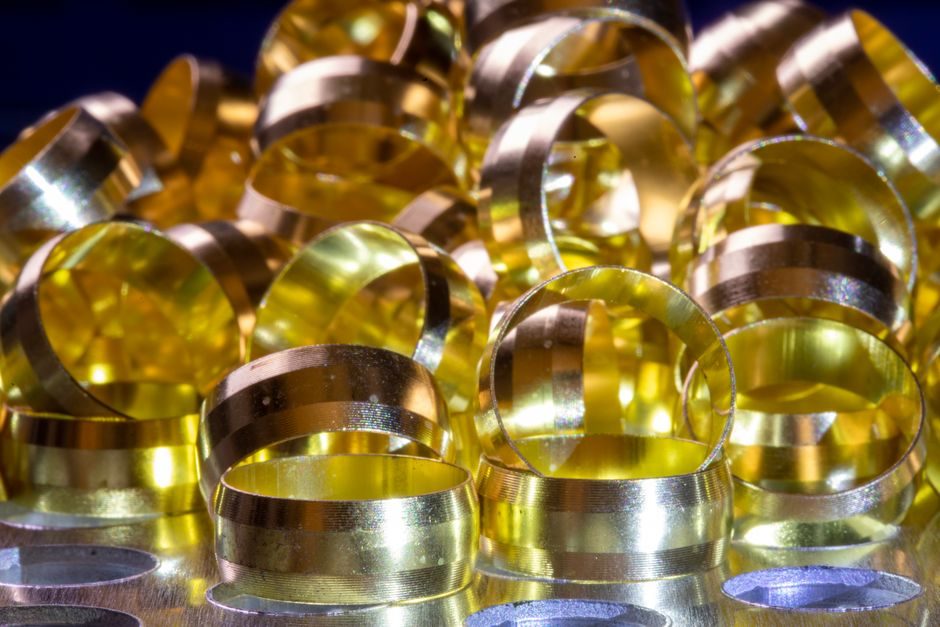
A shaft collar is a simple axial-positioning device — a ring fitted to a shaft to locate bearings, gears, pulleys, or couplings, and to act as a mechanical stop. Modern catalogues list four functional styles (set-screw, one-piece clamp, one-piece split, two-piece clamp) and four common material families, with bore sizes spanning roughly 6 mm to 75 mm [S5][S1].
The reference term in engineering dictionaries is "shaft collar" (or simply "collar"); the related Chinese term 轴肩 refers to the integral shoulder machined onto a shaft itself, not the separate component [S3]. A collar is selected when the design needs an adjustable, non-machined axial stop, when a shaft key shoulder is impractical, or when the assembly must be re-positioned without shaft rework.
Four functional styles: set-screw, clamp, one-piece split, two-piece split
Set-screw collars are the lowest-cost style and the least concentric: a single or opposed set screw bites into the shaft, which marks the surface and slips under cyclic or reversed torque [S5]. One-piece clamp collars wrap the shaft in a continuous ring and lock with one or two through-bolts, giving better holding power than a set screw without axial split, but the shaft must be end-fed into the bore during assembly [S5].
One-piece split collars (also called single-split) are a single ring with one machined gap; they wrap around an in-situ shaft without disassembly and are tightened with one or two bolts. Two-piece split collars consist of two clamped halves and are the standard choice when a shaft must be added or removed without sliding along the full length. Catalog offerings at Ruland, Misumi, and Lovejoy all list these four styles as a fixed taxonomy, with the two-piece split as the highest-torque and most concentric option [S4][S6].
Material families and their trade-offs
Four materials cover the bulk of catalog offerings: zinc-plated carbon steel (low cost, indoor use), black-oxide carbon steel (mild corrosion resistance, dark finish for vision systems), 303 or 316 stainless steel (food, pharma, marine, washdown), and anodized aluminium (weight-sensitive builds such as aerospace, robotics, and air-bearing shafts) [S6][S1][S5].
Hardness matters as much as material: through-hardened steel collars (typical Rockwell C 32-40) hold set-screw torque better and resist bore deformation under clamp load. Stainless grades sacrifice surface hardness for corrosion resistance — 316 stainless is normally supplied in the annealed condition for collars, and is therefore the wrong choice for high-torque clamp duty unless specified as custom-hardened. For very light, very precise assemblies, the OAV C-series face collar is offered in aluminium for use with air-bearing shafts, with the bore range tied to the air-bearing product family [S1].
Size range, bore tolerances, and metric vs inch
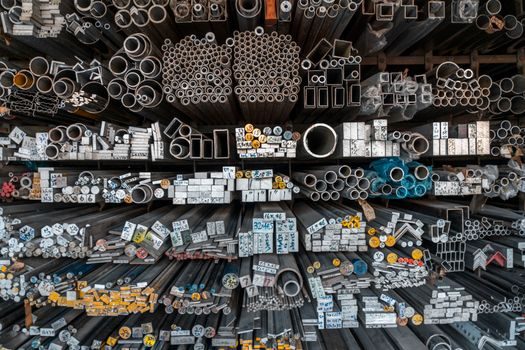
Standard off-the-shelf bore sizes on the metric side run 6, 8, 10, 12, 14, 16, 20, 22, 25, 28, 30 mm and up; inch offerings at major US distributors cover 1/4 in to 3 in and beyond, with widths from roughly 6 mm to 25 mm depending on bore [S5]. Catalog bores are usually produced to a clearance fit on the nominal shaft (e.g. a 25 mm bore on a g6/h6 shaft), not a press fit, because the collar is locked by screw/clamp action rather than friction from an interference fit.
For two-piece split collars, the axial gap between the two halves is held to a tight tolerance so the bolts generate a true radial clamp rather than a bending moment. Concentricity and face-runout are specified by premium makers (Ruland, Climax, Stafford) at 0.05 mm TIR or better on small bores; generic imports are typically not measured to that level [S4].
Load, torque, and RPM limits
Holding torque — not "strength" — is the design number to verify. A typical 1 in bore one-piece clamp collar in carbon steel holds roughly 200-350 in-lb of axial restraint before slip; a two-piece split of the same size holds 2-3x that, with the gain coming from the full 360° clamp surface [S4]. Set-screw collars in soft shafts (aluminium, brass) are usually derated to 30-50% of the catalog figure, because the screw tip craters the shaft rather than locking the collar.
RPM is rarely the limiting factor on a collar itself; what limits speed is the balance grade and the fastener retention. Two-piece split collars, being symmetric about the shaft axis, are the natural choice above roughly 3000 rpm; set-screw collars become the wrong answer above 1000-1500 rpm in reversing or high-cycle service because the screw walks loose. For very high misalignment environments, collars are typically used as axial stops only, with a separate shaft coupling such as a disc or bellows unit handling the offset — for example the Double Flex 6P-C covers 2,100-14,000 rpm, 20-1,164 Nm, and misalignment in axial and parallel directions, with an operating envelope of -57 °C to 121 °C [S2].
Selection criteria and a side-by-side comparison
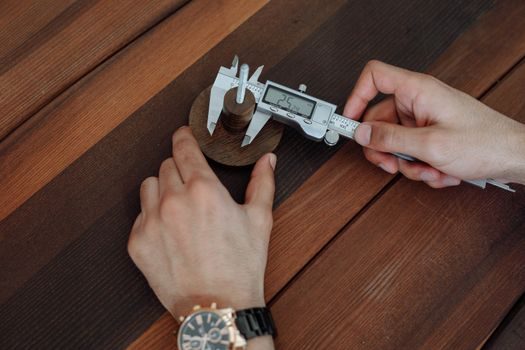
The four decision criteria that actually move a selection are assembly access (end-feed vs in-place), holding torque, concentricity/shaft marking, and environment (corrosion, temperature, washdown). The table below lines the four functional styles up against those criteria. [S2]
Set-screw: lowest cost, end-feedable, marks the shaft, slips in reversing load — pick it for prototype, low-rpm, non-critical axial stop duty. One-piece clamp: higher holding torque than set-screw, no shaft marking, but still needs end-feed. One-piece split: in-place assembly, no shaft marking, moderate torque, single-gap concentricity slightly lower than a one-piece clamp. Two-piece split: highest holding torque and best concentricity, full in-place removal/addition, heavier and more expensive. For most new machine designs that have the axial room, the two-piece split has become the default at Ruland, Lovejoy, and Misumi; one-piece clamp wins when end-feed is available and the shaft cannot be marked.
Standards, certifications, and sourcing
No single ISO or ASME standard governs a generic shaft collar the way ISO 5167 governs orifice plates. What does exist: manufacturers commonly hold ISO 9001:2008 (older) or ISO 9001:2015 quality certification [S6]; stainless and aluminium collars supplied to the food/pharma chain typically carry 3-A or FDA-grade material statements; military and aerospace grades reference QQ-C-390 and AMS-QQ-S-763 on the underlying bar stock rather than on the collar itself. For ATEX or IECEx-zoned equipment, the collar is normally treated as a non-sparking passive component and is paired with certified industrial valve, flow meter, or pressure transmitter housings that carry the actual certification.
Lead time and stock status vary sharply by bore. Common metric bores (8, 10, 12, 16, 20, 25 mm) in zinc-plated or black-oxide steel ship in 1-3 weeks from Western distributors and in 1-2 weeks from Chinese mill-direct channels; non-standard bores, large diameters above 100 mm, and full-stainless imperial sizes are typically built to order at 4-8 weeks [S5][S6]. For sourcing under 2026 cost pressure on raw carbon and stainless bar, locking in annual call-off with a stocking distributor is more reliable than spot orders on the open market, as also seen in parallel component classes covered in the Control Cable Buying Guide 2026.
One watch-out when reading a supplier page: many catalog "shaft collar" entries are actually face collars or thrust washers used with a specific bearing family — for example the OAV C-series is a flat precision face collar that mates with the maker's thrust air bushing and is sized to the air-bearing bore range (13-75 mm), not to a generic shaft-collar duty cycle [S1]. Two trackable signals for the next design cycle: (1) the shift by major US makers (Ruland, Stafford) toward offering two-piece split collars in 316 stainless as stocked SKUs rather than build-to-order, and (2) growing use of black-oxide and zinc-nickel coated carbon steel as a cost-down substitute for full stainless in indoor washdown environments — both worth verifying in the next shaft collar catalog refresh.