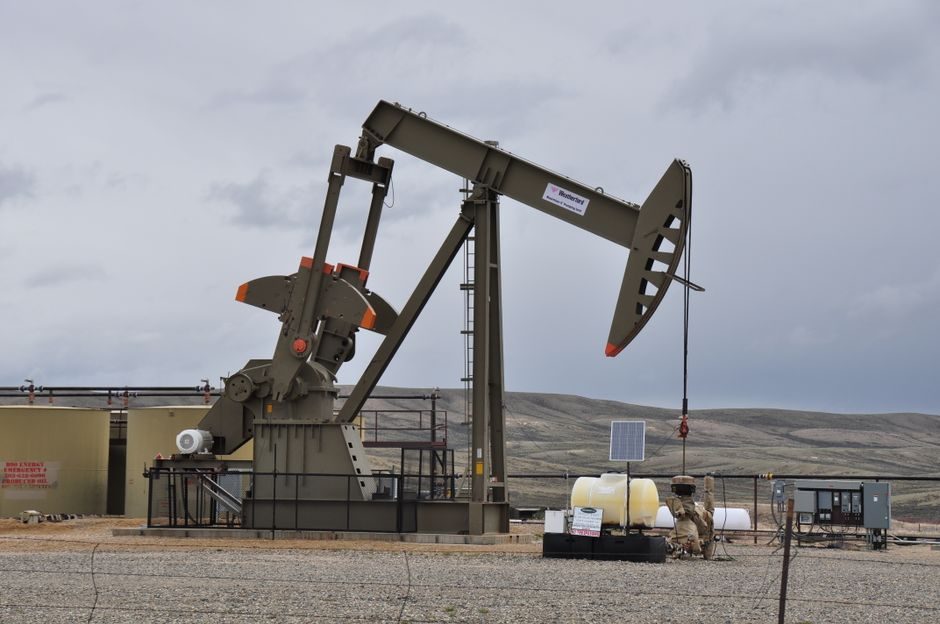
A metering pump is built for accuracy — hydraulic diaphragm dosing units commonly reach 1200 L/h at discharge pressures up to 12 bar, with flow adjusted by stroke length or motor frequency [S3].
A submersible pump is built for access — sealed motor-pump units are lowered into the liquid, pushing rather than sucking, and bypassing the ~8 m suction-lift ceiling that limits surface pumps in practice [S2].
Operating Principle and Head/Flow Envelope
Metering pumps move small, metered volumes against high pressure; the mechanical diaphragm dosing variant is rated to 1200 L/h at 12 bar in the cited product line, with hydraulic actuation and a power-off seal [S3].
Submersible pumps are fundamentally centrifugal devices — an impeller throws liquid outward, and a multistage stack can build the high head needed for borehole duty; vertical long-shaft chemical submersibles (e.g. DICKOW type NCT) are documented up to 700 m³/h [S1]. Submersible sewage pumps typically use a vortex or channel impeller to pass solids; grinder variants add a cutter ahead of the impeller for small-bore pressure sewer systems [S2].
Decision Criteria: Accuracy vs Throughput vs Solids Handling
On accuracy, only the metering pump class is in scope — flow is set by stroke length and motor frequency, which is the point of a dosing pump [S3]. On throughput, submersibles dominate, with industrial units in the hundreds of m³/h range and borehole multistage stacks optimised for head rather than flow [S1][S2]. On solids handling, submersible sewage and slurry models use vortex/channel impellers, hardened wear plates, and optional agitators, with grinders added for shredding duty [S2]. On high-viscosity or corrosive media, hydraulic diaphragm dosing pumps list PVC, PVDF, SS304, and SS316 head materials as standard build options [S3].
Who Each Pump Is For — and Who It Is Not For
A metering pump is the right tool when the specification is mL/L per minute of polymer, acid, caustic, scale inhibitor, or flocculant into a process stream — chemical, power, water-treatment, food and beverage, and paper lines are named applications [S3]. It is the wrong tool for moving tank volumes or raw water; volumetric efficiency drops and capital cost per cubic metre is unfavourable. A submersible pump is the right tool for drainage, dewatering, sewage lift, borehole supply, slurry transfer, and flood response — anywhere a surface pump cannot prime or a wet well sits below grade [S2]. It is the wrong tool for precision chemical dosing; centrifugal slip and the absence of positive displacement make setpoint accuracy unattainable.
Installation, Cabling and Depth Limits
Submersible depth is bounded by cable length and discharge head, not by suction lift, because the unit sits in the liquid it pumps and the motor is sealed and liquid-cooled [S2]. Thermal overload protection is standard, and float switches, level controllers, or VSDs are typical add-ons for automatic running [S2]. Domestic submersible well pumps are commonly installed at depths around 30 m (100 ft) and require a breaker-isolated pull-and-replace procedure; the supply run is the dominant lifetime cost [S4]. Metering pumps are skid- or panel-mounted beside the injection point with suction and discharge lines sized for the rated pressure (12 bar in the cited hydraulic diaphragm series) and a pressure-relief path [S3].
Materials, Media, and Maintenance Posture

Metering pump wetted ends are specified per chemical compatibility — the cited line offers PVC, PVDF, SS304, SS316, allowing selection for corrosive media and dangerous chemicals [S3]. The hydraulic design with power-off seal is sold as a no-leakage feature with simple maintenance [S3]. Submersible pumps carry hardened impellers, wear plates, and agitators for abrasive slurry duty; in chemical service, vertical long-shaft units are built for chemical and petrochemical plants with separate discharge piping [S1][S2]. Submersible units are hermetically sealed, so the maintenance burden concentrates on seal monitoring, cable integrity, and impeller clearance rather than on a packed stuffing box.
Power, Drive, and Control Integration
Metering-pump flow control is dual-axis: stroke-length adjustment and motor-frequency (VFD) adjustment, both standard on the cited hydraulic diaphragm series [S3]. Submersible pumps are typically constant-speed DOL across-the-line starters, with VSDs and level controllers added for level control in wet wells and to manage soft-start on deep-well units [S2]. The control signal is therefore fundamentally different — a dosing pump answers a 4–20 mA or pulse setpoint in a closed loop, while a submersible answers a level switch in an open loop. For broader pump-class context, a centrifugal pump reference applies to the wet-end behaviour of most submersibles, and a gear pump or hydraulic pump is closer kin to the positive-displacement dosing family.
Cost, Sourcing, and Specification Trackers

Chinese OEM capacity for submersible deep-well pumps is documented at 200,000 pieces/year at 50-piece MOQ from a Ningbo-based supplier, an indicator of how commoditised this segment is [S5]. Hydraulic diaphragm dosing pumps are quoted with a 1-unit MOQ, 20-day delivery, and 1,000,000-unit/month supply capability — a very different supply profile, where build-to-order with material selection dominates [S3]. A 4-week delivery lead and 1-unit MOQ is the working assumption for an engineered dosing skid.
Track on the next sourcing cycle: (1) any hydraulic-diaphragm dosing line extending past 12 bar, where process-side demand for higher-pressure polymer injection has been a recurring request; (2) standardisation of VSD + level-controller packages on wet-well submersible stations, since that combination is the main energy and labour saving in municipal duty [S2][S3].