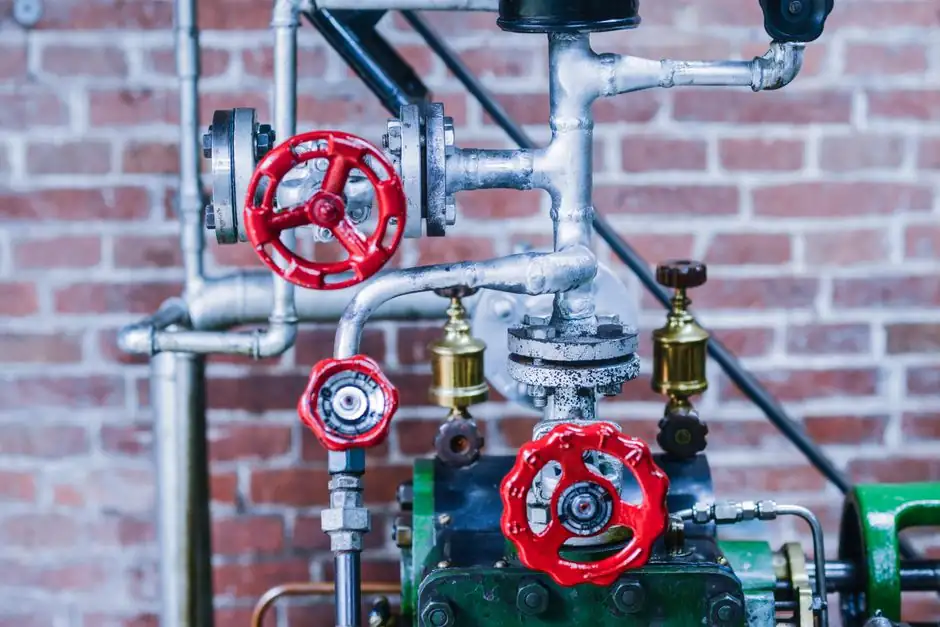
Industrial vacuum pumps divide into three operating families, positive displacement, momentum transfer, and entrapment, each covering a defined slice of the rough-to-ultra-high vacuum range, with rotary vane, liquid ring, dry screw, diaphragm, turbomolecular, diffusion, cryo, and ion designs dominating their respective pressure windows [S1][S5].
Selection is governed by four coupled parameters: ultimate pressure (mbar or Pa), pumping speed (m³/h or L/s), gas composition (wet, corrosive, particulate-laden), and contamination tolerance (oil-sealed vs dry). A Jiangsu food packaging plant that swapped oil-sealed rotary vane pumps for dry screw units in 2025 cut maintenance cost 30% and eliminated product rejects tied to oil traces, while the same dry screw would have failed in a chemical plant handling corrosive vapors [S7].
Vacuum Range Classification and Operating Bands
Industrial vacuum is split into four bands: rough (atmospheric to 1 mbar), medium (1 mbar to 1×10⁻³ mbar), high (1×10⁻³ mbar to 1×10⁻⁷ mbar), and ultra-high (below 1×10⁻⁷ mbar), and the band a process needs dictates which pump family can physically reach it [S5]. Most manufacturing sits in rough-to-medium; high and ultra-high are served by kinetic transfer (turbomolecular, diffusion) and entrapment (cryo, ion) stages backed by a roughing pump [S5][S3].
Within a band, two-stage oil-sealed rotary vane units reach roughly 1×10⁻³ mbar at 0.7 to 275 m³/h, a range that handles lab roughing, freeze-drying, mass-spectrometer backing, and vacuum packaging; liquid ring pumps stop near 30 mbar but scale to 25,000 to 30,000 m³/h, which is why they dominate condenser evacuation, paper drying, and chemical service where the seal liquid absorbs heat and soluble contamination [S6]. Diaphragm pumps, inherently dry, can be staged into the 1×10⁻⁸ mbar region when paired with a turbo and stay the default for analytical instruments and clean sampling lines [S2].
Positive Displacement Pumps: The Industrial Workhorse
Positive displacement pumps trap a fixed gas volume, isolate it from the inlet, and mechanically compress it to exhaust; rotary vane, liquid ring, screw, claw, and diaphragm designs all use this principle and together represent the majority of installed industrial units [S1][S5].
Rotary vane pumps use oil as the absolute seal, allowing the rotor vanes to compress gas to slightly above 1 bar before the exhaust valve opens, and that oil seal is what gets them to deep rough-vacuum levels [S9]. Rotary vane units run 0.7 to 275 m³/h, oil-lubricated, 55 to 75 dB, and consume 250 to 5000 W; the trade is oil backstreaming risk, which is why semiconductor and food plants increasingly specify the dry variants [S2][S3]. Liquid ring pumps use water or a process-compatible service liquid as the seal and tolerate condensate, slugs, and mildly corrosive vapor loads, which is why they are standard in chemical, power, and pulp-and-paper service; pumping speeds span 25 to 30,000 m³/h at ultimate pressures around 30 mbar [S2][S6]. Dry screw pumps, with counter-rotating screws, deliver an oil-free, contact-minimized compression path and have become the default where contamination cannot be tolerated; the Jiangsu case study linked their adoption to a 30% maintenance-cost reduction in a packaging plant [S7][S4]. Diaphragm pumps move a flexible membrane to displace gas, stay 100% oil-free, and are specified for medical, analytical, and emission-monitoring lines where 4 to 8 mbar ultimate pressure and 0.6 to 1 L/s throughput are acceptable [S2][S3].
Momentum Transfer and Entrapment Pumps: The High-Vacuum Tier
Momentum transfer (kinetic) pumps move gas by imparting velocity to molecules rather than trapping a volume: turbomolecular pumps spin a bladed rotor at 20,000 to 90,000 rpm to push gas toward the exhaust, reaching 1×10⁻⁷ to 1×10⁻⁹ Pa ultimate with 50 to 5000 L/s throughput; diffusion pumps use a stream of high-vapor-pressure fluid to entrain gas and historically set the floor for high-vacuum systems below 1×10⁻⁴ Pa [S3][S4]. Both require a backing rotary vane or dry pump, and that backs the 1 mbar to 1×10⁻³ mbar range the kinetic stage cannot handle alone [S5].
Entrapment pumps, cryopumps and ion pumps, capture and hold gas molecules rather than exhausting them, and therefore reach the deepest practical vacuum (below 1×10⁻⁷ mbar) with no hydrocarbon contamination [S1][S3]. Cryopumps condense gas onto a cold surface at 10 to 20 K, regenerating every few weeks; ion pumps trap ionized gas onto chemically active titanium plates and are the workhorse of particle-accelerator and ultra-high-vacuum research lines [S3]. Regenerative (Roots) pumps are a separate sub-class used as boosters between a roughing pump and a high-vacuum stage, multiplying effective pumping speed in the 1 mbar to 1×10⁻³ mbar transition without reaching deep vacuum on their own [S3][S5].
Selection Criteria: Pressure, Gas, Contamination, Duty Cycle
Specifying a pump starts with three numbers: required ultimate pressure, required pumping speed at operating pressure, and the composition of the gas load; matching only the spec sheet while ignoring the gas is the most common procurement failure and shows up as premature wear, contamination, or an inability to hold the working vacuum [S4][S5]. For a manufacturer of moving parts, the screw pump family is worth a parallel look, since screw-pump selection shares several decision criteria with positive-displacement vacuum units, including gas/liquid compatibility and duty cycle. A liquid ring pump tolerates wet and corrosive streams where a dry screw would score and seize; a dry screw or claw pump returns cleaner service in semiconductor and pharmaceutical lines where a rotary vane would backstream oil; and a turbomolecular stage, always backed by a roughing pump, is the only realistic path below 1×10⁻⁵ mbar [S4][S7].
Energy and total cost of ownership shape the second-tier decision: oil-sealed rotary vane pumps are cheap to buy but carry oil-change intervals of 2000 to 4000 hours, while dry-claw and dry-screw units cost more upfront and run tens of thousands of hours between services, which is why the maintenance savings the Jiangsu plant reported are repeatable across food and pharmaceutical lines [S7]. For metering-pump-adjacent chemical dosing where vacuum is used for degassing, the metering-pump TCO math is a useful parallel: service interval and consumable cost dominate 5-year spend, not sticker price. Noise (45 to 90 dB across the family), materials of construction (stainless steel versus aluminum for vapor compatibility), and port size round out the spec sheet and frequently tip the choice between two units that both meet the pressure spec [S3][S4].
Pump Family Comparison on Four Decision Criteria

The following table condenses the four criteria a process engineer should weigh first; numbers come from published OEM and reference data and the comparison is meant to be read alongside the vacuum pump encyclopedia entry for the supporting curves and sizing formulas. [S1]
Rotary vane (oil-sealed): ultimate 1×10⁻³ mbar, 0.7 to 275 m³/h, oil-lubricated (contamination risk), low-to-moderate cost, suited to lab roughing, freeze-drying, mass-spec backing [S2][S6]. Liquid ring: ultimate ~30 mbar, 25 to 30,000 m³/h, wet (uses service liquid, tolerates condensables), moderate cost, suited to chemical, power, paper, and mining [S2][S6]. Dry screw / claw: ultimate 1×10⁻² to 1×10⁻³ mbar, 10 to 500 m³/h typical, oil-free, higher capital cost, suited to food, pharmaceutical, semiconductor, and packaging where contamination cannot be tolerated [S3][S7]. Diaphragm: ultimate 1 to 8 mbar (down to 5×10⁻⁸ mbar when turbo-staged), 0.6 to 50 L/s, oil-free, suited to medical, analytical, and emission sampling [S2][S3]. Turbomolecular: ultimate 1×10⁻⁷ to 1×10⁻⁹ Pa, 50 to 5000 L/s, oil-free, high capital, always requires a backing pump, suited to semiconductor load locks, electron microscopy, and accelerator beamlines [S3][S4].
Standards, Failure Modes, and Maintenance Windows
Vacuum system design is governed by the ISO vacuum technology vocabulary (ISO 3529 for terminology and ISO 21360 for pumping-speed measurement conventions), and specifying an oil-sealed pump in a process that requires dry service is the single most common root cause of product-reject incidents the published case studies describe [S5][S7]. Related equipment, including the vacuum gauge used to verify that the pump actually reaches its rated ultimate pressure, is part of the same selection chain: a Pirani or cold-cathode gauge must match the pressure band the pump is meant to operate in, or the spec is unfalsifiable on the shop floor.
Failure modes concentrate on three patterns: oil backstreaming and chamber contamination from rotary vane pumps run at high inlet pressure; cavitation, seal-liquid overheating, and shaft-seal wear in liquid ring units handling water-soluble solvent loads; and rotor-bearing failure in turbomolecular pumps after contamination ingestion or power-loss events, which is why every kinetic stage needs an automatic isolation valve and a hard-backed roughing pump [S1][S3][S5]. Maintenance intervals are the practical lever: rotary vane oil changes at 2000 to 4000 hours, dry screw and claw bearing inspections at 8000 to 16000 hours, and turbomolecular bearing replacement typically at 20000 to 30000 hours, with cryopump regeneration cycles of 3 to 12 weeks depending on gas load [S7]. For a process engineer sizing a new line, the vacuum generator and its ejector-style variants, which use compressed air to generate vacuum without a moving piston, are an option worth comparing for spot-duty and pick-and-place applications where the duty cycle does not justify a rotary pump.
Use Cases by Industry and Working Band
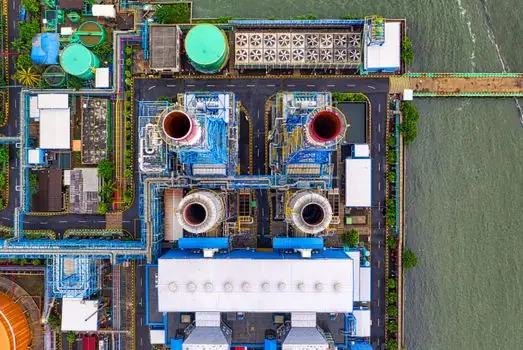
Pharmaceutical and food packaging run in the rough vacuum band and increasingly specify dry screw or oil-lubricated rotary vane with food-grade oil, the Jiangsu plant's case being a representative example of the dry-screw retrofit now in progress across Chinese packaging lines [S7]. Semiconductor fabrication starts at medium vacuum for load-lock pumps (dry claw or dry screw, 1 to 1000 m³/h) and moves into high vacuum (1×10⁻⁵ to 1×10⁻⁷ Pa) for process chambers pumped by turbomolecular units backed by dry roughing pumps, and any oil backstreaming at that level is a wafer-reject event [S3][S4].
Chemical and petrochemical plants evacuate condensers, dryers, and filtration vessels with liquid ring pumps sized from 25 to 30,000 m³/h, accepting the ~30 mbar ultimate in exchange for tolerance of water, solvent vapor, and entrained liquid; an analytical laboratory, by contrast, lives on a diaphragm roughing pump feeding a turbomolecular or diffusion high-vacuum stage, with the diaphragm as the contamination firewall [S2][S6]. Power generation and mining pair liquid ring pumps with steam condensers, while research and particle-physics facilities use cryopumps and ion pumps for ultra-high vacuum, recognizing that those entrapment pumps cannot exhaust accumulated gas and must be regenerated or replaced on a defined schedule [S1][S3].
Across the published case data and reference material, two signals are trackable for the next planning window. First, the dry-screw retrofit in food, pharmaceutical, and semiconductor packaging lines is the most cited maintenance-cost reduction lever in 2025 to 2026 references, and the comparison framework above is the right filter to apply to any vendor shortlist [S7]. Second, the screw pump trade-off analysis gives a side-by-side on dry versus wet configurations that maps directly onto dry-screw vacuum pump selection, since the contamination and maintenance math carries over from the liquid-handling side into the gas-handling side.