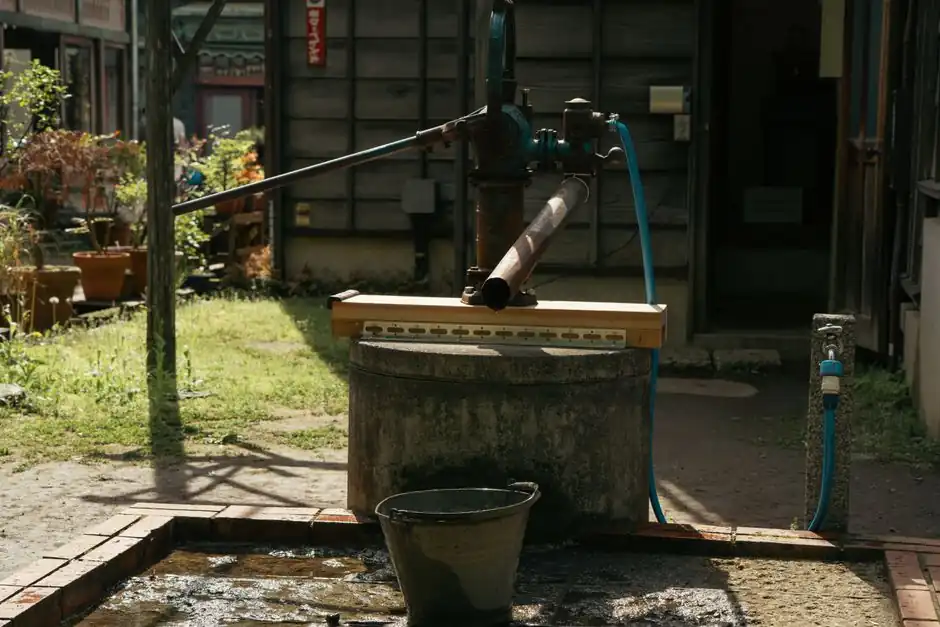
A single-screw (progressive cavity) pump built around a metallic rotor inside an elastomer stator typically delivers up to 50,000 LPH at differential pressures to 12 kg/cm² and handles fluids up to 1,00,000 cPs, with reversible suction and discharge as standard [S4].
Twin- and triple-screw variants in the Gloyel G-series span 2–45 m³/h at 60–120 m head on 1.5–15 kW motors at 960 rpm, with 50 mm to 150 mm flange ports, showing how the same positive-displacement principle scales across duties [S1]. For background on pump families, see the screw pump reference page.
Operating envelope: flow, pressure, viscosity
Progressive-cavity screw pumps combine high viscosity tolerance with self-priming: vendor data confirms fluid viscosities to 1,00,000 cPs and solids-bearing media at 50% solids content by volume, with flow directly proportional to speed [S1][S4]. The discharge cavity is formed by the rotating rotor inside a double-lead elastomer stator, sealing suction from discharge without check valves [S1]. Compared with centrifugal pumps, screw pumps maintain a linear flow-versus-speed curve and tolerate entrained gas, abrasive particles, and fibrous slurries in a single stage [S1][S5].
Standard G-series models (G25 through G70) span 2 m³/h at 60 m head with a 1.5 kW motor up to 45 m³/h at 120 m head with a 15 kW motor, with suction and discharge flange sizes from Dg32/Dg25 to Dg150/Dg125, which is a useful benchmark when matching PD pumps to hydraulic cooling or lubrication circuits [S1].
Advantages over centrifugal, gear, and piston pumps
Screw pumps outperform several alternatives in specific duty bands: versus centrifugal pumps they need no check valve and give stable, linear flow; versus plunger pumps they offer stronger self-priming and higher suction lift; versus diaphragm pumps they tolerate gas, solid particles, fibers, and corrosive media; versus gear pumps they handle higher viscosity fluids and abrasive slurries with non-pulsating output [S1][S4]. Pulse-free flow is a recurring engineering argument: the rotor-stator geometry creates sealed cavities that progress from suction to discharge without internal turbulence, agitation, or pulsation, which protects downstream instruments and filters [S1][S4].
Additional design-level advantages include a low NPSHr, low operational noise, bidirectional rotation, and inherent self-priming without a foot valve, with one specification table citing a flow rate of 50,000 LPH and pressure capability of 12 kg/cm² as a typical ceiling [S4]. For comparison with another positive-displacement technology, see Gear Pump TCO: Cost Drivers, Service Intervals, and Selection Math.
Limitations: stator wear, pressure ceiling, dry-run risk
Every advantage carries a corresponding constraint. The elastomer stator that enables gentle handling of abrasive and fibrous media is the wear part: it is the limiting component on service life, and its replacement typically drives the maintenance schedule on progressive-cavity units [S4]. Screw pumps also have a limited pressure ceiling compared with multi-stage centrifugal or piston pumps, so they are not the first choice for very high-head applications, with most cataloged PC units capped near 12 kg/cm² (about 11.8 bar) and 120 m head on the high-flow G-series frame [S1][S4].
Dry running damages the stator rapidly because the rotor-stator pair relies on the pumped fluid for lubrication and cooling. The Archimedes-style open-trough variant shares a different limitation: efficiency drops as the screw angle increases (commonly 30°–40° is the practical band, with 20°–45° overall), and friction losses rise on steep installations, so lift and headroom constrain where it can be sited [S2]. For context on broader industrial pump categories, see the related screw pump types spec map.
Selection criteria and decision matrix
For process engineers weighing pump types, four criteria usually decide the call: viscosity range, solids/gas tolerance, pulsation requirement, and pressure ceiling. A simple comparison: centrifugal pumps are the default for low-viscosity, high-flow water and clean chemical service but lose efficiency and prime when viscosity rises; gear pumps cover moderate-viscosity lubricants but struggle with solids and abrasive slurries; piston/plunger pumps deliver the highest pressures but are pulsating and sensitive to particulates; screw pumps (single, twin, triple) cover the high-viscosity, solids-bearing, low-pulsation niche from roughly 1 cPs solvent to 1,00,000 cPs polymer, with 0.6–12 kg/cm² differential pressure, at the cost of stator wear [S1][S4][S5].
For Archimedes-type open-screw units, the decision shifts to capacity and lift: flow scales with screw diameter and pitch, and the inclination angle (commonly 30°–40°) sets the head-versus-efficiency trade-off, so these are specified mainly for wastewater, dewatering, aquaculture, and granular-solids transfer rather than closed-pipeline process service [S2].
Applications that match the strengths
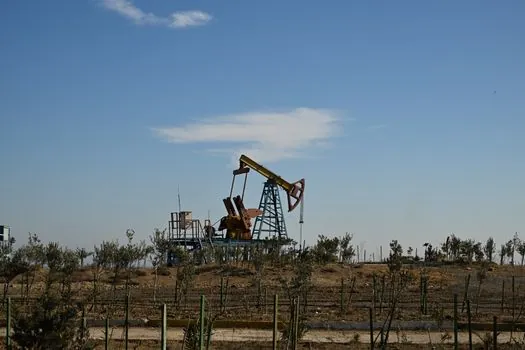
Screw pumps are widely deployed in oil and gas, chemical processing, marine, food and beverage, pharmaceutical, wastewater treatment, paper, and building-materials plants, where the duty involves viscous, abrasive, or solids-laden fluids [S6][S7][S8]. Specific fit-for-purpose examples include transferring polymers, resins, and bitumen; handling slurries in mineral processing; moving crude and produced fluids in upstream oil and gas; and feeding sludge or scum in wastewater treatment, where the gentle, non-pulsating, self-priming action protects both the fluid and downstream equipment [S4][S5][S6].
Hydraulic cooling and lubrication loops are another established application, with suppliers positioning screw pumps as the PD choice for steady, low-NPSHr flow in machine-tool and heavy-machinery circuits [S3]. Archimedes-style open-screw units remain common in wastewater lifting, agricultural irrigation, aquaculture fish transfer, and mining dewatering, exactly the low-pressure, solids-tolerant niche where their geometry works best [S2].
Standards, sourcing, and trackable signals
Most vendor specifications in this segment follow API 676 for positive-displacement pumps (screw, gear, lobe) and ISO 5199 for general chemical-process pump testing; the research material here does not quote specific clauses, so buyers should confirm the exact edition named on the vendor data sheet before order placement. Catalog data consistently cites 960 rpm as a common four-pole motor speed for small-frame PC pumps, 1.5–15 kW as the typical motor power range, and self-priming as standard, which gives a workable envelope for a first-pass datasheet review [S1][S4].
Trackable signals to watch: stator elastomer compound (NBR, EPDM, FKM) ratings versus the actual chemistry being pumped, ATEX/IECEx certification for Zone 1 hazardous-area service, and confirmed solids-passage size relative to discharge geometry, since these three items drive both the maintenance interval and the unit's real-world availability in abrasive or explosive-atmosphere service [S1][S4][S7].
For component-level specifications, see construction machinery and equipment, and lamps and light fittings.