Vanadium in 2026 is a dual-track market: roughly four-fifths of global consumption still flows into high-strength low-alloy (HSLA) steel and tool steel, while vanadium redox flow battery (VRFB) electrolyte demand is the fastest-growing secondary pull, driven by grid-scale storage tenders in China, Australia and the Middle East [S4].
The automotive sector — the largest downstream sink for microalloyed vanadium — is sized at $4,357.69 B in 2025 and is projected to reach $8,508.56 B by 2035 at a 6.92% CAGR, with North America alone valued at $1,020 B [S3]. The auto industry's electrification push (EVs, hybrids) raises vanadium intensity per vehicle for suspension, chassis and battery-grade fasteners, but the absolute demand delta depends on alloy substitution economics that buyers must monitor.
Reserve Geography and Resource Concentration
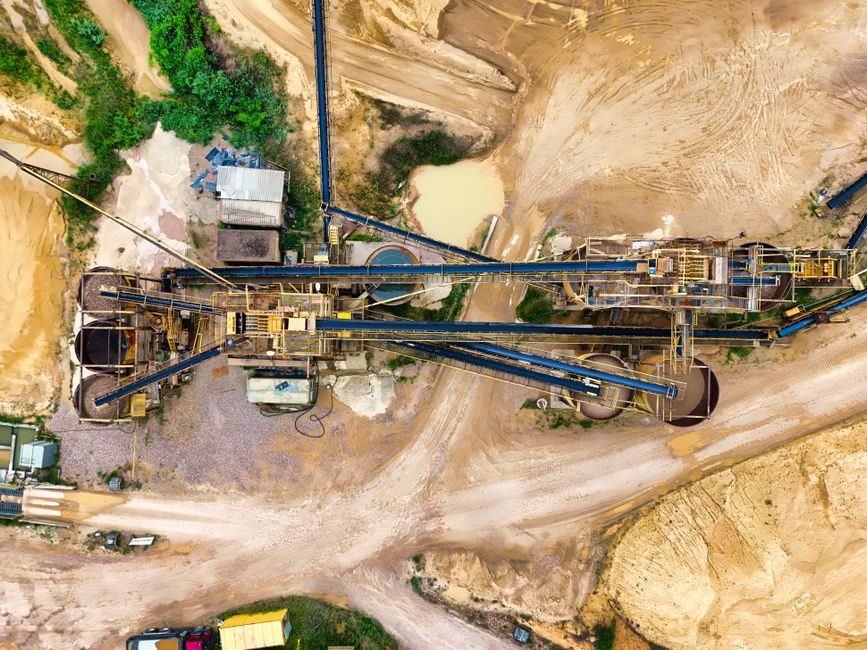
China, Russia, South Africa and Brazil hold the dominant share of global vanadium-bearing ore reserves, with vanadium hosted primarily in titanomagnetite deposits and, secondarily, in shale and phosphate stone [S1]. CBCIE maintains province-level reserve tracking for China, where Sichuan, Hubei and Hunan are the historical anchors for vanadium extraction from stone coal and vanadium-titanium magnetite [S1].
For procurement, this concentration matters: spot V2O5 flake pricing and FeV master-alloy pricing are heavily correlated with operating-rate swings at Chinese converters, and reserve-depletion curves at mature stone-coal mines are now a 5-10 year planning input rather than a 30-year constant [S1]. A buyer mapping 2026 supply should weight three variables: titano-magnetite co-production credits (the iron ore byproduct underwrites V2O5 cost), stone-coal acid-leach permit risk, and secondary recovery from spent catalysts and VRFB electrolyte regeneration.
Operating Rate Signals and Downstream Pricing
CBCIE's monthly tracking of vanadium pentoxide flake output by province is the single highest-frequency public data feed on Chinese converter utilisation [S2]. Operating-rate drops below ~50% historically align with V2O5 flake price spikes of 30-60% on a 3-6 month lag, because the merchant converter base is small (single-digit large players dominate) and inventory cover at downstream FeV producers is typically 4-8 weeks.
Procurement teams should treat the CBCIE operating-rate series as a leading indicator and pair it with port inventory data at Tianjin and Shanghai. A useful internal rule: when the published Chinese V2O5 operating rate stays above 60% for two consecutive months, expect FeV (80% V) prices to soften within one quarter; when it falls under 45%, expect FeV contract renegotiation pressure [S2]. Sourcing for HSLA applications should also benchmark against molybdenum industry 2026 trend bands, because Mo and V substitute in many HSLA microalloy formulations and their spread drives alloy choice.
HSLA Steel Pull and Automotive Demand Mechanics
HSLA steels typically contain 0.05-0.20 wt% V as vanadium-nitrogen (V-N) or V-Nb-Ti microalloy packages, leveraging V(C,N) precipitation for grain refinement and yield-strength uplift in the 415-700 MPa class [S3][S4]. The automotive industry's path to $8,508.56 B by 2035 at 6.92% CAGR implies sustained growth in suspension, chassis and battery-tray structural components — all high-vanadium-intensity parts per vehicle [S3].
Electric vehicles in particular raise vanadium demand per vehicle for crash-energy management: the front subframe, B-pillar reinforcement and battery enclosure often specify 590-780 MPa hot-formed or cold-formed HSLA, with V-N microalloying as the standard strengthening route [S3]. Substitution risk is real — niobium-microalloyed HSLA, dual-phase steels, and press-hardened boron steels can displace V in some components — but V retains a cost-strength edge in the 415-550 MPa hot-rolled coil band used for chassis rails. A more granular read on competing alloy strategies sits in the steel manufacturing cost breakdown 2026 reference.
VRFB Electrolyte: The Secondary Growth Engine
A 100 MWh / 400 MWh VRFB installation therefore consumes on the order of 800-1,000 t V2O5 equivalent, which is material relative to global annual V2O5 output.
The chemistry has a structural advantage for grid storage: the same vanadium species shuttle between oxidation states on both sides of the cell, eliminating cross-contamination degradation that plagues zinc-bromine and iron-chromium flow batteries. For a buyer evaluating 2026 storage-tender supply, lock electrolyte-purity grade separately from steel-grade flake contracts.
End-Use Comparison: Steel-Grade vs Electrolyte-Grade V2O5
Four decision criteria separate the two end-uses cleanly. First, purity: steel-grade V2O5 flake is typically 97-98% V2O5 with Fe, Si, P, S residuals tolerated; electrolyte-grade needs ≥99.5% V2O5 with stringent limits on Fe, Cr, Ni, and Si to prevent cell stack fouling. Second, form factor: steel mills take powder, flake, or FeV master alloy; VRFB cell integrators take V2O5 flake or pre-mixed electrolyte solution. Third, contract length: steel-grade contracts are 1-3 month index-priced; VRFB projects increasingly sign 3-7 year take-or-pay because of project financing requirements. Fourth, price sensitivity: steel-grade FeV80 trades in a tight band to V2O5 flake plus conversion margin; electrolyte-grade carries a 15-30% purity premium but is far less volatile because of contracted offtake. [S2]
For supply-chain planning, the practical takeaway is that the same converter can swing between grades with moderate retooling, so a tight steel-grade market does not necessarily mean a tight electrolyte-grade market, and vice versa. A V2O5 producer's product-mix decision in 2026 is driven by relative price signals across these two pools.
Adjacent Supply-Chain and Tooling Read-Across
Vanadium sits inside the broader ferroalloy-and-titanomagnetite cluster, so its 2026 economics share signals with titanium sponge, molybdenum, and tungsten supply. The titanium sponge 2026 supply chain map is the most directly relevant cross-reference because co-production at titano-magnetite smelters sets the floor on V2O5 cost: when TiO2 slag or Ti sponge margins compress, V2O5 byproduct credits expand, and vice versa. [S2]
Tooling and cutting-tool demand also pulls ferrovanadium indirectly: vanadium remains a standard addition to high-speed steels and cold-work tool steels at 1-5% V levels, and the tungsten industry 2026 reference is the relevant cross-check for tooling-grade alloy cost pass-through. On the U.S. duty front, vanadium pentoxide and FeV have been inside Section 232 steel derivative coverage since 2018, with HTS subheadings 2825.30 (V2O5) and 7202.92 (FeV) carrying 15% ad valorem — a baseline that has shaped trans-Pacific flow for years and remains the operative duty regime into mid-2026.
Risk Factors and 2026 Watchpoints
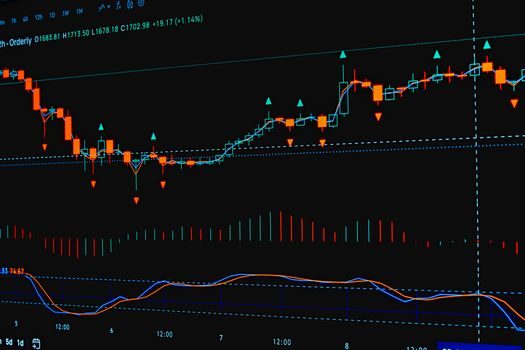
Three quantitative watchpoints deserve a buyer's dashboard. Second, VRFB project commissioning announcements above 100 MWh nameplate per quarter — the cumulative installed base globally crossed approximately 500 MWh in nameplate by end-2024 and is on a path to multi-GWh by 2027, which implies 5,000-10,000 t/year of incremental electrolyte-grade V2O5 demand. Third, automotive HSLA coil order books from major mills, where a North American market worth $1,020 B in 2026 [S3] sets a floor on chassis-grade V-N microalloy consumption even under substitution pressure.
A fourth, more idiosyncratic risk: V2O5 electrolyte-purity supply is concentrated in a small number of Chinese refiners running ion-exchange polish circuits. Any environmental permit action against a Sichuan- or Hunan-based polisher can move global electrolyte-grade pricing by 20-40% inside two months, because the swap-supply base outside China (Austria, South Africa, Brazil) is thin. Pair this with annual reserve data from CBCIE [S1] and the operating-rate feed [S2] and a 2026 procurement playbook becomes a two-indicator exercise, not a price-chasing one.
Spec-level background on the components involved: pressure transmitter, flow meter, and industrial valve.