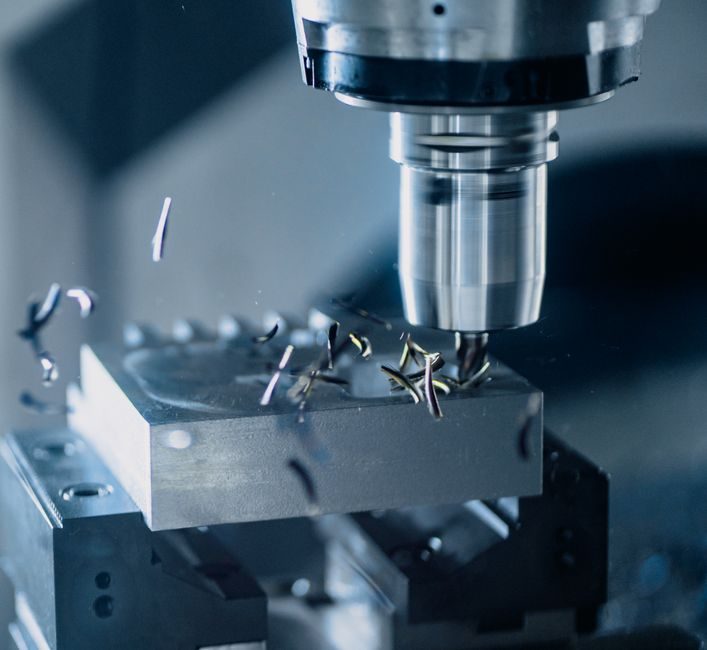
The U.S. International Trade Commission determined on 2025-08-06 that imports of tungsten shot from China materially retard the establishment of a U.S. industry, with Chair Amy Karpel and Commissioners David S. Johanson and Jason E. Kearns voting in the affirmative [S1].
The affirmative final determinations in Inv. Nos. 701-TA-732 and 731-TA-1701 compel the U.S. Department of Commerce to issue both a countervailing duty order and an antidumping duty order on Chinese tungsten shot, and the public record (USITC Publication 5655) was scheduled for release by 2025-09-17 [S1]. Tungsten — long labelled the "industrial tooth" for its melting point, density, and diamond-adjacent hardness — sits at the centre of a tooling, defence, and additive-manufacturing supply chain that is now visibly bifurcating between Chinese feedstock and non-Chinese finished forms.
Reserve Geography and the 54.3% Concentration
China held 1.9 million tonnes of tungsten ore reserves in 2013, equivalent to 54.3% of the world total, and produced 138,000 tonnes of tungsten concentrate (WO₃ 65%) that year — 84.5% of global output [S5]. That single-country concentration is the structural reason a downstream U.S. CVD/AD determination on one product (tungsten shot) has outsized signalling value across the wider carbide, wire, and alloy families.
For a 2026 buyer, the practical consequence is that APT (ammonium paratungstate), yellow tungsten oxide, tungsten carbide powder, and finished mining buttons are still overwhelmingly routed through Chinese exporters under a cumulative export-quota system [S4]. The U.S. import bill for tungsten ore and concentrate, tungsten metal powder, and tungsten carbide powder remains a live customs data series that procurement teams should track monthly rather than quarterly [S6]. The supply-node reality is also why buyers in cutting-tool, drill-bit, and radiation-shielding categories are now stress-testing non-Chinese sub-tier sources at the scheelite and APT gate, not at the finished-tool gate.
What the 2025-08-06 USITC Determination Actually Covers
The affirmative material-retardation finding applies specifically to "tungsten shot" — small spherical tungsten particles used in kinetic-energy penetrators, ballast, and radiation shielding — not to the full tungsten HS schedule [S1]. Tungsten shot is chemically the same metal family as carbide mining buttons, but its downstream specification set (sphericity, density ≥ 17.5 g/cm³, narrow particle-size distribution) is much tighter than the mill-product categories that flow through Chinese export quotas.
The vote split (3 commissioners in favour, no dissenters named) means Commerce's forthcoming orders will not be suspended by a remand, and any importer bringing Chinese-origin tungsten shot into the U.S. after the order publication date will face cash deposit rates equal to the preliminary subsidy and dumping margins [S1]. For European and Japanese OEMs that had been dual-sourcing shot from China and from secondary Western refiners, the orders make the secondary route the default — with a predictable 6-12 month price premium and longer mill lead times on spherical tungsten powder in the 0.5–6 mm range. Specifiers evaluating pressure transmitter skids or industrial valve trim that historically used Chinese-sourced tungsten-heavy alloys should treat the 2025-08-06 ruling as a leading indicator, not a one-off product action.
Tungsten Carbide Tooling: HRA 88–93 and Cobalt-Binder Reality
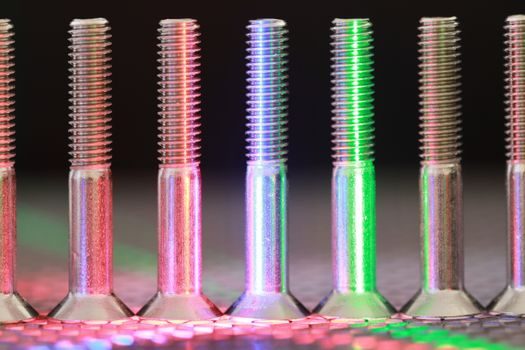
China Tungsten Industry Association (CTIA) product data lists tungsten carbide mining buttons at HRA 88–93, produced from high-purity tungsten carbide with a premium cobalt binder, and used in oil drilling, DTH (down-the-hole) hammers, and tricone bits [S2]. The HRA 88–93 band is the practical hardness window for mining-grade WC-Co; below HRA 88 the button wears rapidly in abrasive ore, above HRA 93 the binder phase is starved and transverse rupture toughness drops below the ~1.5–2.5 MPa·m½ floor that drill-bit designers need.
Cobalt content in mining buttons typically sits between 6 wt% (high wear, low impact) and 15 wt% (high impact, lower wear), with grain sizes of 1.0–3.0 µm for oil-and-gas bits and 4.0–8.0 µm for mining-grade buttons where fracture toughness is prioritised. Buyers evaluating a flow meter lined with tungsten carbide sleeves, or a PLC-controlled drilling rig, should request the manufacturer's WC grain-size distribution and Co weight percentage alongside the HRA figure, because HRA alone is a poor predictor of bit life in formations with high quartz content. For a broader cross-commodity view of how this tooling spec band sits inside the wider 2026 metals map, see the Tungsten Market 2026: Supply Nodes, Price Floor, and Sourcing Map reference.
Forms, Grades, and Where Each Spec Band Is Specified
The Chinese export-quota schedule groups tungsten into bar/rod/profile, wire, powder, carbide powder, and ferrotungsten — each with its own HS code and cumulative annual quota window [S4]. Tungsten rod and bar feed EDM electrodes and heating elements; tungsten wire (typically 0.05–0.5 mm diameter, doped with potassium aluminium silicate) feeds lamp filaments and ion-implantation equipment; tungsten carbide powder (FSSS 0.8–2.5 µm) feeds the button and insert supply chain above.
A criteria-based comparison for procurement: ammonium paratungstate (APT, ≥ 88.5% WO₃) is the standard intermediate for converting ore into powder; yellow tungsten oxide (YTO, WO₃ ≥ 99.95%) is the premium intermediate for sub-micron powder; tungsten metal powder (≥ 99.9% W, particle size 1–10 µm) is what cemented-carbide producers actually blend with carbon black to make WC. Cost runs APT < YTO < metal powder, while purity and lead time run the opposite direction. Where a servo motor or pressure sensor manufacturer quotes "tungsten-alloy" components, ask whether the underlying feedstock is APT-derived or YTO-derived — the former is adequate for counterweight and shielding blocks, the latter is what high-density kinetic parts require.
Limits, Failure Modes, and What the Data Does Not Tell You

The public USITC bulletin confirms the affirmative vote and the duty-order consequence, but the final injury margin, the cash-deposit rate, and any company-specific exclusions sit inside USITC Publication 5655 (release date 2025-09-17) [S1]. Until that publication is parsed, importers should treat the headline determination as a direction-of-travel signal, not as a complete cost model. The 2013 reserve and production shares are still the cleanest public numbers, and they are 13 years old — actual 2024–2026 share will have shifted as Vietnam, South Korea, and Australia have brought new mines and APT plants online, but the precise updated share is not in the supplied research and should not be invented here [S5].
Failure modes a process engineer should keep in mind: WC-Co buttons fail by impact fatigue (binder-pooled cracks at HRA > 93), by abrasive wear (under-bonded, HRA < 88), and by thermal cracking when coolant supply is starved in dry DTH service. Tungsten wire fails by sag and recrystallisation above ~2,500 °C if the doping bubble row is misaligned during drawing. And in any shielding or counterweight application, density alone is not the spec — machinability (drillable, tapped), CTE match to neighbouring components, and gamma attenuation per cm at 662 keV (Cs-137) are the real acceptance criteria.
Standards, Documentation, and What to Put on the PO
For mining buttons, ASTM B777 (tungsten-base heavy-metal sintered products) and ISO 513 (classification of carbide cutting materials) are the two cross-border references that recur in mill certs; for powder, GB/T 4295 (Chinese national standard for tungsten carbide powder) is the format that Chinese exporters will quote by default, and a Western buyer should request a dual-format mill cert to avoid ambiguity [S2]. For shielding blocks, ASTM B777 density classes (Class 1: 18.5 g/cm³ nominal, Class 2: 18.0 g/cm³, Class 3: 17.0 g/cm³, Class 4: 16.0 g/cm³) are the cleanest spec shorthand a procurement document can carry.
Two trackable signals for the next reporting window: (1) the U.S. Department of Commerce's publication of the CVD and AD order for Chinese tungsten shot — the duty rates and any product exclusion list are the next hard data points that will reshape U.S.-bound shot pricing; (2) the monthly cumulative export-quota usage for Chinese tungsten powder and downstream products, which customs trade data tracks at the province and city level and which will reveal whether quota tightening is being used as a parallel supply-control lever alongside the U.S. duty action [S4][S1]. Buyers who lock APT and WC powder supply before the next quota window will, in practice, have bought themselves 2-3 quarters of price-floor visibility.