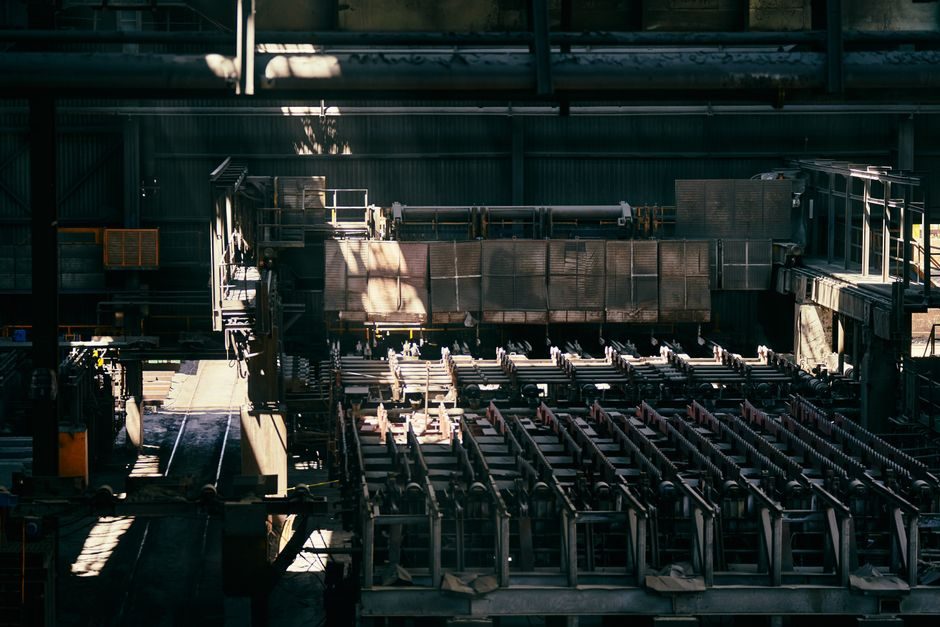
Raw material inputs — iron ore, coking coal, ferrous scrap, and ferroalloys — typically absorb the largest single share of steel conversion cost, with ore and coal historically combining for the majority of variable input spend on the integrated blast-furnace / basic-oxygen-furnace (BOF) route [S5] (2021-11).
The 2026 cost picture is shaped by three structural choices: integrated BOF vs electric-arc-furnace (EAF) route, commodity-price exposure (ore, coal, scrap, electricity, natural gas), and downstream processing depth — casting, hot-rolling, cold-rolling, galvanizing, and pipe conversion — each adding a discrete cost layer on top of the semi-finished steel input [S3].
Raw Material Layer: Ore, Coal, Scrap, and Ferroalloys
On the BOF route, the bill of materials starts with iron ore (sinter feed, pellets) and metallurgical coal charged into a coke oven and blast furnace; a typical integrated mill consumes roughly 1.6-1.7 t of iron ore and 0.6-0.8 t of coking coal per tonne of crude steel, before fluxes and alloy additions are tallied. On the EAF route, the dominant input is ferrous scrap — typically 1.05-1.15 t per tonne of liquid steel — with DRI/HBI or pig iron used to dilute residual tramp elements and balance the metallic charge [S5] (2021-11).
Ferroalloys — FeMn, FeSi, FeCr, FeMo, FeV, FeTi, FeNb — are added at the ladle furnace to hit the specified grade; silicon and manganese alone can run 5-25 kg/t depending on the target carbon steel or HSLA grade, while stainless grades pull in 10-20% Cr and 8-12% Ni in the metallic charge, which is why stainless steel carries a fundamentally different cost base than carbon steel.
Scrap pricing is the single most volatile line item for EAF mills: a $100/t swing in busheling scrap moves EAF slab cost by roughly $105-115/t at 1.10 t/t yield, before any electricity or electrode impact.
Energy and Refractories: The Hidden Variable Cost
Energy is the second-largest cost bucket after raw materials, and its share depends on the route. EAF mills spend roughly 400-500 kWh/t of electrical energy plus 2.5-4.0 kg/t of graphite electrodes, and electrode cost alone can run $25-60/t of steel at recent needle-coke prices. Integrated BOF mills burn primarily coal-derived coke and inject pulverized coal or natural gas at the blast furnace tuyeres; coke rate typically sits at 280-350 kg/t of hot metal, with coke making and BF gas systems driving the mill's internal energy balance [S5] (2021-11).
Refractories — magnesia-carbon bricks in BOF vessels and EAF sidewalls, alumina-silica and dolomite linings in ladles and tundishes — run 5-15 kg/t of crude steel; a full BOF reline is a multi-day, multi-million-dollar event, so campaign life (heats per campaign) is a key cost-of-conversion lever. Utilities such as oxygen, nitrogen, argon, compressed air, and process water scale with route and steel grade; argon alone for stainless ladle stirring can exceed $5/t.
Maintenance and labor are smaller in percentage terms but sticky: a modern 3 Mt/yr integrated mill carries a fixed-cost base of roughly $80-150/t including labor, spares, and depreciation, with EAF mini-mills running leaner at $50-90/t because of lower headcount and simpler flowsheets.
Route Comparison: BOF vs EAF on Cost, Carbon, and Spec Fit
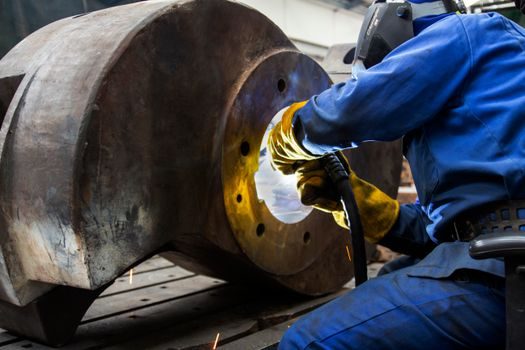
The decision between BOF and EAF is the single biggest cost-shape driver in steel manufacturing. BOF is feedstock-heavy (ore + coal) but energy-light; EAF is scrap-heavy and electricity-heavy, with capital intensity and CO₂ profile roughly half that of an integrated plant on a per-tonne basis when the grid is clean. BOF fits long, high-tonnage runs of commodity carbon steel grades; EAF fits shorter campaigns, higher scrap availability, and thinner slab / rebar / merchant product mixes. [S1]
On a delivered-cost basis, BOF hot-rolled coil typically lands within a few percent of EAF hot-rolled coil in normal scrap-ore spreads, but EAF wins outright when scrap is cheap and power is cheap, and BOF wins when scrap is tight and ore is cheap. For downstream conversion — seamless pipe, casing, drill pipe, line pipe — the input is a semi-finished billet or slab, and the cost stack adds a casting premium plus a hot-working premium for piercing, mandrel rolling, and stretch reduction [S1].
Stainless and silicon steel routes add a decarburization / argon-oxygen decarburization (AOD) step, scale breaker, annealing pickling line, and temper mill; each step adds $30-150/t of conversion cost, which is why austenitic stainless can run 3-5x the per-tonne cost of commodity hot-rolled carbon steel.
Downstream Processing: From Slab to Pipe, Plate, and Coated Coil
Once crude steel is cast — continuous slab casting for flat products, billet/bloom casting for long products — every downstream step is a cost adder. Hot rolling a 230 mm slab down to 2-25 mm strip consumes energy, work-roll wear, and water; cold rolling to 0.3-3.0 mm gauge adds another 20-50% of conversion cost and demands continuous annealing and temper passing. Galvanizing (hot-dip or electro-galvanizing) is roughly $60-120/t of conversion; tin, chrome, paint, and silicon coatings each carry their own cost band. [S1]
For pipe, tube, and structural products, the chain runs slab → reheat furnace → hot strip mill → cold forming / ERW welding (electric-resistance-welded pipe) or seamless piercing (for OCTG, boiler tube, and high-pressure service). Pipe threading, beveling, cut-and-roll grooving, pipe coating (3LPE, FBE, epoxy, cement-mortar), and shot blasting each add a discrete service line on the supplier invoice, with coating typically the largest single adder for line pipe and water pipe [S1]. Anti-corrosion coating on carbon-steel pipe typically lifts delivered cost by 15-40% depending on FBE/3LPE spec, with FBE thinner and cheaper than 3LPE.
Quality-control and certification cost — MTC EN 10204 3.1/3.2, NACE MR0175 / ISO 15156 for sour service, ASTM/ASME grade compliance, CWB and ISO 9001 audits, third-party inspection (SGS / BV / TUV) — is small per tonne but real on premium contracts, and it is one of the easiest places for a non-fabrication mill to lose money if documentation is not handled cleanly.
Capital, Labor, and Overhead: The Fixed-Cost Floor
Greenfield integrated capacity runs $600-1,200/t of annual installed capacity for an integrated BOF plant and $200-400/t for a greenfield EAF mini-mill, with debottleneck and modernization projects at a fraction of that.
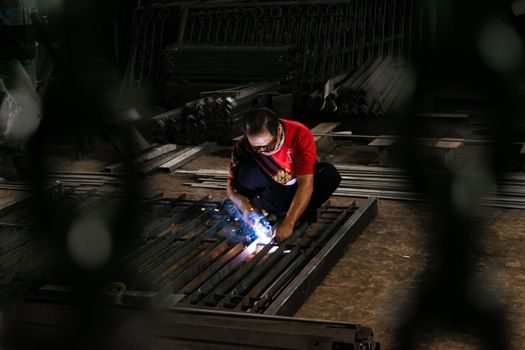
Labor is the smallest line on the variable-cost sheet in developed-market mills — typically $20-50/t — but a 24,000 ft² CWB-certified fabrication and machining facility still requires certified welders, CWI inspectors, and shift coverage, so even a small fabricator carries $1-3 M/yr of fixed payroll before any steel is cut [S4]. Logistics — trucking, rail, port drayage, and demurrage — is often 5-12% of delivered cost for pipe and structural products, and is the line item most often mis-bid by new entrants.
2026 Sourcing Signals and What to Watch
Three signals are worth tracking through the rest of 2026: the iron-ore / coking-coal / scrap spread, the BOF vs EAF utilization gap, and the downstream conversion premium for coated and tested pipe. The simulation-and-visualization consortium at Purdue Northwest has its member roster and roadmap work aimed at energy, yield, and throughput bottlenecks in the U.S. steel chain, which feeds directly into where conversion-cost reductions will show up in published mill data [S3].
For buyers, the practical move in 2026 is to spec to the lowest acceptable standard, push certification to MTC 3.1 unless the service demands 3.2, and request an itemized quote that splits raw-material surcharge, conversion, coating, and freight — that line-item structure is what lets you benchmark one mill against another apples-to-apples on the cost stack outlined above [S2]. A side-by-side read against Steel Manufacturing Quality Standards: Spec Bands, Certifications, and 2026 Sourcing helps tie the cost layers to the right grade and cert tiers.