
Pressure transmitter list prices in mid-2026 span roughly USD 150 to USD 5,000+ per unit, with the spread driven primarily by sensing element (piezoresistive vs. thin-film vs. ceramic-capacitive), accuracy class (commonly ±0.5% to ±0.075% of span), and whether the device carries single or dual hazardous-area certification such as ATEX 2014/34/EU or IECEx [S1][S2].
The market for pressure transmitter products remains fragmented between Western premium brands, Japanese mid-tier suppliers, and Chinese volume manufacturers, with Lanso-class offerings from Chinese suppliers explicitly positioned on "good cost & price" for general industrial use, while Western OEMs such as WIKA push the mbar-range envelope with dedicated low-pressure models like the A-10 [S1][S2]. For a broader overview of gauge, absolute, and differential variants see the absolute pressure transmitter and differential pressure transmitter reference pages.
What a 2026 Pressure Transmitter Costs by Tier
Entry-level compact process transmitters with a 4-20 mA output and ±0.5% reference accuracy typically land in the USD 150-350 list-price band when bought individually, falling below USD 120 per unit in OEM panel-builder volumes [S2]. Lanso offers a range of pressure transmitters, including the YS-30+DS silicon piezoresistive diaphragm pressure transmitter for fluids that are highly viscous, crystallising, solidifying or contain small grains, and describes its products as compact, high-accuracy, and suitable for remote monitoring [S2].
Mid-tier units, defined as ±0.1% accuracy with stainless-steel wetted parts, 100:1 turndown, and HART 7 or HART-IP protocol, generally range USD 500-1,200 list. Premium transmitters from brands like WIKA, Rosemount, E+H and Yokogawa carry ±0.075% (or better) accuracy, dual-output protocols (HART + Foundation Fieldbus, or HART + WirelessHART), full material traceability to NACE MR0175 for sour service, and routinely list at USD 1,500-3,500 [S1]. Specialty devices, including the WIKA A-10 with extended mbar ranges (0-100 mbar through 0-1,000 mbar) for low-pressure HVAC and cleanroom applications, list at a premium relative to standard-range equivalents because the diaphragm and bridge geometry have to be redesigned for very low spans [S1].
The Four Cost Drivers Specifiers Actually Negotiate
Hazardous-area certification is the next multiplier: a non-Ex general-purpose unit can be re-engineered with ATEX Ex ia IIC T6 Ga or IECEx Ex d IIC T6 Gb ratings for an additional USD 200-800 over base price. Finally, signal protocol drives both transmitter and infrastructure cost, since adding Foundation Fieldbus or PROFIBUS PA to a 4-20 mA+HART base requires different communication stacks and is mutually exclusive with the HART-on-analog-loop architecture in most installations [S1][S2].
When evaluating a differential pressure transmitter for flow or level service, the same four cost drivers apply but the mechanical body is more complex: dual isolator diaphragms, oil-filled capsules, and static-pressure line pressure rating up to 420 bar all add to fabrication cost, which is why DP units typically carry a 30-80% price premium over equivalent-range gauge-pressure transmitters.
Buying Criteria: Matching Spec to Application

For cleanroom, draft, or laboratory low-pressure service below 1 bar, the WIKA A-10 in extended mbar ranges (down to 0-100 mbar) covers the application without forcing a specifier into a differential-pressure cell [S1].
For hydrocarbon custody transfer, pharmaceutical SIP/CIP loops, or anywhere NACE MR0175 sour-service compliance is required, the specifier must insist on material certificates, hardness testing per NACE MR0175, and welded rather than gasketed diaphragm seals, which generally pushes the price tier up by 2x to 3x. For hazardous-area Zone 1 chemical or refinery service, the pressure transmitter needs ATEX 2014/34/EU or IECEx certification with an appropriate temperature class, and the enclosure rating (typically IP66/IP67) becomes a line item rather than an option.
Total Cost of Ownership Beyond the Sticker Price
Purchase price is roughly 40-55% of the 10-year TCO for a typical process pressure transmitter. Installation labour (impulse tubing, manifolds, brackets, conduit, and commissioning) typically adds 15-25% to first cost. Energy is a minor cost for a 4-20 mA two-wire device (typically 17-36 VDC loop supply at <1 W), but HART multidrop or wireless variants shift power and gateway costs into the network layer. [S2]
For a parallel cost reference covering a related process instrument, the Pt100 RTD price 2026 cost guide follows the same logic: accuracy tier and certification dominate, while for a flow-meter comparison the thermal mass flow meter price and cost guide 2026 details how protocol choice (HART vs. Foundation Fieldbus vs. IO-Link) reshapes infrastructure spend.
Who This Tier Structure Is For, and Who It Is Not
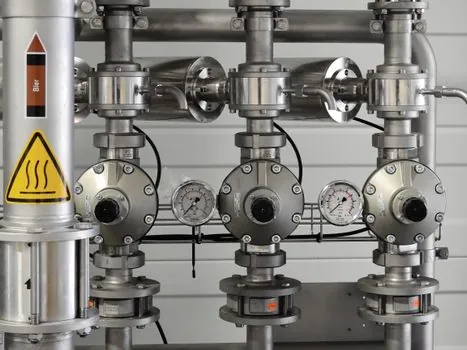
The 2026 tier structure suits mid-sized process plants, skid builders, OEM machine builders, and EPC contractors who need 10-200 units per project and can standardise on one or two model families. It is less suitable for ultra-low-volume R&D labs needing single-unit custom ranges (where stocking distributors and rental pools beat list-price buying) and for greenfield megaprojects that lock in framework agreements which typically discount list price by 25-45% in exchange for multi-year commitment [S2].
For specifiers who need to weigh a pressure-loop device against a similar cost-banded instrument, the hydrostatic level transmitter price 2026 guide is a useful parallel reference because hydrostatic level is essentially a gauge-pressure measurement of a liquid column. The oscilloscope price 2026 cost bands guide is also a useful cross-check on how the test-and-measurement segment of the supplier ecosystem prices analogous bandwidth and accuracy tiers.
Limitations, Lead Times, and Failure Modes
Three constraints consistently bite specifiers in 2026. First, lead times for premium Western-brand units with full certification paperwork routinely run 10-18 weeks, against 2-4 weeks for catalogue-grade Chinese suppliers, so projects with tight schedules will pay a premium to the Western supply chain or accept higher integration risk on volume-tier brands [S2]. Second, IP66/IP67 ratings on Chinese catalogue units vary in practice, and dielectric strength, surge immunity, and EMC conformity to IEC 61000-4-x series should be verified by third-party test report rather than datasheet claim. Third, the most common field failure mode is impulse-line plugging, water hammer, or over-range shock, which a properly sized manifold and snubber addresses at <USD 100 cost but is routinely omitted to save on instrumentation hardware.
A working trackable signal for the next sourcing cycle is the WIKA A-10 mbar-range rollout, which signals that low-pressure HVAC and cleanroom service is now a documented product line rather than a custom build [S1].