
A VFD-duty motor and an electromagnetic brake solve two different engineering problems on the same drive axis, and the spec sheets show that contrast sharply: AMER's BL70 brushless DC motor delivers 180–1,100 W (0.24–1.5 hp) at 1,500–6,000 rpm with a built-in electromagnetic brake and NeFeBo six-pole permanent-magnet construction, while Oriental Motor's VHR206C2M-5E V-series electromagnetic-brake reversible motor is a single-phase 220/230 VAC unit drawing 0.111–0.115 A at 50/60 Hz with a 60 mm frame and 6 W (1/125 HP) output [S1][S3].
The first is sized for continuous duty on a VFD-driven bus with integrated holding; the second is a low-power induction-style reversible unit for instrumentation and light conveyor indexing. Specifying one when the application calls for the other is the most common procurement error in small-frame motion axes.
Definition and Scope: What Each Component Actually Does
A VFD-duty motor is an induction or synchronous machine whose winding insulation system, bearing construction, and grounding have been designed to survive the voltage reflections, common-mode currents, and high dV/dt transitions produced by a variable-frequency drive, with typical inverter-grade insulation meeting NEMA MG 1 Part 31 or IEC 60034-25 (as commonly referenced in OEM literature). The unit itself is not a brake and cannot hold a suspended load when the drive stage is off. [S1]
An electromagnetic brake, in contrast, is a spring-engaged, electrically released holding device that is mechanically coupled to a motor shaft and uses friction linings to develop static torque. The brake pack requires a dedicated DC excitation supply (24 VDC is common, with 90 VDC packs also widely available) and a rectifier, and it produces no motion of its own. The PKP5 five-phase stepper from Oriental Motor ships as a 28–60 mm frame unit with built-in electromagnetic brake and a 0.052–2.3 Nm holding-torque envelope [S2].
Scope boundary, stated cleanly: VFD-duty = electrical survival and torque production under PWM switching; electromagnetic brake = mechanical holding and emergency stop torque on a stationary or decelerating shaft. They are downstream/upstream elements on the same axis, not substitutes.
Selection Criteria: Match the Component to the Real Load
Pick the VFD-duty motor side first, using the VFD's switching frequency, cable length, and motor frame. A 6-pole BLDC with NeFeBo magnets, 12–280 VDC supply, hall-effect position feedback, and 8.85–26.55 lb-in nominal torque as seen in the BL70 covers the 1,500–6,000 rpm continuous-duty band without encoder on simple speed loops [S1]. The decision gate is dV/dt, peak voltage at the motor terminals, and ambient thermal class, not brake torque.
Pick the electromagnetic brake side from the holding torque requirement, the response time, and the power supply. The PKP5 brake pack produces 0.052 Nm minimum and 2.3 Nm maximum holding torque across its 28–60 mm diameter range, with a basic step angle of 0.36°–0.72° [S2]. The V-series reversible brake motor delivers only 6 W (1/125 HP) of output, so it is not a substitute for a VFD-driven axis at all, it is a separate, smaller, lower-power class of product [S3].
Three concrete decision gates: (1) VFD switching frequency above 8 kHz and cable runs longer than 15 m demand a VFD-duty winding; (2) any vertical axis or load that must hold position with power removed demands an electromagnetic brake sized at 1.5×–2× the static load torque; (3) low-power reversible indexing with a 220/230 VAC supply, 60 mm frame, and 0.11 A current is the V-series territory, not the VFD-duty territory [S3].
Comparison: Three Motor/Brake Categories Lined Up on Decision Criteria
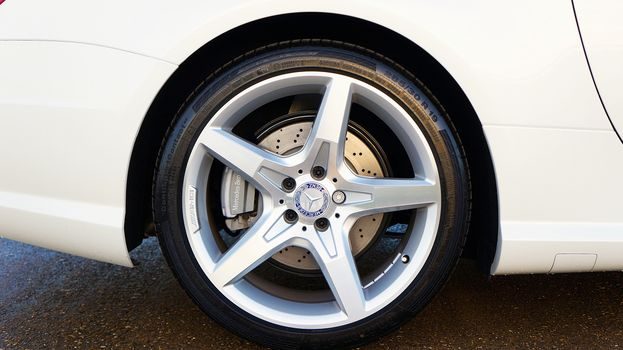
Three product archetypes seen in the 2026 catalog data, compared on the four gates that actually drive the purchase order: power, frame, brake holding torque, and supply class. [S2]
AMER BL70 brushless DC with built-in electromagnetic brake: 180–1,100 W (0.24–1.5 hp), 6-pole, 4.68"×4.68" section, 12–280 VDC, 8.85–26.55 lb-in nominal torque, 1,500–6,000 rpm, hall-effect feedback, integrated drive [S1].
Oriental Motor PKP5 five-phase stepper with built-in electromagnetic brake: 0.052–2.3 Nm holding torque, 28–60 mm frame diameter, 0.36°–0.72° basic step angle, integrated driver and encoder, DC supply [S2].
Oriental Motor VHR206C2M-5E V-series electromagnetic-brake reversible motor: 6 W (1/125 HP) output, 60 mm frame, single-phase 220/230 VAC, 0.111 A at 50 Hz / 0.115 A at 60 Hz, listed under legacy/discontinued inventory [S3].
Decision matrix, simplified: the BL70 fits VFD-driven continuous-duty axes that also need holding; the PKP5 fits open-loop or closed-loop positioning axes that need both detent and holding; the V-series fits legacy low-power reversible service where holding is required and the duty cycle is light. The V-series is not a VFD-duty machine in any modern sense, and substituting it for a 0.5 kW or larger drive would be a category error visible on day one of commissioning.
Who It Is For, and Who It Is Not For
A VFD-duty motor is for the process engineer running pumps, fans, conveyors, extruders, and machine-tool spindles through a VFD at switching frequencies from 2 kHz to 16 kHz, on cable runs up to 100 m, who needs to avoid the classic failure modes of turn-to-turn shorts, bearing fluting, and common-mode-induced ground currents. The 1,100 W upper output of the BL70 and the 6 W output of the V-series are about 180× apart, so the engineer who needs the larger machine is not even looking at the smaller catalog [S1][S3].
An electromagnetic brake is for the designer who must hold a vertical load when power fails, stop a high-inertia load within a defined deceleration distance, or index a small parts feeder. The PKP5 holding range of 0.052–2.3 Nm covers most small-format positioning axes; for large hoist or elevator service the brake class escalates to spring-engaged AC thruster units with 200 Nm and above holding, which is outside the BL70/PKP5 envelope [S2].
What each is not for: the VFD-duty motor is not for applications that need zero-speed holding without an active servo loop, and the electromagnetic brake is not for continuous dynamic braking at full running speed, where the lining energy dissipation will exceed its thermal capacity in seconds.
Limitations, Failure Modes, and the Cost of Mixing the Two
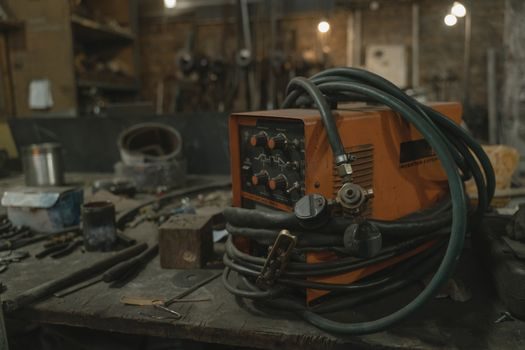
Brake lining wear is the dominant failure mode on the electromagnetic-brake side. Spring-engaged units release only when energized, so a coil burn-out means the brake drops in (engages), and a control-circuit fault during a stop means the load halts instantly with full dynamic torque transferred to the friction surface. The V-series documentation flags a 60 Hz current draw of 0.115 A at 220 VAC, which is the steady-state excitation only, not the inrush [S3].
On the VFD-duty side, the limitation is the voltage stress from the inverter. Long motor leads, ungrounded frames, and high-carrier-frequency switching create peak voltages of twice the DC bus at the motor terminals. Standard random-wound machines typically derate or fail under that stress; reinforced insulation systems specified to inverter duty are the mitigation, and the cost is real, usually a 20%–40% premium over general-purpose units of the same horsepower.
Cross-mixing risk: a VFD-driven standard (non-inverter-duty) motor will often survive a 50 m cable run at 4 kHz switching for months, then fail on the turn-to-turn insulation; a general-purpose friction brake attached to a high-inertia flywheel will burn its linings in a single emergency stop. Both are category errors, and both are detectable in the specification review, not in the field.
Sourcing, Standards, and Trackable Signals
The 2026 catalog data shows the V-series reversible electromagnetic-brake motor as a legacy/discontinued line on Oriental Motor's US online catalog, with the VHR206C2M-5E still quoteable but flagged for non-cancel/non-return once processed [S3]. Procurement teams specifying a 60 mm frame, single-phase 220/230 VAC, 6 W output, 0.11 A current reversible brake motor in 2026 should expect a long lead-time and a single-source supply path, and should qualify a second source before release.
Standards in this segment typically include NEMA MG 1 Part 31 (inverter-duty) and IEC 60034-25 (general-purpose three-phase induction motors fed by voltage-source inverters) on the motor side, with manufacturer-internal test protocols for brake response time, release voltage, and static holding torque on the brake side. The catalog data presented in S1–S3 does not list third-party certifications on the brake or VFD-duty envelopes for the units shown, so engineers sourcing for ATEX or IECEx environments should request the certification documents directly and not infer compliance from the product family name.
For motion axes where a brake resistor is already present on the VFD and a separate electromagnetic brake is also required, the two are complementary: the resistor absorbs the regenerative energy from a decelerating high-inertia load, while the mechanical brake holds the load at rest. Conflating the two, treating the brake resistor as a stopping device or the mechanical brake as an energy sink, is the most common spec error on overhead crane and vertical-conveyor retrofits.
Two trackable signals: (1) the BL70's 4.68"×4.68" cross-section and 1,100 W ceiling define the upper envelope for the BLDC-with-built-in-brake class in the 2026 catalog data, useful for benchmarking alternative integrated motor-brake offerings; (2) the V-series VHR206C2M-5E's discontinued-product flag is the early warning that future service on the 60 mm-frame 6 W reversible brake class will be spare-parts-driven, not new-build. Engineers specifying in this category should request the 2026 supply-status letter from the manufacturer before committing to a multi-year spares plan.
For related coverage, see Explosion-Proof Motor Buying Guide 2026: Zone, T-Code, Frame and Cert Match.