
An explosion-proof motor is not a single product line but a compliance decision: pick the protection concept (Ex d, Ex e, Ex n, Ex t) and the certification scheme (ATEX 2014/34/EU, IECEx, UL Class/Division, CSA) before looking at kW, rpm or frame size [S1][S2][S3].
The 2026 buying scope is dominated by IEC-based schemes in EMEA and IECEx for cross-border projects, with UL/CSA still governing North American sites; gas atmospheres use Zones 0/1/2 (or Class I Div 1/2) while combustible dust uses Zones 20/21/22 (Class II Div 1/2), and the motor nameplate must carry the matching Ex marking plus a T-code for maximum surface temperature [S2][S3].
Decoding the Marking String Before You Shortlist a Vendor
An ATEX/IECEx nameplate follows a fixed sequence — equipment group, category, atmosphere (G/D), Ex symbol, protection type, gas group, temperature class, EPL — and any quotation missing parts of that string should be rejected before price is discussed [S2][S3].
Typical 2026 examples: Kollmorgen Goldline EB carries "Ex d IIB T3 Gb" with -40 °C ≤ Ta ≤ 40 °C for Zone 1 gas, while the AKME stepper line is rated "II 3G Ex ec mc IIC T4 Gc" (Zone 2) plus "II 3D Ex tc IIIC T130 °C Dc" (Zone 22 dust) — the same vendor, two different protection concepts, two different EPLs [S2]. NORD's hazardous-area range runs 0.16–250 HP across categories 2G/3G (Zones 1/2) and 2D/3D (Zones 21/22), with all Category 2 units type-test certified by PTB or DEKRA EXAM [S3].
UL Class/Division sites still use the older but legally valid format: Kollmorgen's PMDC EP line is "Class 1, Divisions 1 & 2, Groups C & D" and "Class 2, Division 1 & 2, Groups F & G" with UL File E56538 — meaning it covers gasoline/ethanol vapors (Group C/D) plus carbon-black or grain dust (Group F/G) in a single frame [S2]. For the related explosion-proof distribution and explosion-proof junction box components on the same skid, the gas group and T-code on the motor must not exceed what the downstream enclosure is rated for.
Choosing the Protection Concept: Ex d vs Ex e vs Ex n vs Ex t
Flameproof enclosure "Ex d" contains any internal ignition and quenches the flame through machined flame paths; it is the default choice for Zone 1 / Class I Div 1 where hydrogen or acetylene (Group IIC) is absent, as shown by Kollmorgen's Goldline EB "Ex d IIB T3 Gb" rating [S2].
Increased safety "Ex e" adds creepage distances, terminal strength and restricted surface temperature; it is lighter and cheaper than Ex d but is limited to Zone 1/2 on non-flammable-start rotating machines, and is the dominant gas concept inside NORD's IE2 efficiency range [S3]. Pressurized "Ex p", non-sparking "Ex n" / Ex ec, and dust enclosure "Ex t" (per EN 60079-31) cover the remaining cases, with NORD explicitly offering "e", "d/de" and "n" ignition protection on the same motor family [S3].
The cross-reference table below lines the four common 2026 options against the decision criteria most engineers actually evaluate:
Concept — Typical zone — Gas/dust — Cost vs Ex d — Notes: Ex d — Zone 1 / Div 1 — Gas — Baseline — Heaviest, requires flame-path machining; Ex e — Zone 1/2 — Gas — ~10–20% lower — Lighter, IP55/IP65 typical, no flame path; Ex n / Ex ec — Zone 2 — Gas — Lowest for gas — Energy-limited, restricted T-code; Ex t (tD) — Zones 21/22 — Dust — Matched to dust group — EN 60079-31 governs [S2][S3].
Motor Family, Torque and Speed: Matching the Mechanical Load
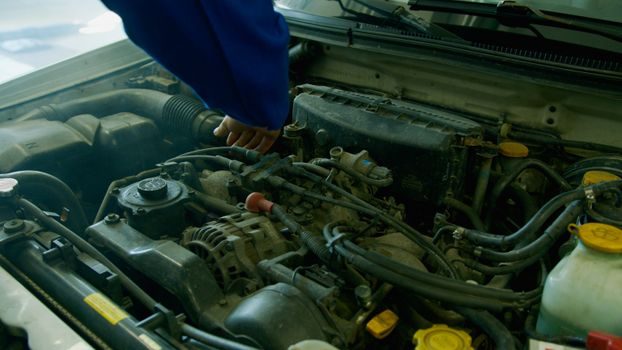
Selecting the protection concept is only half the job; the second half is matching motor technology to the load profile, and explosion-proof lines are not limited to induction — Kollmorgen ships five distinct technologies in 2026 from the same hazardous-location catalog [S2].
Servo / brushless covers variable speed and dynamic loads, with the Goldline EB/EBH range at 0.84–158 Nm and the AKME servo at 0.37–51.75 Nm, both requiring a matched drive/amplifier; permanent-magnet DC (PMDC EP) runs fixed speed, constant load at 1750 rpm with 1.02–3.05 Nm and runs directly off 12/24/90/180 VDC without a drive; stepper MX covers 1.27–9.82 Nm up to 3000 rpm; and AC synchronous X supplies 1.77–10.59 Nm at 60/72 rpm for slow-speed conveyor or indexing duty [S2]. Frame sizes for these hazardous-location servos span 4.49 in square up to NEMA 66, and AC line voltages reach 480 VAC [S2].
For pump, agitator and lifting-gear duty the dominant choice remains three-phase induction, and NORD's ATEX/IECEx induction portfolio covers 0.16–40 HP (compact frame) up to 250 HP (large frame) in IE2 efficiency class [S3]. A 380 V direct-on-line version of the Chinese-market peristaltic pump FG601S-A3YZ35 (LEAD FLUID) runs the explosion-proof AC driver at 570 rpm without a frequency converter, while the VFD-controlled version offers 0.1 Hz speed resolution and IP65 enclosure [S5] — useful as a reference for IP rating, voltage tolerance and decoupling driver from pump head.
Temperature Code, Ambient Range and Dust Layering
Surface temperature — not winding temperature — is what ignites a gas cloud or a dust layer, and the T-code on the nameplate is the single number a process safety engineer will check first [S2][S3].
Common 2026 T-codes: T3 limits surface to 200 °C, T4 to 135 °C, T5 to 100 °C, T6 to 85 °C; dust markings use a Celsius figure directly, as in the AKME "T130 °C" Zone 22 marking [S2]. If the surrounding dust can build up to a 5 mm layer, the motor's surface limit must be reduced accordingly — a T4 motor in a gypsum or grain-handling area may no longer be acceptable, and the supplier's dust certificate must explicitly cover the assumed layer thickness [S2].
Ambient range is the second often-overlooked value: Kollmorgen's Goldline EB is certified -40 °C ≤ Ta ≤ 40 °C, meaning a northern-Russian or winter-turbine application cannot be served by a standard tropical-rated motor, and the datasheet's "X" suffix (as in "IECEx ETL 12.0006X") signals a special condition of use that the installer must respect [S2].
Certification Schemes and Cross-Border Project Sourcing
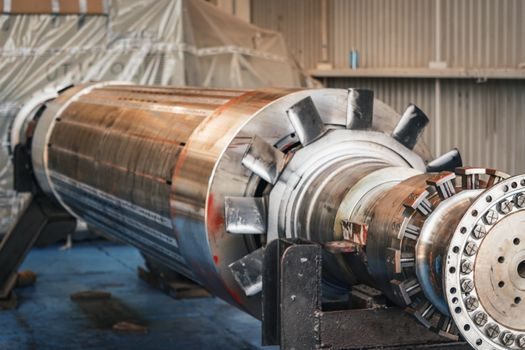
ATEX 2014/34/EU is mandatory for any equipment placed on the EU market for use in potentially explosive atmospheres, and NORD's hazardous-area motors explicitly cite this directive plus EN 60079-31 for dust enclosures [S3].
IECEx is the scheme used for non-EU countries that adopt the IEC 60079 series (Australia, parts of the Middle East, South-East Asia, and increasingly Africa); Kollmorgen's Goldline EB carries both ATEX (ITS12ATEX17548X) and IECEx (ETL 12.0006X) on the same motor, so the same SKU can ship to a Rotterdam refinery and a Perth LNG plant without re-certification [S2]. For North America the choice is UL (US) and/or CSA (Canada), with UL Class I Div 1 Groups C&D being the gasoline/ethanol baseline and Groups A/B reserved for hydrogen/acetylene service on specially certified frames [S2].
For a plant that runs both gas and dust zones — a common case in pharmaceutical, food and grain handling — specify a combined "G + D" marking on the same nameplate; NORD explicitly offers this combined certification, and the explosion-proof electrical and explosion-proof light accessories on the same skid should be ordered with the same dual marking to avoid a mix-up at the junction box.
Common Sourcing Mistakes and Trackable 2026 Signals
The three mistakes that recur on 2026 RFQs are: (1) quoting kW without T-code, gas group and EPL; (2) specifying "explosion-proof" as a single adjective when the real ask is "Ex ec Zone 2 IIC T4"; and (3) ordering an IP55 standard motor for a Zone 21 dust area where EN 60079-31 demands Ex tD with a tested dust ingress path [S2][S3].
Trackable signals to watch over the next two quarters: ABB continues to bundle hazardous-area motors into its Motors & Generators line covering "explosive atmospheres" applications, with its product page updated 2026-06-10 [S1]; NORD's ATEX dust line cites EN 60079-31 and PTB/DEKRA EXAM type testing, with the page stamped 2026-06-30 [S3]; Kollmorgen's hazardous-location catalog (ATEX, IECEx, UL, CSA across five motor technologies) was refreshed 2026-06-09 [S2]. A practical next node is to request the ATEX/IECEx "X"-suffix special conditions in writing, and to confirm the dust-layer assumption (5 mm vs 12.5 mm) before signing the PO. The companion selection logic for an electromagnetic brake on the same shaft follows the same EPL and T-code envelope, and pairing a hazardous-area motor with an industrial explosion-proof button station at the local isolator keeps the certification chain unbroken.