Virtual commissioning can reduce commissioning time by 40–75% with virtual testing [S8].
The saving applies to software validation, control-logic debugging and production ramp-up before physical commissioning; it is not a guaranteed reduction in the full project schedule [S1][S5].
What Virtual Commissioning Changes
Virtual commissioning connects actual PLC programs, HMI logic, robot programs and safety logic to a behaving model of the physical machine before installation [S3]. Engineers can then exercise sequence logic, interlocks, fault handling and mode transitions without waiting for completed hardware [S3][S5].
For a PLC-controlled cell, this moves controls validation away from the production outage window and into an engineering environment that can run in parallel with mechanical construction [S1][S5]. Siemens describes the objective as testing actual control behavior before production-floor deployment, allowing corrective work before hardware commissioning [S2].
Simulation is not merely a 3D visualization or CAD walkthrough: the controller executes against simulated inputs, outputs, timings and fault conditions, making it a live software-integration activity [S3]. The model may include real hardware in the loop, such as a PLC connected to the simulation model for signal testing [S2].
Measured Savings Range
Virtual testing is associated with a 40–75% reduction in commissioning time and a 70% commissioning-related improvement metric [S8]. One May 2026 example reports an 80% startup reduction, comparing an eight-week startup with a four-day startup [S3].
The eight-week and four-day figures describe a specific project configuration, not a universal benchmark [S3]. Project savings depend on simulation fidelity, mechanical completeness, PLC code maturity, equipment behavior, test coverage and the amount of physical prove-out still required [S1][S5].
Where the Startup Hours Are Saved
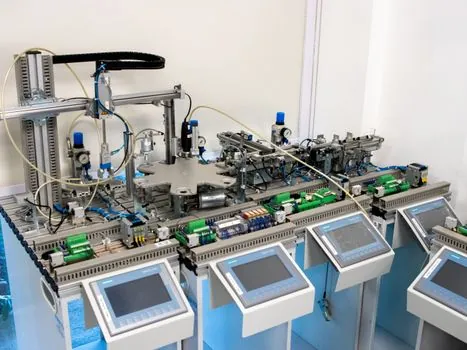
Virtual commissioning removes avoidable software debug from the physical commissioning phase: PLC sequence errors, robot reach limitations, motion collisions, conveyor timing conflicts and HMI issues can be found before deployment [S1][S2]. Siemens specifically identifies reach, cycle time and contingency-event tests as checks performed before the control program is downloaded to physical equipment [S2].
The schedule gain is not one uninterrupted block. Engineers can test basic sequencing, robot motion, equipment interactions, recovery routines and safety responses before arrival, then use the outage window for physical I/O verification, calibration, process tuning and residual faults [S1][S3]. This distinction matters because some validation cannot be completed without the installed machine [S5].
One industrial workflow cited an eight-week startup and a four-day startup after testing the automation system in simulation before installation [S3]. A separate automation reference gives a less dramatic but broader planning figure of 40–75% commissioning-time reduction [S8]. The defensible procurement case is therefore based on the share of work shifted earlier, not on a promised 80% saving for every project.
PLC, Robotics and Factory Automation
For robot cells, simulation can validate actual control software, including reach limits, cycle time and event-based contingency behavior, before the robot reaches the floor [S2]. Virtual debugging then addresses PLC code and automation logic without repeatedly stopping physical production [S2].
For mixed factory lines, the digital model can combine robots, conveyors, equipment and structures in one interactive environment and support multiple robots in a shared work area [S2]. This broadens validation beyond collision-free paths: it tests how upstream equipment, downstream buffers, interlocks and timing interact under operating scenarios [S1].
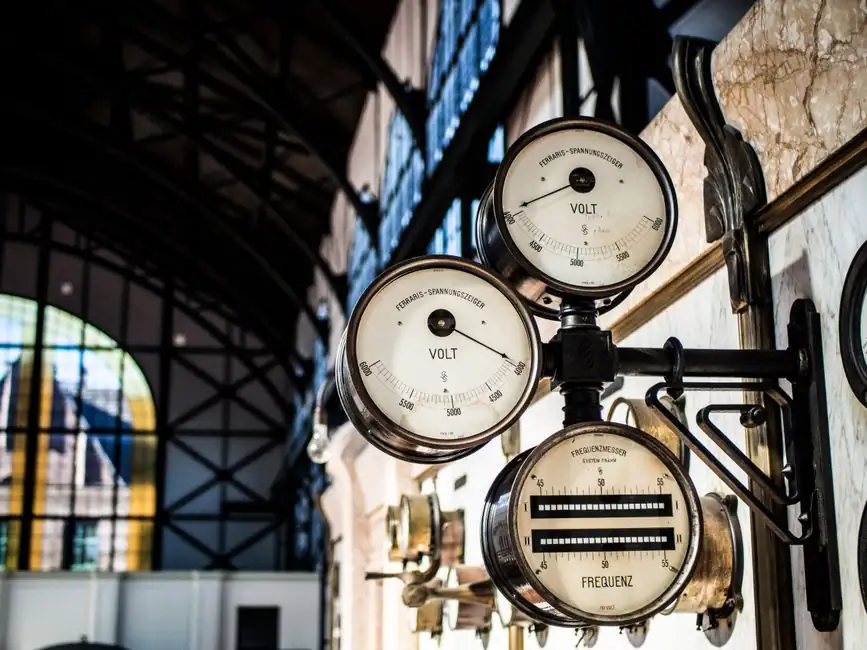
The time relay, counter and meter, emergency-stop function and other controls can be represented as simulated signals when the model captures their timing and state behavior. Virtual testing does not replace the need to verify actual field devices, wiring, sensors and actuators during physical commissioning [S3][S5].
What It Is For and What It Is Not
Virtual commissioning is suited to greenfield automation projects with substantial PLC logic, robot motion, conveyor sequencing and equipment interaction, especially when the production outage window is short [S1][S3]. It is also useful for testing changes before deployment and for continuing engineering work after startup through an updated digital model [S1].
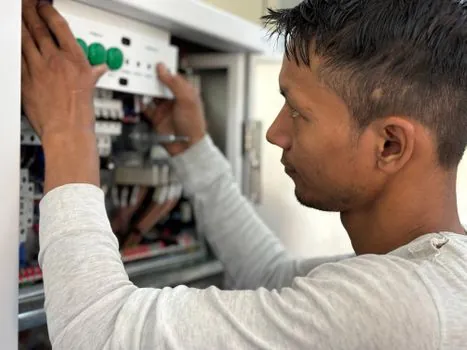
It is not a substitute for factory acceptance testing, physical I/O checks, mechanical alignment, live process tuning or site-specific safety validation [S5]. A high-fidelity model can expose different behavior from the installed asset, particularly where sensor characteristics, material handling, wear, network timing or environmental effects are underrepresented [S1].
Small projects with simple controls may gain less from the setup burden than complex systems with many interacting devices and failure states. The business case is strongest when debugging on-site would consume a constrained outage, repeated logic changes are expected, or the same cell must be replicated across multiple production lines [S1].
Simulation Compared With Digital Twin
Virtual commissioning focuses on validating planned operation and control behavior before startup, whereas a digital twin can continue to represent and improve the system after physical commissioning begins [S1]. The pre-startup model is primarily a commissioning environment; the lifecycle digital twin adds an operational feedback loop for optimization, predictive maintenance and future process changes [S1].
The main options therefore differ by timing, purpose and remaining physical work. A virtual-commissioning model concentrates on PLC code, robot programs and machine interactions before installation, while an offline programming model supports robot trajectory development and virtual debugging [S2]. A digital twin extends the engineering representation into operation for continued improvement [S1].
Decision criteria should therefore separate four questions: How much commissioning time must move before startup, how much live equipment behavior must remain in the model, whether the model must continue receiving operational data, and how much physical acceptance testing remains. A combined virtual-commissioning and digital-twin approach can cover both pre-startup validation and post-startup engineering, but it requires more discipline than a static 3D model [S1][S2].
Limits, Failures and Acceptance Criteria
A virtual model is only as useful as its timing, geometry, I/O behavior and fault representation. Common issues identified during testing include robot reach limitations, collisions, sequencing errors, PLC logic defects, throughput bottlenecks, timing conflicts, operator-access concerns and HMI faults [S1]. A clean simulation run that omits one of these behaviors does not prove startup readiness.
Control-engineering acceptance should require traceable coverage of operating sequences, sensor and actuator states, recovery paths, interlocks and cycle-time targets [S2][S3]. A safety PLC or safety relay still requires the applicable site-specific safety validation and proof testing, because simulation checks modeled behavior rather than every physical failure mode [S3].
Commissioning can consume 25% of total project duration, so removing software uncertainty can materially reduce the critical path [S5]. Nevertheless, planners should exclude non-commissioning delays such as late mechanical drawings, incomplete procurement and unavailable acceptance resources from the claimed savings. The verifiable schedule benefit is measured from virtual test completion to first qualified production, not from an arbitrary percentage applied to the original plan [S1][S5].
Building a Measurable Business Case
A defensible estimate starts by counting the baseline on-site hours for PLC debugging, I/O verification, robot rework, conveyor sequencing fixes and HMI correction. The 40–75% reduction range then provides a scenario bound, while the eight-week-to-four-day case provides a separate high-conversion example [S8][S3].
Baseline data should include the number of integration faults, average engineer hours per fault, production loss per outage hour and repeated trips between digital and physical testing [S1][S3]. Siemens links the approach to lower commissioning costs by resolving control logic, safety interlock and PLC-code defects while they remain easier to correct [S2].
Track two signals after implementation: the elapsed time from site arrival to first qualified production and the number of defects found physically that were not represented in the simulation [S1]. For deeper fault analysis, see Can Virtual Commissioning Catch Safety Logic Errors Before Startup?.
The strongest near-term decision signal is a measured reduction in on-site software debug hours without a corresponding rise in late mechanical defects, safety findings or physical acceptance-test failures.