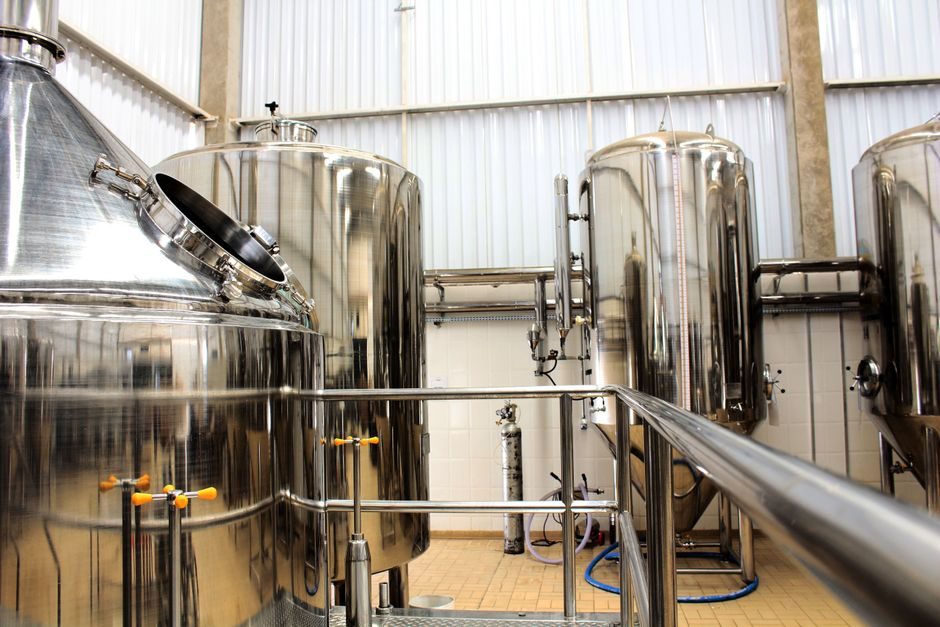
WFE revenue is on track to add USD 34.7 billion between 2024 and 2029 at a 6.2% CAGR, with 2024-2025 YoY growth printed at 5.8% in Technavio's segment tracking [S1]. Yole's 2024 baseline places the 2024 WFE market at USD 108.1 billion, with the 2024-2029 CAGR revised to 4.3% and a 2029 endpoint of USD 133.7 billion [S5].
Service and support revenue — spares, preventive maintenance, predictive maintenance contracts — is modeled at USD 23.5 billion in 2024, growing 6% year-on-year and reaching USD 27.6 billion by 2029 at a 3.3% CAGR [S5]. Allied Market Research structures the 2026 outlook by node size (7 nm and below through 65 nm and above), fabrication process (FEOL/BEOL), and end-user (Foundry, Memory, IDM) [S2].
Node-Size Segmentation: Where the Spend Concentrates
Foundry, memory, and IDM customers split the 2026 WFE opportunity, with advanced nodes capturing the largest capital share [S2]. The 7 nm and below, 10 nm, and 14 nm brackets represent the bulk of FEOL tool demand; 22 nm through 65 nm cover mature-node expansions still driven by automotive, industrial, and analog IC demand [S2].
Advanced logic, NAND, and DRAM each pull distinct WFE mixes: deposition tools for 3D NAND word-line stacks, etch tools for high-aspect-ratio capacitor and gate-all-around transistor structures, and lithography — DUV immersion and EUV — for sub-7 nm pitch scaling [S1]. Yole's data shows deposition WFE alone accounts for roughly 25% of total WFE revenue, forecast to return to 2022 peak levels by 2026 [S5].
Deposition, Etch, and Lithography: The 2026 Cost Mix
Deposition WFE is expected to grow 0.9% YoY in 2024, hit the 25% revenue share mark, and rebound to 2022 levels by 2026 as 3D NAND layer counts and gate-all-around logic ramps resume tool purchases [S5]. Etch and clean WFE (dry and wet combined) was depressed in 2023 by NAND capex compression, but a 2024-2025 recovery is implicit in Yole's 4.3% multi-year CAGR [S5].
Lithography, dominated by DUV immersion with EUV inserted at the 7 nm and below bracket, sits inside the 25% deposition share as a separate revenue line; ASML, Nikon, and Canon split the scanner installed base, with EUV remaining single-sourced to ASML [S2]. Technavio's segmentation also names automatic layer deposition and chemical vapor deposition as explicit technology buckets, reflecting the deposition rebound narrative [S1]. For a deeper look at the scanner segment economics, the parallel lithography equipment 2026 sizing and segment outlook tracks the same demand cycle.
Supply Chain Pressure: 300mm Lead Times and Capacity Planning
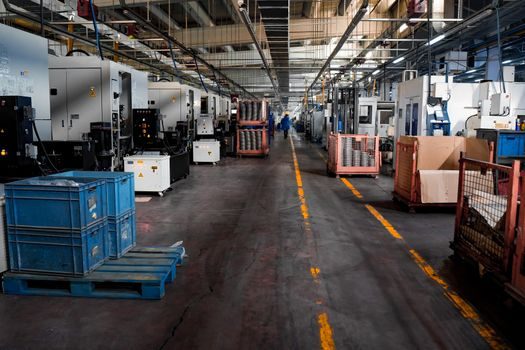
300 mm equipment lead times have stretched from the historical 3-6 month band into multi-quarter territory as chip demand and greenfield fab builds pulled forward orders [S3]. Photomask tools, raw wafer supply, and 200 mm tool aftermarket channels all show congestion, with 200 mm equipment already short for several years before the 300 mm squeeze layered on top [S3].
Wafer tracking, capacity planning, and predictive maintenance have moved from back-office functions to first-line cost levers as fabs optimize tool uptime to absorb lead-time risk [S1]. Spare parts management, preventive maintenance cycles, and air filtration / particle control in cleanrooms are now direct inputs to cost-of-ownership and yield optimization calculations [S1]. The downstream pressure also cascades into smart packaging machinery procurement, where BEOL tool decisions lock in automation stack requirements for the 2026-2027 build window.
OEM Map: Who Builds the 2026 Installed Base
Allied Market Research's vendor list for the 2026 WFE forecast includes Applied Materials, ASML, Lam Research, Tokyo Electron, KLA-Tencor, Dainippon Screen, Hitachi Kokusai Electronic, Nikon, TSMC (as both buyer and reference customer), and Motorola Solutions [S2]. TSMC and Samsung foundries, alongside Intel's IDM roadmap, anchor the demand pull for advanced-node tools through 2026 [S2].
On the materials and substrate side, epitaxial wafer and wafer bonding suppliers feed FEOL tool chains; defect density, wafer thickness, and wafer diameter specifications are direct inputs to tool qualification and cost-of-ownership models [S1]. A more granular read on the deposition, etch, and litho supplier split is available through the lithography equipment 2026 sizing and spec-driven outlook companion piece.
Standards, Process Control, and Yield Discipline

Process control instrumentation — pressure transmitter arrays on gas delivery lines, flow meter networks on precursor and slurry distribution, and industrial valve manifolds on vacuum and abatement — has become a capex line item as fabs chase single-digit ppm defectivity targets. Yield optimization, defect density tracking, and performance metrics are flagged as integral to cost-of-ownership by the WFE market models [S1].
Smart manufacturing and factory automation are reshaping how fabs deploy real-time data analytics and predictive maintenance across tool fleets [S1]. Power consumption, wafer lifetime, and cleanroom particle counts are now instrumented variables feeding the same cost optimization loops; air filtration and particle control investments scale with the node shrink [S1]. For fabs retrofitting older cleanrooms, the spec map parallels a pressure vessel selection exercise — code fit, certification, and TCO dominate the buy decision.
Constraints and Failure Modes Buyers Should Price In
High tool cost remains the single largest barrier to WFE market participation; the USD 34.7 billion incremental opportunity through 2029 is concentrated at vendors able to absorb multi-year R&D and supply-chain commitments [S1]. Specific raw materials — high-purity polysilicon, photomask blanks, EUV pellicles — remain a structural bottleneck; the WFE market will not scale linearly with end-chip demand [S2].
200 mm tool aftermarket supply is structurally tight and not expected to normalize before 2026-2027 even with new tool builds [S3]. Multi-quarter lead times for 300 mm tools mean fabs must order 12-18 months ahead of wafer-out, locking capex decisions and exposing projects to demand-cycle whiplash [S3]. For buyers balancing fab build against process plant retrofits, the pressure vessel price 2026 certification and TCO math applies the same pre-order discipline.
Track these two indicators through year-end 2026: Yole's quarterly WFE revenue mix between deposition, etch, and litho — deposition share holding above 25% confirms the 3D NAND and gate-all-around ramps are still funding the cycle [S5]; and 300 mm tool lead-time data points published by SEMI and major OEMs — any return toward the 3-6 month historical band signals the supply chain has finally caught up with the 2024-2025 demand pull [S3].
Component reference pages worth checking: anti static equipment.