
The 2026 smart meter vendor field consolidates around nine spec-credible names spanning telecom-grade AMI 2.0 platforms and metering module suppliers, with Huawei, Landis+Gyr, Itron, ZTE and Ningbo Sanxing as the dominant China-side AMI 2.0 system integrators [S5].
Outside China, the metering stack side is led by Sagemcom, EDMI, Hexing, Holley and Wasion, supplying the DLMS/COSEM, IDIS Package 2 and G3-PLC modules that ride on top of those AMI backbones [S5]. A 21,645-listing catalog of wearables on Made-in-China's Consumer Electronics category illustrates the volume of adjacent IoT hardware competing for the same low-power RF and PLC silicon, which directly affects smart meter module lead times [S3].
How the 2026 Vendor Map Is Structured: AMI Backbone vs Meter Module
The 2026 smart meter ecosystem has crystallized into two distinct tiers: AMI 2.0 communication backbone vendors (Huawei, Landis+Gyr, Itron, ZTE, Ningbo Sanxing) and meter-side module manufacturers (Sagemcom, EDMI, Hexing, Holley, Wasion) [S5]. Utilities specifying new deployments in 2026 typically buy the AMI radio, DCU and head-end software from the first group, then issue a separate RFQ for the smart meter enclosure and metrology board to the second.
This split exists because backbone vendors optimise for telecom-grade carrier networks — RF mesh, LTE-M, NB-IoT, G3-PLC and Hybrid PLC/RF — while module vendors optimise for IEC 62053-22 active-energy accuracy class 0.2S/0.5S/1.0 metrology and DLMS/COSEM object modelling [S5]. Mixing the two is the norm; replacing the meter while keeping the AMI is the more common 2026 upgrade path for European DSO retrofits.
Selection Criteria: Protocol, Accuracy Class, and Dual-Utility Stacks
Selection in 2026 is dominated by three hard criteria: communication protocol stack, IEC 62053-22 accuracy class, and dual-utility multi-function board integration (electricity + water + gas on one register) [S5]. Utilities running European DSOs usually mandate IDIS Package 2 interoperability on the meter side, with DLMS/COSEM as the application layer, and G3-PLC or RF mesh on the AMI side; this is the configuration where Hexing, Holley and Wasion hold the largest installed base across Southeast Asia, the Middle East and Africa.
North American IOUs typically specify Landis+Gyr or Itron AMI 2.0 RF mesh with meters rated to ANSI C12.20 class 0.2, whereas Chinese State Grid tenders — the single largest single buyer in 2026 — continue to favour Huawei's HPLC (high-speed power line communication) backbone paired with Ningbo Sanxing or Wasion metrology [S5]. When the procurement scope includes gas or water metering on the same register, the meter module decision must explicitly cover a clamp meter-grade test profile and a pulse-output or M-Bus interface on the meter base.
Criteria-Based Comparison: Top 2026 Smart Meter Vendors
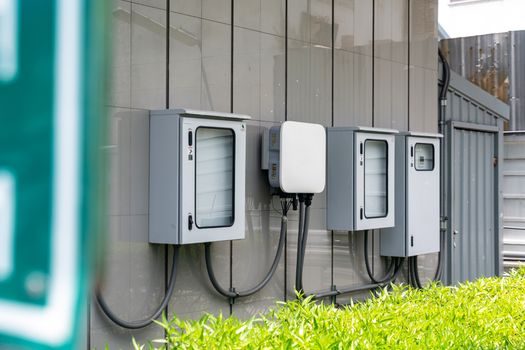
Lining up the nine recurring 2026 names against the three core criteria gives utilities a working shortlist without resorting to marketing claims [S5]:
- Huawei: AMI 2.0 backbone (HPLC + RF mesh), no first-party IEC 62053-22 meter module, dominant in China State Grid; pairs with Ningbo Sanxing and Wasion for the metrology tier.
- Landis+Gyr: RF mesh AMI backbone, IEC 62053-22 class 0.2S/0.5S meters, IDIS Package 2 certified; strong in EU DSO and US IOU markets.
- Itron: RF mesh and LTE-M AMI, ANSI C12.20 class 0.2 meters, OpenWay Riva portfolio; North American and French DSO stronghold.
- ZTE: Cellular NB-IoT/LTE-M AMI backbone, limited direct meter module line; pairs with Hexing and Holley.
- Ningbo Sanxing: Meter module vendor, G3-PLC and RF mesh stacks, IEC 62053-22 class 0.5S/1.0, large State Grid share.
- Sagemcom, EDMI, Hexing, Holley, Wasion: Meter module vendors, all DLMS/COSEM and IDIS Package 2 capable, IEC 62053-22 class 0.5S/1.0 typical, with G3-PLC and RF mesh options; geographic mix covers EU, APAC, MEA, LatAm [S5].
Who This Vendor Map Is For — and Where It Falls Short
This map is for utility procurement engineers, metering project managers at DSOs, and OEM system integrators who need a defensible 2026 shortlist before issuing a tender [S5]. It is not a substitute for a formal homologation review: IDIS Package 2 certification status, ANSI C12.20 conformance certificates, and G3-PLC interoperability test reports must be requested from the named vendor on a per-tender basis, because certification lists are updated quarterly and the counter meter variants are not always covered.
It also does not cover C&I (commercial and industrial) three-phase CT/PT-operated meters above 100 A — for those loads the 2026 shortlist typically adds Siemens, Schneider Electric and ABB, which are not in the recurring 2026 residential/small-commercial AMI module ranking [S5]. Likewise, lab-grade reference meters and conductivity meter-style water-quality probes are out of scope; they sit in a different IEC 60770 / ISO 7888 supply chain entirely.
Real Use Cases: Where Each Tier Wins in 2026
China State Grid's 2026 residential rollouts — the largest single smart meter tender in the world — run on Huawei HPLC AMI with Ningbo Sanxing and Wasion metrology modules, typically 100 A class 1.0 single-phase meters with DLMS/COSEM and bidirectional measurement to handle rooftop PV reverse power flow [S5]. Enel and Iberdrola-style EU DSO retrofits in 2026 overwhelmingly specify Landis+Gyr or Itron AMI 2.0 RF mesh with Sagemcom or EDMI meters, usually class 0.5S three-phase with IDIS Package 2 certification for plug-and-play replacement.
MEA (Middle East and Africa) tenders — Saudi Electricity, DEWA, Kenya Power and similar — still favour Holley and Hexing meter modules paired with ZTE or Huawei cellular AMI, mostly G3-PLC or NB-IoT, class 1.0 single-phase. Japanese smart utilities software stacks in 2026 explicitly list integration with "smart meters, revenue-grade meters, PV, storage batteries, EV charging stations" as out-of-the-box endpoints, which favours meters with open DLMS/COSEM object models and a documented IEC 62056-21 optical port [S2].
Limitations, Constraints, and Failure Modes to Plan Around
Three failure modes dominate 2026 field returns: PLC coupling degradation on low-voltage feeders longer than 250 m without repeaters, accuracy drift on class 1.0 meters that run continuously above 100 A (the smart valve positioner comparison is informative — both product families depend on stable auxiliary power), and firmware update downtime on RF mesh when a DCU drops off the backhaul [S5]. Specifying dual-radio meters (RF mesh + cellular fallback) is now standard for new AMI 2.0 builds to mitigate DCU loss.
SourceForge's 2026 Japan smart utilities review notes that outage and fault response SLAs are increasingly tied to revenue-grade meter data plus weather and SCADA feeds, meaning the meter module must expose DLMS/COSEM event logs over a documented API, not just push passive register reads [S2]. Vendors that cannot provide an event-log object model on a published interface should be excluded at the RFQ stage.
Sourcing Standards and Next Signals to Track

All 2026 procurement specs in this space should anchor on IEC 62053-22 (active energy accuracy), IEC 62056 (DLMS/COSEM object model and data exchange), and IDIS Package 2 or ANSI C12.20 for regional interoperability; G3-PLC and RF mesh conformance is per the relevant ITU-T G.990x or Wi-SUN profiles [S5]. For the AMI 2.0 backbone, LTE-M and NB-IoT conformance per 3GPP Release 14+ is the minimum, with HPLC mandatory for China-side tenders.
Two trackable 2026 signals: (1) State Grid's next round of HPLC + bidirectional PV meter RFQs, which will set the price band for the rest of the year, and (2) the next IDIS Package 2 certification batch, which is the gating event for any EU DSO meter swap. Procurement teams should also watch the meter-to-cash software rankings updated by SourceForge in 2026, because head-end changes typically force a meter module firmware revalidation cycle [S4].
This topic is covered further in Tower Crane Types and Classifications: A 2026 Spec Map.