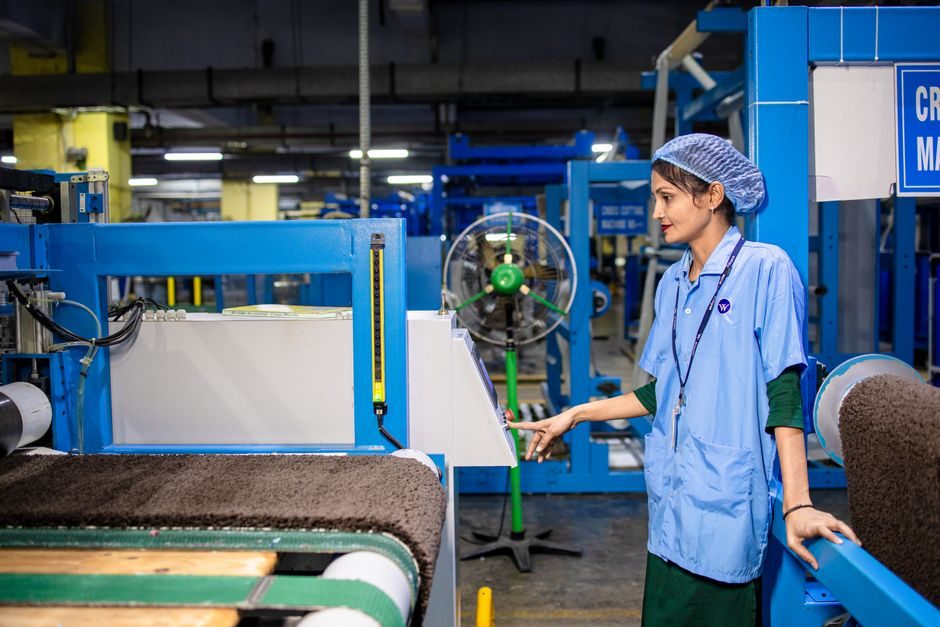
Sino-Pack 2027, scheduled for 3-6 March 2027 at Area B of the China Import and Export Fair Complex in Guangzhou, is organised around an explicit "Smart Packaging Total Solution" headline, grouping automated packaging production lines, integrated lines, and packaging industrial robots (palletisers, transporters, sorters) under one floor plan [S3].
That hall taxonomy mirrors what Chinese end-of-line (EOL) builders such as Ruipuhua (operating since 2004) and Newidea Pack (18 years on the market, exports to 80+ countries, 500+ customers) already ship as standard: flow wrappers (horizontal form-fill-seal), filling, sealing, labelling, coding, capping, wrapping, bundling, palletising modules configurable as fully automatic or semi-automatic lines for food, chemical, baking and hardware lines [S1][S5].
What "smart" means in a 2026 packaging line
A modern smart packaging line is not a PLC with a touchscreen bolted onto a VFFS; it is a layered stack where each module exposes structured data, status, alarms, and recipe control over a common fieldbus so the line can be re-tasked in under 10 minutes [S1][S3].
The four functional pillars consistently shown by Asian EOL builders in 2026 are: (1) primary packaging — HFFS flow wrappers, VFFS, form-fill-seal, aseptic and vacuum packaging machines; (2) secondary packaging — cartoners, case packers, wraparound, shrink, spiral, skin pack and box-filling units; (3) tertiary packaging — palletisers, strappers, stretch wrappers, conveying and sorting; (4) coding, marking and inspection — small/large/Hi-Res/TIJ inkjet, laser marking, thermal transfer overprinters, RFID, and machine-vision rejection [S3].
Chinese process-engineering literature defines packaging automation through four discrete technical layers: (1) automatic metering, conveying and finished-goods output of packaging materials, containers and products; (2) automatic execution of process sequences plus self-regulation and fault handling of the actuators; (3) closed-loop control of process parameters (position, dimension, weight, count, speed, state, behaviour); (4) automatic quality inspection and rejection of non-conforming packs [S6]. A line that delivers all four layers is what Sino-Pack 2027 markets as a Smart Packaging Total Solution [S3].
Selection criteria: which packaging line to specify
Buyers should anchor the specification on the package format, the product's contact surface, and the throughput target, then push the OEM on three engineering questions: changeover time, data exposure, and what runs offline versus at the cell [S1][S4].
Alligator Automation, a dedicated EOL packager operating since 2008, positions its 2026 portfolio around the "maximise productivity and competitiveness" outcome — meaning its differentiation is sold on OEE tooling and changeover logic rather than on any single mechanical hardware SKU [S4]. Ruipuhua's flow-wrapper line instead is sold on the mechanical capability: HFFS over a wide product range from bread, cake and biscuits to noodles and vegetables, available as standalone or integrated into a complete packaging line [S1].
Newidea Pack's published footprint (18 years in the trade, 500+ customers, 80+ export countries) gives a useful reference benchmark when validating any Chinese EOL supplier: an experienced EOL builder should be able to document reference lines in at least three of the four pillars above (primary, secondary, tertiary, coding) and supply FAT videos per line reference [S5]. Buyers that skip that documentation step typically discover, during SAT, that the "automatic" line they bought is in fact a sequence of semi-automatic islands loosely tied by a conveyor.
Who the smart-line is FOR — and who it is NOT for
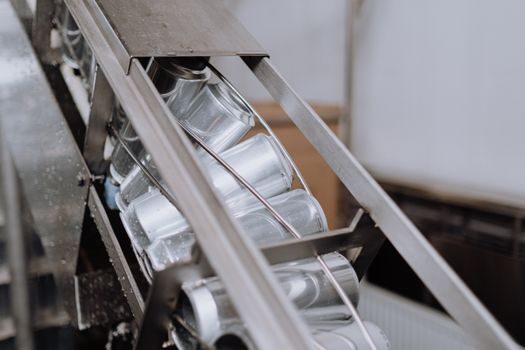
Smart, fully integrated packaging lines are economically justified for plants running above roughly 5,000 finished units per shift with SKU changeovers more than once per day, in regulated industries (food, beverage, pharma, daily chemical, cosmetics) where coding/traceability and CIP/cleanability are non-negotiable [S3].
For low-mix / high-volume lines such as IBC tank or water-tank blow moulding, the smart factory case shifts upstream: Weifang Yuyang Plastic Machinery's first-tier national high-tech enterprise profile, focused on water tank, single/double L-ring drum, IBC tank, and multi-purpose blow moulding machines, shows that high-tonnage plastics packaging uses dedicated blow-moulding cells with OEM/ODM service rather than configurable EOL robotics [S2].
Semi-automatic machines remain the right call for craft bakeries, contract packagers with seasonal SKUs, and pilot lines producing under 500 units per shift — the per-unit ROI of a fully robotic palletiser simply does not close there, and the footprint of a smart line can be 3-4x that of a semi-auto equivalent [S1].
Option matrix: HFFS, VFFS, robotic palletising, vision inspection
The four workhorse sub-systems that anchor any 2026 packaging line are the HFFS flow wrapper, the VFFS bagger, the robotic palletiser, and the vision/rejection station; each carries a different cost, footprint, and data profile that should be picked against the SKU mix [S1][S3].
HFFS (horizontal form-fill-seal) flow wrappers dominate for solid, individually wrapped items (bakery, biscuits, chocolate bars, noodles, single-serve hardware) where the product feeds in horizontally and the film forms a fin-seal or lap-seal around it; VFFS is the right choice for free-flowing bulk (powders, granules, liquids in sachets) where the film forms a tube vertically [S1][S3].
Robotic palletisers — listed as a "packaging industrial robot" category alongside transporters, sorting machines, containing machines, bulk-handling equipment, stacking machines and demolition machines at Sino-Pack 2027 — handle the end-of-line stack and add structured data on each pallet (load pattern, layer count, tare/gross) that the WMS/MES can consume [S3]. Vision and coding (small-character and large-character inkjet, Hi-Res and TIJ printers, laser marking, thermal transfer overprinters, RFID and marking systems with their software platform) are the layer that actually closes the loop for traceability, and they are the layer most often under-specified at RFQ stage [S3].
Data, protocols and where Ethernet-APL / IO-Link fit
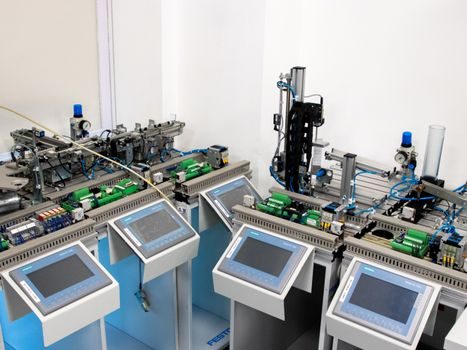
Packaging machinery data exposure in 2026 follows the same convergence as process plant: drives and I/O move to IO-Link on the device level, instrumentation moves to Ethernet-APL on the cell level, and MES/SCADA on top consumes both via OPC UA [S3].
Vision and coding systems are increasingly embedded as edge nodes rather than as separate PCs, with rejection events written into the same OPC UA namespace as the line OEE counters, so that one line stop and one reject are correlated automatically in the MES [S3][S6]. The four closed-loop layers in the Chinese process-engineering definition — metering/conveying/output, sequence execution with fault handling, parameter control, and quality inspection with reject — map almost one-to-one onto the four OPC UA companion specifications (PackML for machine state, AutoID for RFID/vision, Weighing for checkweighers, FDI for device diagnostics) that serious EOL integrators reference during FAT [S6].
For a deeper look at the sensor side of an integrated line, see our reference page on the smart camera that drives most modern vision-reject stations, and our entry on the vacuum packaging machine that anchors the gas-flush modified-atmosphere packaging cell.
Standards, safety and acceptance testing
A 2026 packaging line is a safety-relevant machine: the robot cell, the cartoner and the palletiser each carry risk assessment under ISO 12100 and ISO/TS 15066 (collaborative robots), with functional safety on guarding and interlocks typically implemented with safety PLCs wired to ISO 13849-1 PL d or PL e, and to IEC 62061 SIL 2 or SIL 3 for higher-hazard lines. [S1]
Where the line runs in an ATEX-classified area (solvent-based inks, bulk flour dust, alcohol-based cosmetics), the encoder, vision light, scanner and HMI must be ATEX 2014/34/EU and IECEx certified for the correct zone; in food and pharma, hygienic design follows EHEDG Doc. 2 for closed equipment and 3-A Sanitary Standards / EU 1935/2004 for contact surfaces.
Acceptance must run an IQ (installation qualification) at delivery, an OQ (operational qualification) at the OEM floor in front of the buyer's engineer (FAT), and a PQ (performance qualification) on the buyer's site over three production runs at the contractually agreed OEE (SAT) [S4][S5]. The OEE contract figure is the single most important number to negotiate — every other acceptance clause is subordinate to it.
Lead time, FAT, and the 2026-2027 sourcing window
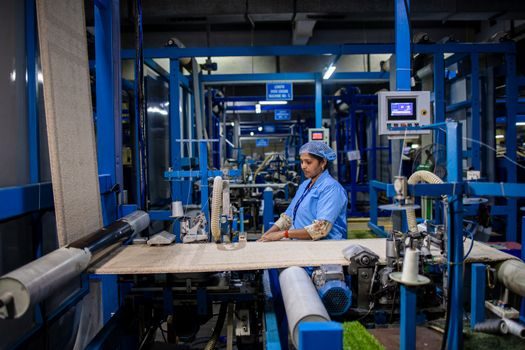
Lead times for a smart, fully integrated packaging line in mid-2026 sit in the 5-9 month range from PO to SAT for standard EOL configurations, with the bottleneck shifting between servo drives, safety PLCs, and robot arms depending on the OEM; the OEM/ODM route documented for Chinese blow-moulding and palletising machinery typically compresses that further by holding stocked platforms, but at the cost of less customer-specific mechanical engineering [S2].
The natural sourcing window for plants targeting a 2027 start-up is the 3-6 March 2027 Sino-Pack show in Guangzhou, where the floor is segmented exactly along the line-architecture lines above — Smart Packaging Total Solution, automated production lines, packaging industrial robots, primary/secondary packaging machines, plastics packaging machines, coding and marking, smart logistics equipment and systems — making it a one-visit RFQ and FAT-quote exercise for buyers building 2027 capacity [S3].
Trackable signals to watch over the next two quarters: (1) the published exhibitor list and "Smart Packaging Total Solution" floor plan for Sino-Pack 2027, which will reveal which Chinese EOL integrators have completed Ethernet-APL and OPC UA convergence on their standard offerings [S3]; (2) the FAT video library refresh from established integrators such as Alligator, Ruipuhua, and Newidea Pack, where new entries typically preview the next generation of changeover logic and OEE dashboards [S1][S4][S5]; (3) the next revision of Chinese packaging-automation reference material, where the four closed-loop layers (metering/conveying/output, sequence execution with fault handling, parameter control, quality inspection with reject) remain the most reliable lens for evaluating any new OEM claim [S6].
For the relevant spec sheets and selection criteria, see additive manufacturing material.
This topic is covered further in Polycarbonate types and classifications: aromatic vs aliphatic vs modified.