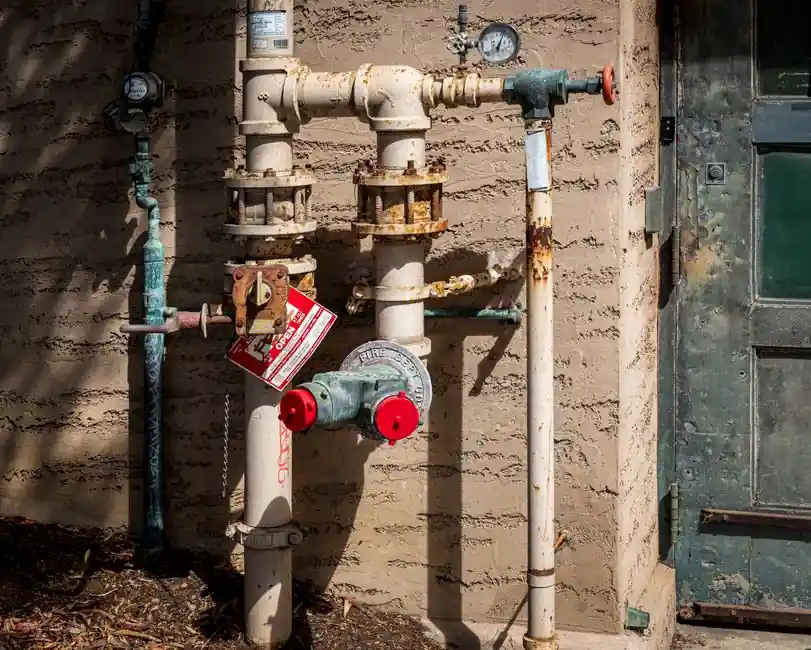
Body style, not disc material or seat type, is the first decision when specifying a butterfly valve: it sets pressure class, end-of-line capability, weight, and cost in one shot [S4][S6].
The three body types covered by EN 593 and API 609 are wafer, lug (lugged), and double-flanged; each one solves a different mechanical problem between the pipe flanges and the valve body [S3][S4].
Wafer Body: Lowest Cost, No End-of-Line Duty
A wafer butterfly valve has no flanges of its own: the body is sandwiched between two pipe flanges and held by long through-bolts that pass around the valve, not into it [S4][S5]. This keeps face-to-face length at API 609 Category A short pattern, weight at the low end of the family, and unit cost at the bottom of the range [S3][S4].
The mechanical limit is hard: the disc projects beyond the flange face when open, so a wafer valve cannot be used as an end-of-line valve, and it cannot be specified on pump-suction piping where the downstream section is regularly unbolted for service [S4]. Wafer bodies are also not recommended above DN600 because the unsupported disc span loses stability, so large water and pipeline projects move to the double-flanged design instead [S4].
Lug Body: Threaded Inserts, Dead-End Capable
A lug butterfly valve has threaded metal lugs cast or machined into the body at each bolt-hole position; each pipe flange is bolted independently into the matching lug, with no through-bolts crossing the body [S3][S4]. This independent bolting is what unlocks end-of-line service: one flange can be unbolted and the downstream pipe removed while the valve stays in line and continues to isolate the upstream side [S2][S4][S5].
Seating is one-directional (the disc seals against one seat ring under line pressure), which is acceptable for the vast majority of pump-discharge, tank-isolation, and fire-service duty. For NFPA 13 / UL/FM fire protection, lug body is the standard specification because the body must hold dead-end pressure on the closed side of the system [S4]. Reference design pressure for general-industry lug bodies sits around PN10 to PN16, with soft seats in EPDM, NBR, or PTFE as the common default [S2][S3].
Double-Flanged Body: Maximum Rigidity, Large-Bore and High-Pressure
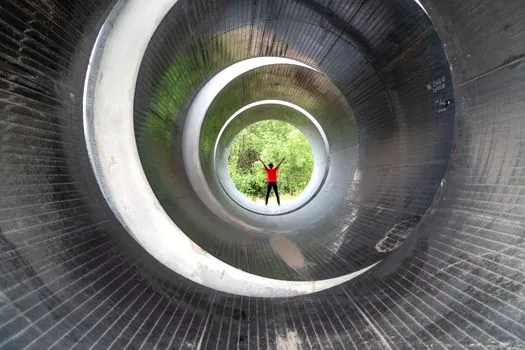
A double-flanged butterfly valve has integral flanges forged or cast onto both ends of the body, so the connection to the pipe is a full face-to-face bolted joint with the valve's own flange faces [S3][S7]. The thicker body section and the fully integrated flanges distribute pipe loads over a much larger contact area, which is why this style is standard for AWWA C504 water-service butterfly valves from DN76 (3 in) up to DN1800 (72 in) at AWWA Class 150B, roughly 10.3 bar [S4].
The trade-off is weight and cost: double-flanged bodies are the heaviest of the three and the most expensive, but they are the only style rated for bidirectional end-of-line duty at meaningful pressure, and they are the format specified by EN 593, API 609, and AWWA C504 for large water and pipeline work [S2][S4]. They are also the natural choice when the pipeline is subject to external bending loads, soil movement, or thermal growth, because the integral flanges resist misalignment that would distort a wafer or lug body [S7].
Selection Criteria and Cross-Reference
End-of-line requirement is the single decision that eliminates one of the three: if the valve must hold pressure with the downstream flange removed, wafer is out and the choice narrows to lug or double-flanged [S2][S4][S6]. Pressure class is the next filter, with PN10 to PN16 typical for lug and PN16 to PN40 (and above) typical for double-flanged [S2].
Body-style trade-off in one view, per the comparison in [S4] and corroborated in [S3] and [S6]: wafer is lowest cost and lowest weight but has no end-of-line rating; lug is mid-cost and mid-weight with one-directional dead-end service and UL/FM fire listing; double-flanged is highest cost and highest weight with bidirectional dead-end service, AWWA C504 coverage, and standard use above DN600 [S4].
For quick selection: chilled water, condenser water, fire-suppression branch lines, and general chemical feed below DN600 usually land on wafer; pump suction and discharge, fire-service mains per NFPA 13, and any line needing downstream maintenance without full drain usually land on lug; municipal water, large-bore cooling water, and high-pressure or high-integrity piping land on double-flanged [S3][S4][S6].
Installation, Sealing, and Maintenance Differences
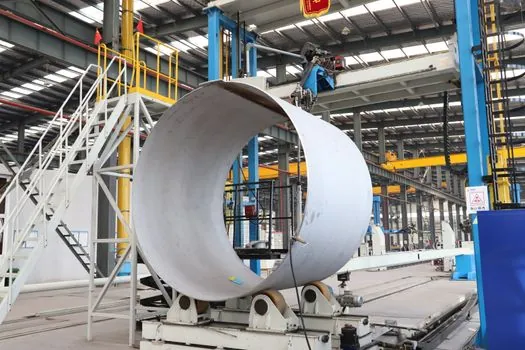
Installation effort scales with body style. Wafer is the fastest: drop the body between the flanges, run long studs or bolts through both flanges around the valve, and tighten [S5]. Lug needs more bolt work because each flange is independently bolted into its own set of lug threads, but it pays back in maintenance because one flange can be unbolted and the downstream pipe removed without disturbing the upstream side [S2][S5].
Sealing behaviour follows the same gradient. Wafer and lug typically use resilient soft seats (EPDM, NBR, PTFE) with line-pressure-assisted shutoff, suited to water, air, and mildly corrosive liquids [S2]. Double-flanged valves can be specified with metal-to-metal sealing (stainless steel plus graphite, for example) for steam, oil, and more aggressive media, because the rigid flange-to-flange joint maintains seat loading even under thermal cycling [S2].
Common field failure mode for wafer bodies is flange-clip distortion when bolts are over-torqued, since the body has no flanges of its own to share the load; the same failure is much rarer on lug and double-flanged bodies because the threaded inserts or integral flanges carry the bolt clamp directly [S6][S7]. For seat-replacement work, lug and double-flanged bodies are noticeably easier to service in line than wafer bodies, which typically require full removal of the valve from the pipeline [S2][S5].
Standards and Sourcing Reference
The relevant body of work: EN 593 (the European design standard for butterfly valves), API 609 Category A and Category B (which defines short and long wafer face-to-face dimensions), and AWWA C504 (which covers rubber-seated butterfly valves, almost all double-flanged, for water service) [S4]. For fire protection, UL Listed and FM Approved lug bodies are the default; for general process piping, EN 593 and API 609 govern material, testing, and face-to-face dimensions regardless of whether the body is wafer, lug, or double-flanged [S3][S4].
Pressure-class convention: PN/Class ratings follow the flange standard (ASME B16.5, ASME B16.47, EN 1092-1, AWWA C207), so a lug body in PN16 and a double-flanged body in PN16 share the same bolt pattern and gasket, but the body pressure-containing capability differs because of the wall section and the flange integration [S3][S4]. Always cross-check the body pressure-temperature rating against the flange class before specifying.
Closing reference points worth tracking: the API 609 face-to-face tables (Category A short, Category B long), AWWA C504 Class 150B (roughly 10.3 bar) for water-utility double-flanged bodies in DN76 to DN1800, and UL/FM listings for any lug valve that is meant to sit at the end of a fire-protection line. For actuator mounting and position feedback on any of the three body styles, see the related work on visual position indicators versus remote signal feedback in a valve limit switch box, and for downstream material decisions in corrosive water or seawater service, the 6Mo super austenitic vs super duplex stainless selection guide is the natural next read.
The underlying component specifications are covered under balancing valve, and ball valve.