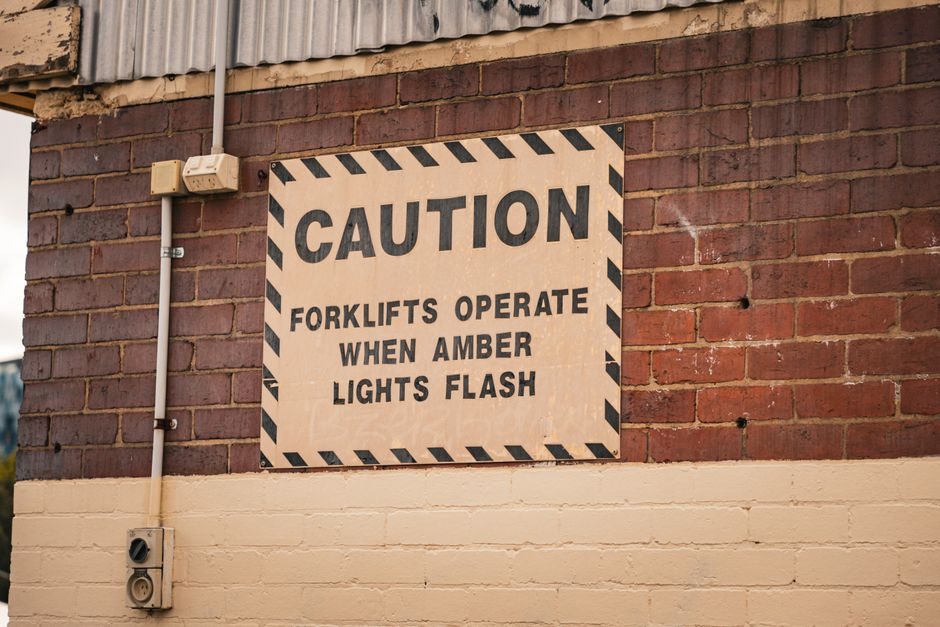
Warehouses that run LPG or propane forklifts, diesel tail-pipe exhaust, or battery charging banks need a portable gas detector configured for LEL, O2, CO, and H2S as the baseline four-sensor stack; cold-storage and dry-goods-only sites usually narrow that to a single-gas CO or O2 instrument.
Selection scope is set by three warehouse-specific hazard sources: combustion-engine lift truck exhaust (CO, NOx, LPG vapour), battery-charging rooms (H2 accumulation above 4% vol LEL, H2S trace from vented lead-acid cells), and confined-space entries into pits, mezzanines, and cold rooms where O2 displacement and solvent vapour are the dominant risks [S1][S2].
Sensor Stack: 4-Gas vs Single-Gas vs Multi-Gas
AIYI Technologies lists a standard portable 4-gas detector for LEL and O2 among its portable gas detector product offerings [S1].
Single-gas portables remain relevant for targeted monitoring: an O3 instrument with selectable ranges of 0-10 ppm, 0-20 ppm, and 0-50 ppm is typical for warehouse air-quality audits where ozone is generated by electrostatic precipitators or copy/print rooms, and pricing near USD 815 for a real-time LCD unit is common in the import channel [S3]. For narrow forklift-exposure or charging-room patrol duty, a single-gas CO unit is often issued to operators as a personal badge. The four options line up on three criteria as follows: 4-gas gives the broadest coverage but the highest purchase and calibration cost; 2-gas (LEL+O2 or CO+H2S) is the cost-compressed middle ground for fixed-hazard sites; single-gas is the lowest-cost, lowest-weight option for a known single threat; multi-gas instruments with 5-7 sensors exist but warehouse use rarely justifies them over a 4-gas baseline [S1][S3].
Ingress Protection, Battery, and Alarm Behaviour
Warehouse duty is rough on instruments, so IP66 is the minimum acceptable dust/water rating, with IP67 or IP68 specified for outdoor trailer docks and cold-storage condensate exposure; the sensor housing, not just the case, must carry that rating to survive wash-downs [S1].
Battery runtime of 24 hours on a single charge is the practical minimum for one-shift operation without mid-shift swaps, with rechargeable Li-ion preferred over alkaline for fleet standardisation. Audible alarm output at 95 dB at 30 cm and visual 360-degree LED strobes are now standard, and a vibrating alarm is necessary for high-noise forklift aisles above 85 dBA. For charging-room patrol, instruments with a hydrogen-specific channel or a wide-range LEL sensor (0-100% LEL in 1% increments) are specified because H2 behaviour deviates from the butane calibration typical of generic LEL sensors [S2].
Calibration Interval, Bump Test, and Sensor Life
Electrochemical CO, H2S, and O2 sensors in warehouse service carry a typical operating life of 24-36 months, after which replacement rather than recalibration is required; catalytic-bead LEL sensors last 12-24 months in dirty environments and are the most frequent service item [S1].
A 30-day calibration interval with a daily or pre-shift bump test is the operational norm, and any instrument that fails bump test must be tagged out until sensor replacement or full calibration. Honeywell-class portable instruments are described as configurable and serviceable, which is the relevant phrase to look for in vendor spec sheets when planning in-house sensor swap rather than factory return [S2].
Who the 4-Gas Is For, and Who Should Pick Single-Gas
Facilities that operate LPG or diesel forklifts inside the warehouse, run battery-charging rooms, or perform confined-space entries into pits and tanks are the 4-gas target user; LPG vapour pooling at floor level, CO build-up near charging banks, and O2 depletion in coolers are all single-instrument detections on one unit [S1][S2].
Dry-goods warehouses with electric-only lift trucks, no charging-room risk, and no confined-space programme can standardise on single-gas CO or O2 monitors for personal protection; the combustible gas detector function is not required when no flammable refrigerant or fuel is stored on-site. Cold-storage facilities handling ammonia refrigeration must add an NH3 sensor and should not rely on a standard 4-gas because NH3 cross-sensitivity on standard H2S cells is high enough to produce false alarms without delivering a reliable ppm reading.
Confined-Space Entry Sequence in a Warehouse

The OSHA-aligned confined-space entry protocol for a warehouse pit or tank starts with oxygen reading (target 20.9% vol, alarm at 19.5% low and 23.5% high), then combustible-gas reading (<10% LEL for entry), then toxic-gas reading for the specific space; this order matters because a low-O2 reading invalidates catalytic-bead LEL output, and a high-O2 reading invalidates the LEL safety margin [S2].
Continuous monitoring throughout the entry, not just pre-entry, is the rule: the attendant must keep the multi gas detector running outside the space with the remote sensor probe or sample draw inserted through the portal, and the entrant wears a personal unit clipped to the chest harness. Man-down alarm and a localised wireless link to the attendant's station are the features that separate a true entry-grade instrument from a basic spot-check model, and these features should be specified explicitly because they are not universal at the entry-level price point.
Standards, Certification, and Sourcing Cues
Warehouse portable instruments should carry IECEx or ATEX certification for the zone classification of the work area, with most indoor warehouse duty falling outside Zone 1 but still requiring instruments rated to Ex ia IIC T4 Ga for LPG-fuelled forklift charging areas [S1].
Manufacturer sourcing is concentrated in two channels: Western OEMs (Honeywell/RAE Systems being the reference brand with a global parts and service network) and Chinese OEM-ODM suppliers such as Nanjing AIYI Technologies, which list single-gas H1600-series units, standard 4-gas portables, NDIR gas analyzers, and explosion-proof fixed detectors as their warehouse-relevant catalogue [S1][S2]. For the toxic gas detector channels specifically, spec sheets must name the sensor manufacturer, the resolution, and the cross-sensitivity list, and buyers should refuse any data sheet that lists only "imported sensor" without a part number.
Selection Criteria Compared Across Three Form Factors
Three form factors compete for the warehouse budget: clip-on personal single-gas (USD 100-300 per unit), 4-gas diffusion portable (USD 500-1200 per unit), and pumped sampling 4-gas with sample draw (USD 800-2000 per unit); the deciding criteria are confined-space entry requirement, sensor count, and calibration philosophy [S1][S3].
The single-gas clip-on is correct for forklift-operator issue and is justified on weight and cost; the 4-gas diffusion portable is the default for facility safety staff and routine sweeps; the pumped 4-gas is mandatory for tank, pit, and refrigerant-room entries where the gas of interest may be heavier than air or located in an inaccessible corner. For sites standardising on a single fleet, the 4-gas diffusion model with field-replaceable sensors and a 24-month service interval delivers the lowest total cost of ownership because calibration gas and sensor replacement dominate lifetime cost, not the initial purchase [S2].
Buyers should anchor the specification on three numbers: a 0-30% vol O2 range, a 0-500 ppm CO range with 1 ppm resolution, and a 0-100% LEL combustible range with 1% LEL resolution; any instrument that cannot meet these minimums should be rejected, regardless of price. A documented 30-day calibration cycle and a vendor-stated 24-month sensor life are the second gate, and IP66 with 95 dB alarm at 30 cm is the third gate that closes the spec [S1][S2]. For a related sensor-stack and certification framework applied to higher-risk mining duty, see the mining portable gas detector spec map; for chemical-plant process rooms the chemical plant portable gas detector spec map covers sensor stacks tuned to solvent and acid exposure that differ from warehouse duty.