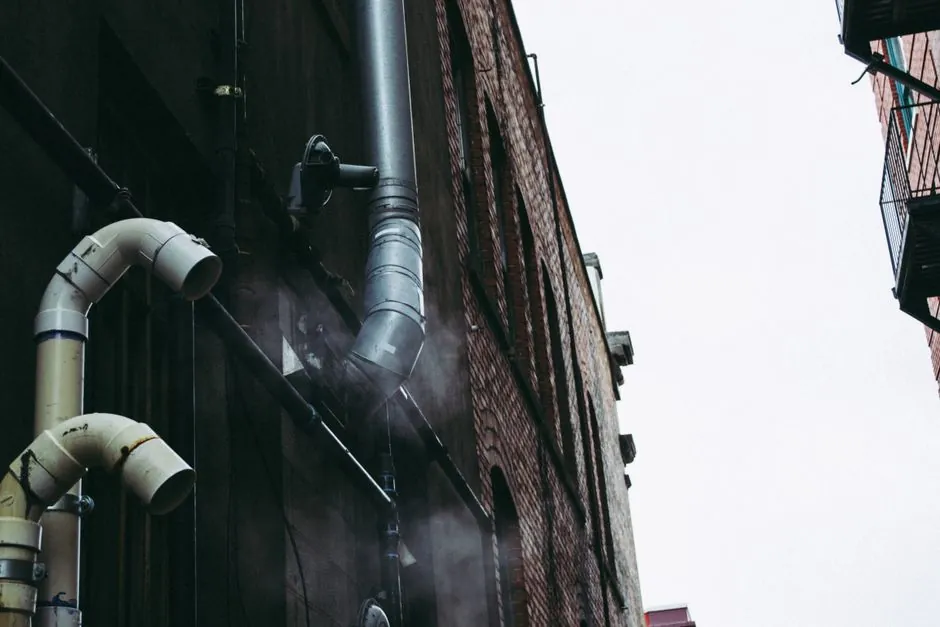
Warehouse steel pipe selection in 2026 starts with the ANSI schedule chart, where Sch 10, Sch 40 and Sch 80 cover roughly 90% of structural and rack-pipe specifications, while double-extra-strong (XXS) remains a corrosion-allowance reserve rather than a default [S2].
The work splits into three families: structural rack/partition tubing sized for cantilever and pallet-rack loads, mechanical/electrical conduit for overhead services, and fluid-service lines for sprinkler, compressed-air and HVAC. Each family uses a different ASTM or ASME grade band and a different schedule range, and conflating them is the single most common mis-spec on new automated-warehouse builds [S4][S2].
Schedule classes and what they actually mean for warehouse pipe
The ANSI pipe schedule chart is a wall-thickness convention: for a given nominal diameter, the outside diameter stays constant while the wall grows as the schedule number rises, from Light Wall through Sch 10, 20, 30, 40 (Standard Weight), 60, 80 (Extra Strong), 100, 120, 140, 160, up to Double Extra Strong (XXS) [S2]. A 4-inch NPS Sch 40 pipe therefore has a different bore and weight per foot than the same 4-inch NPS in Sch 80, even though the outside diameter is identical, which is why spec sheets quote schedule, not just diameter [S2].
For warehouse structural and rack members, the practical band is narrow: Sch 10 and Sch 20 for horizontal rack cross-bracing and partition framing, Sch 40 as the default for upright rack columns carrying pallet loads, and Sch 80 only where impact or fork-truck strike risk is high. Light-wall and XXS are special-purpose choices, not catalogue defaults [S2]. A common engineering rule is to step one schedule heavier than the calculated minimum to absorb corrosion loss, but that step should be justified, not inherited from a 1980s drawing.
Material grades: ASTM A53, A1011, A653 and stainless options
For cold-formed structural strut and partition framing inside warehouses, ASTM A1011 (hot-rolled carbon steel) and ASTM A653 (continuous pre-galvanized steel) are the governing strip-steel specifications on domestic-supplied product [S4]. For pressure or fluid service such as fire-sprinkler risers, compressed-air mains and hydronic HVAC, ASTM A53 Grade B is the workhorse, with ASME B16.9 fittings (sizes 1/2 in to 24 in for seamless, 1/2 in to 120 in for welded) carrying the matching dimensional envelope [S5].
Where corrosion or washdown exposure is expected, stainless grades 304/304L, 316/316L, 321, 347 and 310S are stocked by mainstream fittings suppliers, with 316/316L the default for chlorides and cleaning chemicals [S5]. Carbon fittings default to ASTM A234 WPB; alloy grades (P11, P22, P91) appear only when high-temperature fluid service is in scope, which is rare inside a typical warehouse. For reference on the base product category, see the steel pipe entry and the pipe fitting overview for the dimensional and grade conventions that govern connections.
Coating, galvanization and surface protection
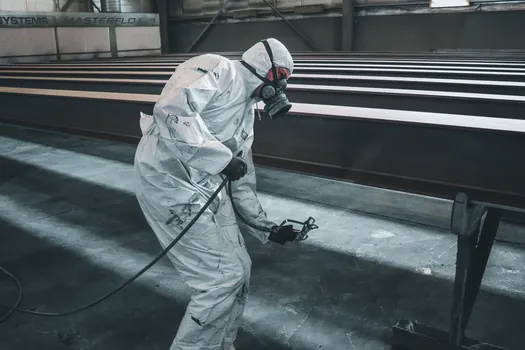
Three surface systems dominate warehouse pipe sourcing: hot-dip galvanization to ASTM A653 for pre-galvanized strip product, in-line zinc-rich coatings (such as Ultra Z-Coat) for black steel pipe that must dry in seconds rather than days, and post-fabrication hot-dip galvanizing for fabricated assemblies and threaded pipe [S4]. The in-line coating matters for throughput: a domestic mill running it can ship black pipe that is handle-ready straight out of the UV cure chamber, which is a real advantage on tight warehouse build schedules [S4].
For galvanized selection, the specifier should distinguish continuous (pre-galvanized) sheet product to A653 from batch hot-dip galvanizing to ASTM A123; mixing the two on the same purchase order leads to coating-thickness mismatches at welded joints. Where pipe will be cut, threaded or welded on site, the cut-end protection plan (cold galvanizing paint, zinc-rich primer) belongs in the same specification section as the base coating, not in the painting section.
Options compared: structural vs fluid vs conduit
The three warehouse pipe families line up against four decision criteria as follows. Structural rack and partition: ASTM A1011/A653 strip, Sch 10 to Sch 40, hot-dip galvanized, sized by pallet-rack load tables. Fluid service (sprinkler, air, HVAC): ASTM A53 Grade B seamless or ERW, Sch 40 standard with Sch 80 for branch risers, fittings to ASME B16.9 in ASTM A234 WPB or stainless 304/316 [S5]. Electrical conduit: Sch 40 EMT or rigid steel conduit with separate UL listing, treated as a different commodity with its own thread and bend-radius rules.
For rack and partition work, seamless steel pipe is rarely the right answer; ERW product in the schedule range above is cheaper, faster to source and adequate when the duty is structural rather than pressure-bound. For sprinkler and compressed-air, steel pipe in ASTM A53 with Sch 40 wall is the default, and the specifier should confirm the local fire-code edition before locking the schedule. Stainless only enters the comparison when washdown chemistry, food-grade storage or coastal humidity pushes annual corrosion loss above the galvanizing maintenance budget.
Who warehouse pipe selection is for, and who it is not
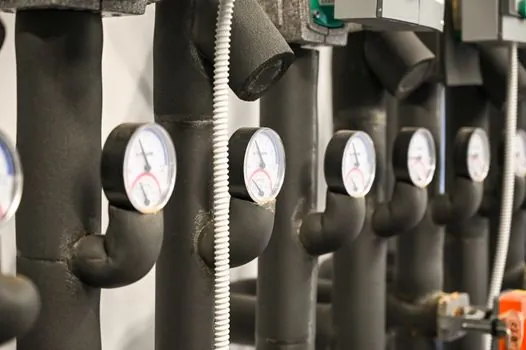
This selection logic fits specifiers working on new automated-warehouse builds, distribution-centre retrofits and rack-installation contractors who need to lock schedule, grade and coating in a single sourcing decision. It also fits facilities engineers standardising MRO pipe spares across multiple sites, where a single Sch 40 / A53 / galvanized specification can replace several legacy SKUs. [S2]
It does not fit pharmaceutical cleanrooms, where 316L stainless with orbital welds and electropolish is the default; it does not fit high-rise building risers, where the schedule and seismic-bracing logic follows a different code path (see the high-rise spec gate map); and it does not fit data-centre white-space, where cooling-pipe routing and condensation control dominate (see the data-centre spec gates). For stainless-heavy service, the stainless selection gates article is a better starting point.
Sourcing, lead time and the domestic-supply angle
Domestic steel-pipe and tube mills explicitly position automated-warehouse projects as a core growth segment, with multi-site data-centre, factory and warehouse demand outpacing the available supply and pushing buyers toward supply-chain planning rather than spot purchase [S4]. That supply pressure shows up in two places: a 2 to 4 week premium on imported ERW versus domestic product, and a rising minimum-order quantity at distribution, typically 1,000 kg for stocked sizes [S1]. For multi-site programmes, scheduling the pipe sourcing plan at the same time as the rack layout is the cheapest insurance against schedule slip.
Where mixed-metal systems appear, for example a rack frame in carbon steel feeding a stainless sprinkler drop, the dielectric isolation belongs on the drawing, not in the field. Cross-reference the pipe clamp and steel-plastic composite pipe entries where transition fittings or isolated supports are in scope. Trackable signals to watch over the next quarter: domestic mill galvanizing-line capacity additions, ASTM A53 Grade B ERW price differentials against import, and revisions to NFPA 13 sprinkler schedules that affect Sch 10 vs Sch 40 branch-line choices.