
Insulated tools specified for food processing lines must satisfy two overlapping regimes: electrical safety (typically 1,000 V AC / 1,500 V DC, manufactured and individually tested to IEC 60900) and hygienic-environment durability, since handles see daily chlorinated or quaternary-ammonium sanitizer exposure [S2][S4].
Plant electricians maintaining conveyors, mixers, fillers, and CIP skids need pliers, screwdrivers, nut drivers, and torque wrenches whose insulation layer resists moisture, animal fats, and cleaning chemistries without cracking, swelling, or shedding particles into the open product zone [S2][S4].
What the Insulation Layer Must Withstand in a Washdown Zone
Food and beverage facilities run washdown sequences that combine pressurized water (often 1,500-3,000 psi hot rinse), foaming alkaline cleaners (pH 11-13), and acid sanitizers (pH 1-3) on a defined cycle, and insulated tool handles must tolerate that chemistry without dielectric loss [S1][S2].
Two-layer dipped construction (a soft inner grip bonded to a harder, thicker outer insulating sleeve) is the dominant process for professional IEC 60900 tools, because a single dipped skin tends to hide shaft cracks and tears faster than a bonded dual-layer jacket [S4][S7].
Bright color is not just branding: high-visibility orange or yellow insulation lets a sanitation auditor spot a missing dipped sleeve or a chipped handle before a tool migrates into a USDA-FSIS or BRCGS-audited zone, and the 2026 guidance repeats the point that color alone does not certify voltage rating [S2][S4].
Voltage Rating vs. Real Food-Plant Hazards
Most food plants run 480 V three-phase distribution with 208 V control panels and 24 V DC I/O, so a 1,000 V AC rated tool gives roughly a 2x safety margin on the worst-case AC bus and covers 1,500 V DC battery cabinets on siting or backup-power equipment [S4].
The rating is only the first filter: working near motor control centres, VFD cabinets, and capacitor banks also requires arc-flash PPE, approach-boundary planning, and verification of absence of voltage, none of which an insulated screwdriver replaces [S4].
For battery-backed AGVs, AMRs, and palletizer servos now common in dairy and meat plants, the DC rating (1,500 V DC on a properly marked IEC 60900 tool) matters as much as the AC rating, because DC arcs do not self-extinguish at current zero the way AC arcs do [S4].
Material and Construction Choices for Hygienic Areas
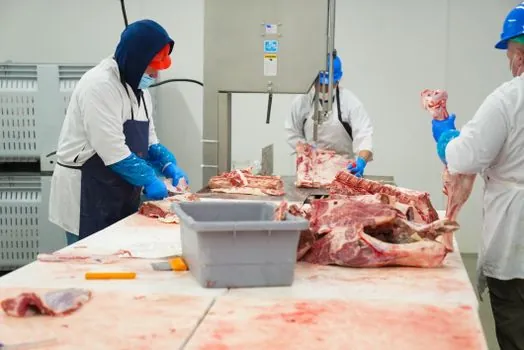
Tool insulation in food zones should be a closed-cell, non-absorbent polymer (typically a TPE or PVC-based dip) rather than porous rubber, since closed-cell surfaces do not harbor moisture, allergens, or Listeria and can be wiped down with the same sanitizer used on stainless equipment [S1][S7].
Open-back or vented grips (common on general-purpose screwdrivers) are a poor fit for wet rooms; specifiers should look for sealed, smooth, and unbroken insulation from the working end back to a defined guard or flange that prevents the hand from slipping onto the conductive shaft [S2][S4].
Stainless or chrome-vanadium working heads with a polished, crevice-free finish reduce harborage points, and any laser-etched rating markings must remain legible after hundreds of CIP cycles, which is one reason 2026 OEM documentation calls out markings as an inspection item [S2][S4].
Selection Criteria for Maintenance and Sanitation Crews
For a crew that works both live and de-energized, a 1,000 V AC / 1,500 V DC individually tested IEC 60900 set is the baseline; pair that with a documented inspection cadence (visual plus dielectric re-test on a defined interval) and a dedicated, labelled, lockable storage case that physically separates insulated tools from non-insulated shop stock [S2][S4].
Match tool form to fastener, not to glove size: insulated combination pliers for gripping, insulated cable cutters for copper, insulated T-handle or socket sets for confined MCC work, and insulated nut drivers sized to the exact hex range on the line, since forcing one tool to cover every job is the leading cause of insulation damage in the field [S4].
Field technicians operating near PV combiner cabinets, EV chargers in the truck yard, or 480 V busbars in sub-station rooms can borrow the same logic used on solar-insulated tool lists, where the catalogue is built around 1,000 V insulated screwdrivers, pliers, cutters, and kits from a small set of vetted brands [S5].
What Insulated Tools Are Not, and Where They Fail
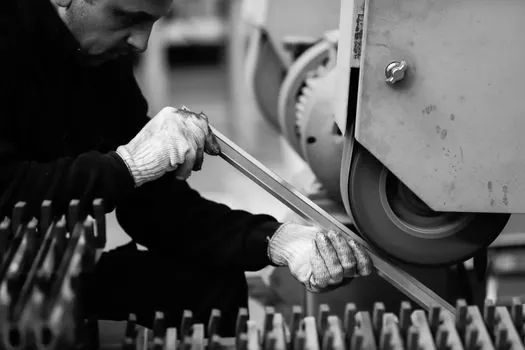
Insulated tools are not a substitute for lockout/tagout, voltage verification, arc-rated PPE, or trained work procedures, and a torn or chemically softened sleeve is an exposure point, not a cosmetic defect, the same way a cut arc-floughed jacket would be [S2][S4].
Common failure modes in food plants include: sanitizer-induced plasticizer leaching that hardens and cracks PVC sleeves, hot rinse water forcing moisture under a poorly bonded dip, and hidden shaft damage where a worker strikes a wrench and the steel yields but the insulation hides the bend until the next dielectric test [S2][S7].
Tool inventory should never be built on price alone, since cheaper single-dipped handles can pass a visual check but fail the dielectric re-test, and the 2026 electrician-focused guidance explicitly warns that bright handle color is not proof of voltage rating [S2][S4].
Standards, Inspection, and Sourcing Notes
IEC 60900 is the recognized insulated hand tool standard referenced across 2026 manufacturer and distributor documentation, with 1,000 V AC and 1,500 V DC being the typical dual marking on individually production-tested tools [S2][S4].
Fluke's safety guidance reinforces that insulated tools are one control in a layered electrical-safety program, alongside intrinsically safe instruments, insulation testers, and battery analyzers, not a stand-alone solution [S6].
For broader hand-tool selection beyond insulated product lines, see the hand tools selection guide, and for the construction-side insulated set used on cold-storage and processing builds, the construction tools reference covers framing and fastening specs. Sites that already run insulated programs for welding cells can also compare the insulated tools for welding spec map against food-zone requirements to avoid buying two parallel inventories.
Detailed specification references: insulated tools.