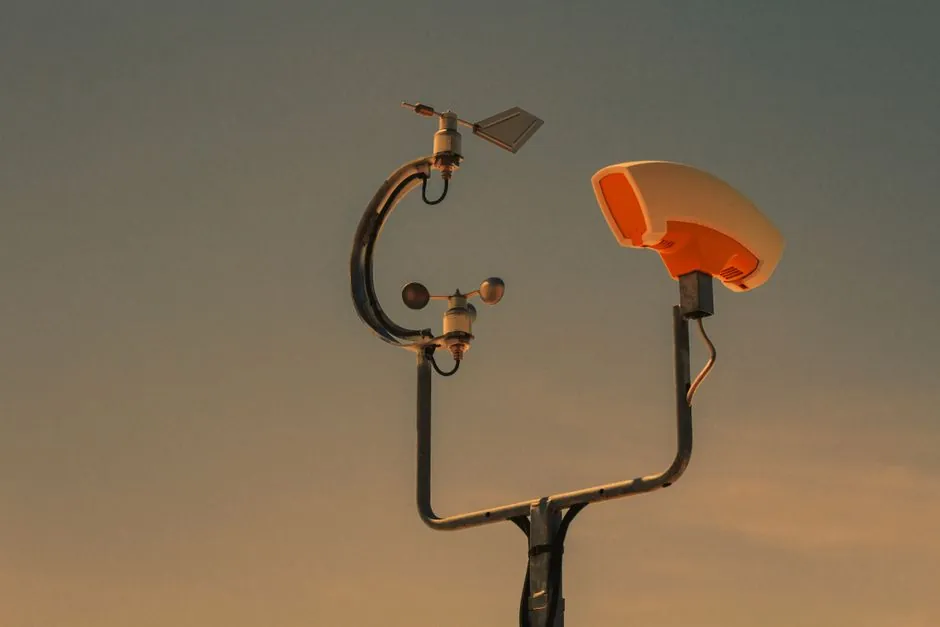
Specifying a weather station for a high-temperature assembly yard means writing the RFQ around four hard numbers: enclosure IP scope, sensor operating temperature band, UV/corrosion class, and engineered wind/snow load path. Each of these is the difference between a station that survives its first summer and one that fails the warranty inspection.
High-temperature sites, including hot-assembly halls, foundry yards, kiln decks, and outdoor welding bays, push ambient above 50 °C in direct sun and add radiant load from the process itself. A general-purpose consumer station sold for home gardens is not the same instrument class as the industrial units stocked alongside lightning detectors, rain gauges, and Kestrel handhelds on a distributor support page [S2][S3]. The RFQ has to be written so a vendor cannot quietly substitute a consumer SKU.
Lock the IP Rating to a Test Basis and a Specific Assembly
An IP rating such as IP65 covers ingress of solids and water only, not UV, corrosion, temperature, or wind, so the RFQ must request the test standard, the installed orientation, and the exact assembly the rating applies to [S1]. Outdoor LED display buyers are warned to confirm whether the rating covers a module, an electrical box, or a completed cabinet, the same trap applies to a weather station where the sensor head, the logger enclosure, and the junction box can carry three different IP codes [S1].
For a high-temperature site, specify IP66 on the sensor housing and IP67 on cable entries as separate line items, and require drip-loop cable glands facing downward. Sealed cabinets still need protected ventilation for condensation, because trapped humidity inside a sun-heated enclosure will condense on cool nights and short the logger board [S1].
Write the Operating Temperature Band, Not the Storage Range
Buyers must state the operating temperature band, not the marketing storage range, for every component: sensor head, data logger, power supply, display, and cabling [S1]. A typical industrial temperature controller class spec for an outdoor logger is -40 °C to +70 °C operating, with storage wider; quoting only the storage number is the most common RFQ error in this segment.
For a high-temperature assembly site, anchor the spec at the upper end: -30 °C to +75 °C operating on the logger and +85 °C on the solar/battery compartment, with a derating note for direct-sun exposure [S1]. State the radiant load from the process separately, because a sensor mounted 2 m from a kiln door sees a different thermal environment than the same sensor in open sun.
Match UV and Corrosion Class to the Site

UV-stable exposed materials must be specified for faces, labels, paint, sealants, and cables, and an approved color sample is not a substitute for long-term performance data [S1]. For steel structures, ISO 12944-2 provides a corrosivity category reference (C1 very low to C5-I/C5-M very high) that the RFQ can cite directly when defining the coating system on masts and brackets [S1].
Coastal, refinery, and foundry sites sit in C4 to C5-M bands; aluminum masts reduce rust risk but internal steel, fasteners, and dissimilar-metal interfaces still need isolation and upgraded coatings [S1]. Salt, pollution, and humidity will attack a standard zinc-plated bracket within one season if the RFQ does not call out 316 stainless fasteners and a documented isolation scheme.
Engineer the Wind, Snow, and Mounting Load Path as One
The cabinet, brackets, frame, pole, anchors, and foundation form one load path, so the RFQ must hand the vendor the site coordinates, mounting height, and a local wind/snow/ice reference [S1]. For U.S. projects, the ASCE Hazard Tool is the typical location-specific source for wind speed, ground snow, and ice thickness, and the chosen values should appear in the RFQ envelope, not in a vendor assumption [S1].
High-wind and freezing sites need tailored specifications because a standard residential mast is not rated for open-yard exposure; for a 10 m mast on a coastal or hillside assembly site, ASCE 7 basic wind speed of 50 m/s (180 km/h) is a realistic design input. State the mast material (galvanized steel, 316 stainless, or aluminum), the foundation bolt pattern, and the expected service-access method, so quotes are comparable.
RFQ Line-by-Line: What the Buyer Must Write
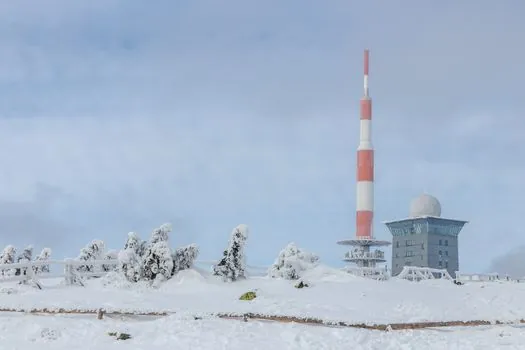
The RFQ should be structured as numbered lines so vendors cannot omit fields: (1) site coordinates and elevation, (2) ambient operating temperature band with radiant-load note, (3) IP code per sub-assembly with test standard, (4) ISO 12944-2 corrosivity category, (5) ASCE 7 (or local equivalent) wind/snow/ice values plus mast height, (6) sensor list (wind speed/direction, temperature, RH, pressure, rainfall, optional solar radiation and lightning detector), (7) logger model with I/O count, (8) power source (mains, solar + battery with autonomy days), (9) communication (Ethernet, cellular, or RS-485 Modbus), and (10) calibration certificates with traceability. [S1]
Optional fields that cause quote inflation when omitted include: mounting height and foundation type, cable lengths and conduit spec, surge protection on signal and power lines, and firmware update method (local USB vs. remote OTA). A spec mistake that forces requote cycles is naming a sensor brand without its firmware revision; vendors will not hold price across firmware changes, and a locking assembly on a rotating mast must match the sensor housing thread, which is brand-specific.
Limitations and Failure Modes the RFQ Must Acknowledge
No weather station sensor survives all environments, and the RFQ should call out the limits it will accept: cup anemometers stall below ~0.5 m/s, sonic anemometers can be affected by heavy rain on the transducer face, and pyranometers need regular dome cleaning in dusty assembly yards. Lightning detectors, including the Skyscan and Thunderbolt class units listed on industrial distributor catalogs, do not replace a proper lightning protection system on tall masts [S2][S3].
For high-temperature sites, the dominant failure modes are: (a) solar/battery compartment thermal shutdown above +60 °C without active ventilation, (b) UV-brittled cable jackets on south-facing runs, (c) condensation shorts inside sealed but unvented logger boxes, and (d) mast vibration fatigue from under-rated guying. Each one maps to a specific RFQ line, which is why the line-item format matters.
Standards, Calibration, and Sourcing Signals
Cite the governing standards directly in the RFQ envelope: IEC 61724-1 for PV-style meteorological monitoring, ISO 12944-2 for corrosivity categories, ASCE 7 for wind/snow/ice loads (U.S. sites), and WMO Guide No. 8 for siting and exposure of standard meteorological instruments [S1]. Calibration must be traceable to NIST or a national metrology institute, with a 12-month re-calibration interval stated up front to avoid warranty disputes.
Trackable signals for the next review: (1) the vendor's published operating temperature spec for the offered logger model, (2) the IP test report that names the tested assembly, not just the company, and (3) the ASCE Hazard Tool output for the exact site coordinates. A vendor who returns a quote with these three documents attached is a vendor worth shortlisting; one who does not is guessing, and guessing on a high-temperature assembly site costs more than the instrument.
Background reading: Floor Grinder Spec Map for Demolition: Head, Mass, and Diamond Selection.