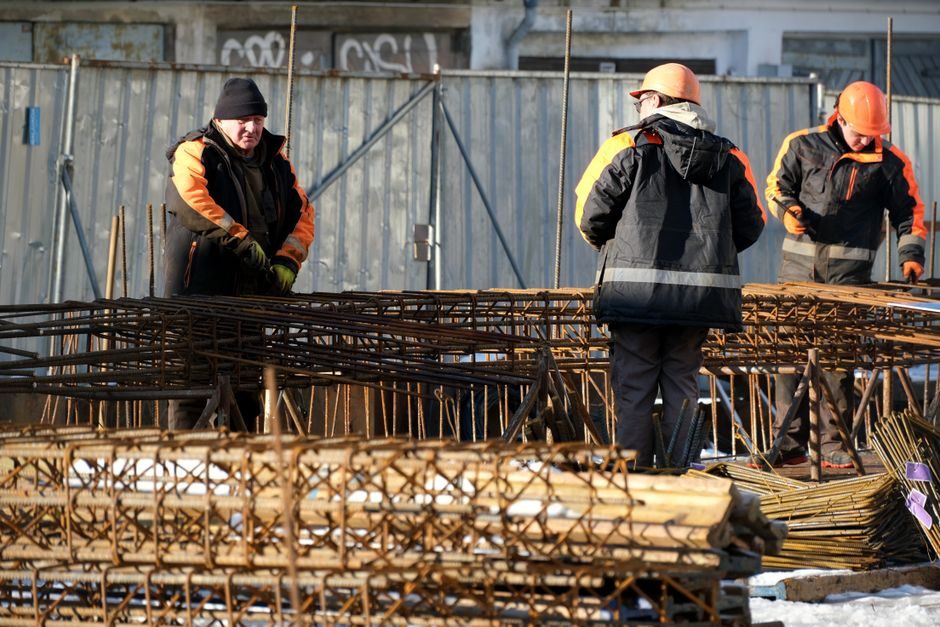
Welded steel mesh is delivered as rigid panels or rolls formed by resistance spot welding of low-carbon or stainless wire, with hot-dip galvanizing, electro-galvanizing, PVC coating and epoxy coating as the four surface finishes most commonly stocked by Anping, Hebei exporters in July 2026 [S1][S6][S7].
The dominant industrial grades for installation work are hot-dip galvanized welded panels (post-galvanized after welding, or welded from pre-galvanized wire) and PVC-coated welded mesh, with low-carbon steel Q195-series wire and stainless steel 304/316 wire as the two base-material tracks; welded mesh is distinct from woven steel mesh because intersections are fused, not interlocked, so panels retain their aperture geometry after cutting [S2][S3].
What "Welded Steel Mesh" Actually Covers at the Dock
Welded steel mesh is a grid of longitudinal and transverse wires joined at every intersection by a resistance spot weld, with typical aperture ranges from 12.7 mm (1/2 in) up to 200 mm and wire diameters from 0.6 mm to 6.0 mm in export catalogues [S3][S7]. The base wire is overwhelmingly low-carbon — Q195 wire rod is the reference grade cited in Chinese mill data, with 1006/1008/1018 rod also used for higher-tensile welded panels [S3]. Stainless welded mesh uses 304 or 316 grade wire and is positioned for food-grade screening, architectural cladding and chemical-plant guarding rather than structural concrete reinforcement [S1][S4][S7]. The related product class mild steel mesh covers the same welded panels plus woven square mesh, expanded metal and perforated sheet, all sharing the low-carbon base material — for the purposes of this installation guide, only the welded form is in scope.
Four finishing routes are visible across the 2026 supply base: hot-dip galvanizing after welding (heaviest zinc coat, best for outdoor and buried service), hot-dip galvanizing the wire before welding (lighter coat, smoother weld zone), electro-galvanizing (thinner, brighter, indoor use) and PVC/epoxy powder coating (colour, UV stability, animal-contact applications) [S3][S6]. One Hebei source operating since 1990 explicitly markets automated resistance welding as the reason its welded panels hold aperture geometry even when cut, a property engineers rely on for partial panels at site edges and penetrations [S2].
Substrate and Storage Prep Before the First Panel Goes Up
Acceptance inspection at the staging area is the first real installation gate: verify panel size, aperture, wire diameter and zinc-coat mass against the purchase order, and reject any panel with broken welds, visible rust bloom, or shipping deformation exceeding roughly 25 mm bow on a 2.4 m panel [S2][S3]. Anping exporters ship hot-dip galvanized welded mesh in bundles wrapped in woven PP fabric and PVC film; storage must keep bundles off the ground on dunnage at least 100 mm high, separated by sticker strips, with a slope so rainwater drains and never ponds against the zinc coat [S2].
Substrate prep depends on the four anchor scenarios seen in 2026 industrial work. On concrete, the surface must be cured at least 28 days, dry, and free of curing compound, oil, paint or laitance; mechanical abrasion or acid etching is used when the concrete is too smooth for chemical anchor bond. On carbon steel structural frames, weld points must be ground clean and primed with a zinc-rich primer compatible with the panel's own coating system. On masonry, hollow block is pre-tested for pull-out strength and a chemical anchor sleeve is specified where the substrate cannot carry a mechanical expansion anchor. On soil (fence post backfill), post holes are typically 300 mm diameter, depth ≥ 1/3 of the post length plus 100 mm of gravel base for drainage [S2][S7].
Panel Handling, Cutting and Orientation
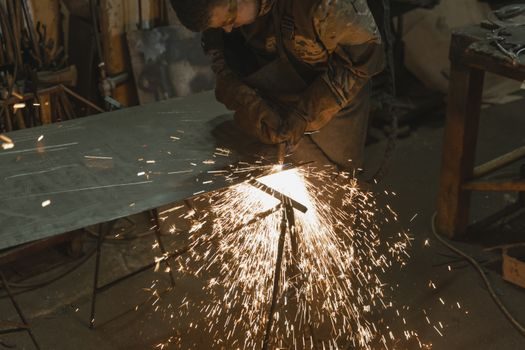
Welded mesh is rigid enough to be carried by one person per 1.2 m × 2.4 m panel but should always be lifted, not dragged, to prevent abrasion of the zinc coat and bending of the cut wires at panel edges [S2]. Cutting on site is done with bolt cutters for wire up to 4 mm, angle grinders with a 1 mm metal-cutting disc for wire up to 6 mm, and reciprocating saws for stainless welded mesh; the cut end is immediately touched up with zinc-rich cold galvanizing paint (zinc content ≥ 95% in the dry film) to restore corrosion protection on hot-dip galvanized panels [S3].
Orientation matters: square-aperture welded panels are installed with the cross-wires on the outside face when used as a machine guard, because the spot-weld nugget is the stiffest point and the smoothest face to present to operators; for concrete-slab reinforcement the panel is oriented so the main load-bearing wires run in the calculated tension direction, and panels are lapped one full aperture plus 25 mm at every splice [S3]. Stainless welded mesh is handled with clean cotton gloves to prevent carbon-steel tool marks that will rust and bleed onto the stainless surface; cutting tools used on carbon steel are not used on stainless in the same shift [S1][S4].
Fixing Methods: Clip, Weld, Anchor or Bind
Four fixing families cover the 2026 installation base, and selection tracks the substrate and the service environment. Mechanical clip fixing with stainless or hot-dip galvanized saddle clips and self-tapping screws is the workhorse for fence-line and partition work, with clip spacing typically 200–300 mm along the framing member. Spot-weld fixing using a stud welder or direct arc strikes is used to bond welded mesh to carbon-steel structural members, with weld pitch 150–200 mm; the zinc coat at each weld is then touched up with cold galvanizing paint [S2][S3].
Mechanical expansion anchors and chemical anchors are used for concrete and masonry: M8 expansion anchors at 200 mm centres is a common production rate, while chemical anchors with threaded rod are specified at panel edges and corners where pull-out load is highest. Tie-wire binding with 1.2 mm galvanized annealed wire is reserved for rebar-mesh overlap in slab work and is the same fixing family that applies when welded mesh panels are lap-spliced on mesh-belt conveyor enclosures, where continuity of the panel is more important than pull-out strength [S3]. PVC-coated welded mesh is fixed only with stainless or PVC-capped fasteners; a carbon-steel fastener driven through a PVC coat will rust, expand and split the coating within one wet season [S6].
Post-Install Inspection: What Auditors Actually Check

Three checks separate a passing install from a rework. First, mechanical integrity: every weld is tapped with a light tool and any wire that moves at the joint is cut out and a patch panel lap-spliced in its place; clip torque on mechanical fixings is verified at 10% of fixings with a calibrated driver. Second, coating integrity: the zinc or PVC coat is visually inspected for cut-edge exposure, weld spatter burn-through, and drill-hole swarf left on the surface; the rule of thumb is no uncoated metal visible at the end of the install [S2][S3].
Third, geometric tolerance: aperture is checked with a go/no-go gauge at 5% of openings, panel flatness is checked with a 2 m straightedge (typical tolerance ±5 mm over 2 m), and verticality on fence-line work is checked with a spirit level at every third post. Stainless welded mesh installations are additionally checked for iron contamination with a ferricyanide test paper or a portable ferrite meter; any reading above the specified threshold triggers mechanical polishing and passivation, not just a visual clean [S1][S4]. Documentation — panel batch numbers, fastener torque records, coating touch-up log and inspection photos — is filed per panel bay so any future corrosion claim can be traced back to the install record.
Common Failure Modes and How to Prevent Them
Four failure modes account for the majority of welded-mesh rework. Zinc-coat cut-edge corrosion: cut ends are not touched up within the same shift and rust streaks appear within months; prevention is immediate cold-galvanizing paint at every cut, drilled or ground surface. Weld-zone cracking under impact load: the panel was specified with too light a wire diameter for the service; prevention is sizing the wire to a minimum 4 mm for any panel likely to see mechanical impact, with structural welded mesh using 6 mm wire at 100 mm × 100 mm aperture for equipment guarding [S2][S3].
Fastener pull-out on hollow masonry: a mechanical expansion anchor was used where the substrate could not carry it; prevention is switching to chemical anchor with sleeve, or relocating the fixing into a solid course. Coating bleed-through on stainless panels: carbon-steel dust from cutting or grinding contaminated the stainless surface; prevention is dedicated tools, clean cotton gloves and a post-install passivation wash on 304/316 mesh used outdoors or in wash-down areas [S1][S4][S7]. A useful sanity check before sign-off is the comparison: hot-dip galvanized welded mesh on hot-dip galvanized fixings is the lowest-risk combination for outdoor service; electro-galvanized mesh is indoor-only; PVC-coated mesh needs PVC-capped or stainless fixings; stainless welded mesh needs stainless fixings of a compatible grade — mixing grades is the single most common spec error seen in field rework.
Trackable signals for the next 1–2 quarters: Hebei Anping exporters including Anlida Metal Mesh, Weian Wire Mesh and Anping Rong continue to list welded mesh alongside stainless steel wire mesh, razor barbed wire and chain link fence as their core export lines, with hot-dip galvanizing and PVC coating as the dominant finish options [S1][S2][S6][S7]; Hengshui Fulida's 2026 export page positions stainless welded mesh alongside stainless steel insect screening for architectural and chemical-plant service [S4]. The carbon steel types and classifications reference gives the upstream Q195/1006/1008/1018 wire-rod grades that the welded mesh above is drawn from.