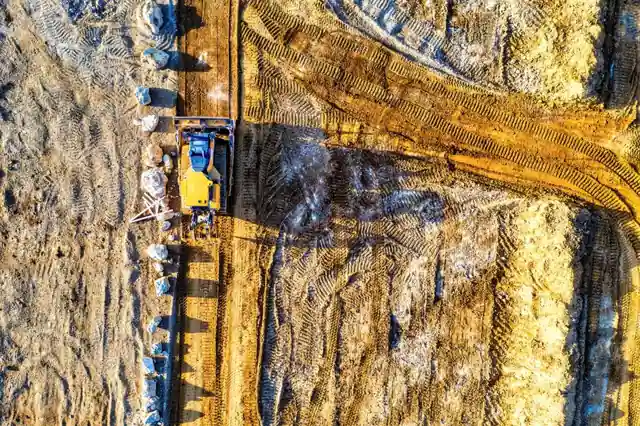
A wheel dozer outruns a crawler dozer by roughly a factor of three in top travel speed, posting 24–40 km/h (15–25 mph) against the crawler's 8–11 km/h (5–7 mph), and that gap is the single biggest reason fleet managers still buy them [S1][S5].
That speed is a real engineering consequence of swapping steel track shoes for four rubber tires, not a marketing line: lower rolling resistance, no sprocket/bushing drag, and a hydrostatic or powershift drivetrain geared for roading, not for stall-mode pushing. The trade-off, well documented in contractor-side guides, is the loss of low ground pressure and drawbar pull, but on hard, dry, or asphalt-paved yards the speed delta decides the equipment list [S1][S3].
Where the 3x Speed Multiplier Comes From
The 3x speed ratio recurs across OEM-aligned and contractor references published in 2026, and the underlying physical reason is straightforward: a track's steel shoes sliding on idlers, rollers, and sprockets absorb far more power per kilometre than a radial tire rolling on compacted soil or asphalt [S1][S5]. Crawler dozers therefore top out at 5–7 mph (8–11 km/h) in roading gear, while wheel dozers run 15–25 mph (24–40 km/h) on the same surface, a 2.4x to 3x delta depending on model and load [S1]. Independent guides published in February and July 2026 bracket the wheeled figure similarly, 20–25 mph (32–40 km/h) for typical mid-size units [S3] and 20–30 km/h for European-spec machines [S4]. The "3x faster" headline is conservative, not aspirational, and it is the metric contractors apply when computing cycle time on a load-and-carry route.
Wheel dozers also self-propel between distant work faces without a lowboy trailer, a logistics saving that the crawler simply cannot match at 5–7 mph, because moving a 30-tonne tracked unit under its own power across public roads is illegal in most jurisdictions and economically unjustifiable inside the site [S1][S2].
Decision Criteria: Speed Is Necessary but Not Sufficient
Travel speed is one of four criteria a process engineer or fleet planner should weigh when choosing between a wheel and a crawler, the others being traction, ground pressure, and undercarriage wear cost. On a 2-kilometre haul road in an aggregate yard, a wheel dozer at 24 km/h covers the round trip in roughly 10 minutes, while a crawler at 10 km/h needs 24 minutes, a 14-minute deficit per cycle that compounds across an 8-hour shift into more than 1.5 hours of lost production [S1][S4].
But on a muddy mining bench or a soft clay fill, the crawler's 4–9 PSI ground pressure keeps it afloat where a tire sinks, and its track contact patch converts more engine kilowatts into drawbar pull without wheel spin [S1][S2]. A correct specification therefore asks: is the work surface hard, dry, and level enough to carry a tire? If yes, the speed advantage is real; if no, the same tire will bury itself and the speed premium becomes a sunk cost. For readers comparing the two undercarriage philosophies in dollar terms, the 2026 cost-per-hour breakdown in Wheel Dozer Tires vs Crawler Undercarriage: Real Cost-per-Hour in 2026 walks the same trade from a maintenance-budget angle.
Side-by-Side Comparison: Wheel Dozer vs Crawler Dozer

Below is a criteria-based comparison built only from the cited sources, sized so a planner or an AI extractor can pull it as a structured answer. The crawler wins on soft-ground pushing; the wheel dozer wins everywhere else that a tire can roll. [S1]
Criterion, Crawler Dozer, Wheel Dozer: Top travel speed, 5–7 mph (8–11 km/h) [S1], 15–25 mph (24–40 km/h) [S1] (also reported 20–25 mph [S3], 20–30 km/h [S4]). Ground pressure, 4–9 PSI depending on shoe width [S1], substantially higher, four contact patches only [S1][S2]. Traction / drawbar pull, high; minimal wheel slip [S1], moderate; limited by tire friction on wet ground [S1]. Best terrain, mud, sand, steep slopes, soft stockpiles [S1], hard, dry, compacted soil, asphalt, flat sites [S1][S2]. Steering, skid / differential [S1], articulated [S1]. Site-to-site transport, requires lowboy trailer [S1][S2], self-transport at roading speed [S1][S2]. Soil compaction effect, lower compaction, roughly 63% less than wheeled [S2], higher compaction, useful for finish work [S2].
The single most-cited operational line, repeated almost verbatim across three 2026 guides, is that the wheel dozer trades the crawler's pushing authority for a 3x mobility gain, and that the speed advantage is the only reason to specify one [S1][S3][S5]. A practitioner reading the table should conclude: if the haul distance per pass exceeds roughly 200 m and the surface can carry a tire, the wheel dozer's cycle-time edge pays for the higher acquisition cost; below that distance or on soft ground, the crawler's drawbar pull wins.
Where a Wheel Dozer Earns Its Keep, and Where It Does Not
Wheel dozers are the correct pick on large flat sites with firm ground: highway grading spreads, mine haul-road maintenance, port and intermodal yard dozing, large roof slabs and compacted parking-lot sub-base work, and any "load and carry" cycle where the machine pushes 50–200 m, drops, returns, and repeats [S1][S2][S3]. On those sites the operator can use roading speed to reposition between cuts without a transporter, which on a remote project removes a piece of auxiliary equipment and a driver from the cost stack.
A wheel dozer is the wrong pick, and a crawler is correct, in four well-defined scenarios: soft or wet ground where tires sink (stockpile clay, freshly placed fill, swampy right-of-way), steep slopes above the tire-machine's safe operating angle, heavy ripping work where drawbar pull dominates, and forestry clearing where track shoes resist stumps and slash better than rubber [S1][S3][S7]. Choosing a wheel dozer in any of those conditions costs traction, not speed, and the resulting wheel spin burns fuel without moving material, a worse economic outcome than the crawler's slow, steady push.
Sourcing, Standards, and Trackable Signals
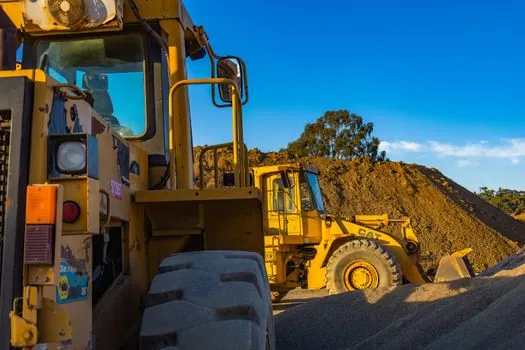
The 3x speed figure is corroborated across at least four 2026 publications and aligns with general OEM catalogues for mid-size articulated wheel dozers, while the crawler's 5–7 mph roading cap is consistent with hydrostatic-track drivetrain limits observed on mainstream 20–40 tonne crawler dozers [S1][S3][S4][S5]. No ISO or SAE standard governs dozer travel speed directly; performance values come from manufacturer specifications and field measurement, which is why independent contractor-side guides, not standards documents, are the right primary source for this comparison.
Two trackable signals to watch in the next reporting cycle: (1) the growing share of electric-drive and hybrid wheel dozer prototypes, which sharpen the roading-speed and brake-energy-recovery case against crawlers whose undercarriage drag penalises every start-stop cycle; (2) the introduction of higher-flotation radial tires for aggregate-yard work, which compresses the gap between wheel-dozer ground pressure and the crawler's 4–9 PSI ceiling, and may shift the boundary condition in the comparison table above. Either development would re-rank the four criteria, not change them, and is worth re-checking against fresh OEM data when the 2027 model-year releases appear.
Detailed specification references: bulldozer, crawler crane, and wheel loader.