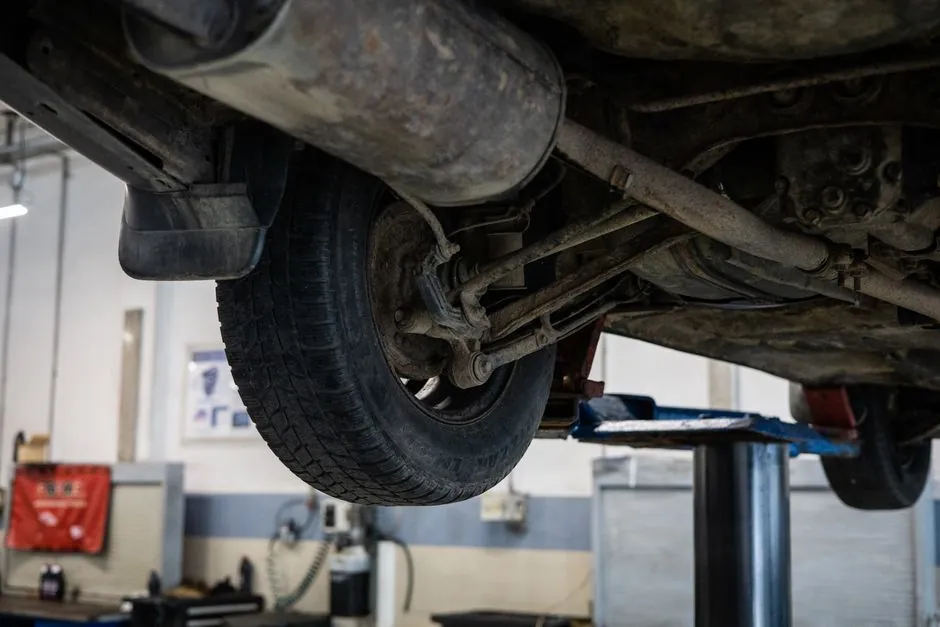
A full set of heavy-duty L5 tires for a wheel dozer costs between $15,000 and $40,000, while a complete crawler undercarriage rebuild on a comparably sized machine can hit $21,936 on parts and labor, so the per-hour math hinges on service life, not sticker price [S2][S4][S5].
Wheel dozers run 15–25 mph on articulated four-wheel chassis, hit 4–9 PSI higher ground pressure than crawlers, and self-transport between work areas without a lowboy; crawler dozers cap out at 6–8 mph but float on 4–9 PSI through mud, sand, and steep slopes [S3]. That mobility delta is what drives the cost-per-hour gap, because tire wear and undercarriage wear are not symmetric expenses [S3][S8].
Where the Two Cost Lines Actually Land
The tire bill for a wheel dozer is a single line: $15,000–$40,000 per set of four L5 tires, with $5,000–$15,000 per corner on the larger mining-class units, which works out to roughly $3.75–$10.00 per hour across a typical 4,000-hour tire life [S2][S4]. On the crawler side, the bill is fragmented: tracks alone, idlers, bogie wheels, sprockets, and labor stack independently, and the December 2010 teardown on a Terex RC100 at 1,307 hours tallied a $9.15/hour partial-rebuild figure and $16.78/hour for a full OEM undercarriage replacement [S5].
That historical RC100 ledger is the cleanest public per-hour breakdown available, and the spread between partial and full replacement ($5.55/hr for tracks only versus $16.78/hr for the complete OEM package) is a better proxy for true undercarriage cost than any single sticker [S5]. The crawler's hidden line item is that undercarriage parts alone often exceed 50% of the machine's residual value, which is why the same operator will routinely rebuild in stages rather than as a single event [S5].
Service Life Anchors the Hourly Math
Tire life on a wheel dozer running mixed dozing cycles is commonly cited at 4,000+ hours before the L5 tread is depleted, with midlife rotations and section repairs extending that further on fleets that track TKPH (ton-kilometer-per-hour) ratings [S2][S3]. Crawler undercarriage life varies dramatically with ground condition: 1,200–1,600 hours is the typical mixed-use band for compact track loaders, while large mining crawlers on abrasive rock can see track and bushing wear forceouts at 2,000 hours or less, and well-managed aggregate sites can stretch to 4,000–5,000 hours before a full set is required [S6][S5].
On the compact end, a tracked skid steer pays $2,500–$4,000 per set of tracks lasting 1,200–1,600 hours ($1.56–$3.33/hr) versus $600–$1,600 per set of tires lasting 2,000+ hours ($0.30–$0.80/hr), which is the same direction the dozer math points: tracks carry higher hourly cost on rocky or mixed terrain, but tires carry the spike risk of sidewall and impact damage on the same sites [S6]. A 2009 lawnsite.com cost analysis on rubber-tracked skid steers confirmed the tracks-side premium of roughly $1.50/hour over a 700-hour window in mixed residential use, which lines up with the FEMA-recovered equipment-rate logic that separates crawler and wheel hourly recovery [S1][S7].
Decision Matrix: Match the Machine to the Site
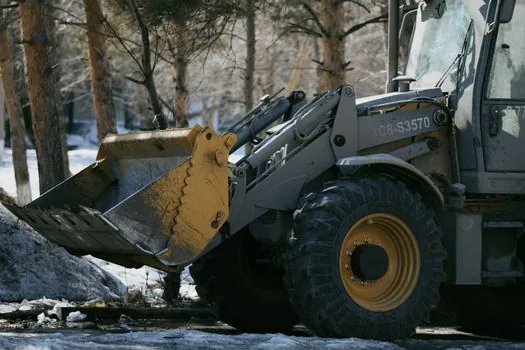
Tires win on per-hour cost when the cycle is long, the surface is firm, and the machine moves at speed: quarry-to-fill hauls, large stockpile management, road-spreading work, and any job where the dozer self-transports between zones multiple times per shift [S2][S3][S8]. Crawler undercarriage costs are amortized best on soft, abrasive, or steep terrain where a wheel dozer cannot stay on the line: land clearing, pioneering, pad construction on uncompacted fill, and ripping in shot rock [S3][S4].
Three decision criteria separate the choice cleanly. First, average cycle speed: under 5 mph sustained, a crawler stays competitive; over 10 mph, tire cost-per-hour dominates. Second, ground abrasiveness: silica-rich rock, blast rock, and recycled concrete slash tire life and push hourly cost above the undercarriage line. Third, transport frequency: a wheel dozer that self-transports daily saves $300–$800 per move in lowboy fees, which over a year of operation can offset a full set of replacement tires [S3][S8].
When the Crawler Math Beats the Wheel Math
On high-impact, low-speed work, the crawler undercarriage is the cheaper per-hour choice because the wear is distributed across more components and the rebuild can be staged. A partial parts replacement on the RC100 came in at $9.15/hour versus $16.78/hour for the OEM full set, and a tracks-only replacement dropped to $5.55/hour, which is below the typical wheel-dozer tire cost on mixed terrain [S5].
The crawler's liability is that every component wears at a different rate, so condition-based inspection is the only way to avoid the $21,936 OEM replacement event; dealers will typically pull the tracks, measure idler and sprocket wear, and then decide between full, partial, or none, which is the workflow that produces the lower per-hour numbers on a well-run fleet [S5].
When the Wheel Math Beats the Crawler Math
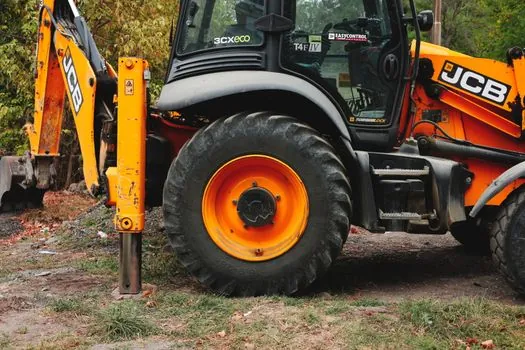
On hard, dry, rolling terrain with frequent long relocations, a wheel dozer at $3.75–$10.00 per hour in tire cost will undercut any crawler undercarriage scenario because the tire footprint is small enough to be cheap per revolution and large enough to roll at speed without the slip that wrecks tracks [S2][S3]. Mines running Cat 834K-class wheel dozers on haul-road spreading routinely log 5,000+ hours on a set of L5 tires because the cycle is high-speed and the surface is compacted aggregate, which is the use case the original-equipment cost-of-ownership models are tuned for [S2][S8].
The wheel dozer's exposure is single-event risk: a sidewall cut from a rebar or a rim-impact from a hidden boulder can write off a $5,000–$15,000 tire outside the wear curve, so fleets that operate on demolition debris or scrap yards often spec foam-filled or solid tires, which roughly doubles the per-tire cost but eliminates the field-failure line item [S2][S4].
Standards, Sourcing, and the Rate Card Reality
FEMA's 2025 Schedule of Equipment Rates reimburses crawler, truck, and wheel dozers in the same $16.53/hour band, which deliberately does not distinguish between the two undercarriage systems, meaning a public-sector cost claim has to defend the per-hour tire or track figure separately from the rate-card recovery [S1]. That separation is why the per-hour tire and undercarriage analyses above are the right unit for fleet-level decisions, not the published hourly rate.
Operator-side sources put the break-even at roughly 2,500–3,000 hours per year of operation: above that threshold on hard, dry ground, tire per-hour cost wins; below it, or on soft and rocky ground, the crawler's staged rebuild plan wins [S2][S3][S5].
Track the next three signals: 2027 L5 tire price index releases from major OEMs, any new TKPH-rated compound for high-cycle wheel dozers, and FEMA's 2026 Schedule update, which will reset the $16.53/hour recovery line for federal projects [S1]. For a related view on compaction-class equipment, the wheel loader running-cost profile follows similar tire-versus-undercarriage logic at smaller scale.
Spec-level background on the components involved: crawler crane, and pressure transmitter.
Related analysis: Temperature transmitter vs temperature indicator: output, signal, role.