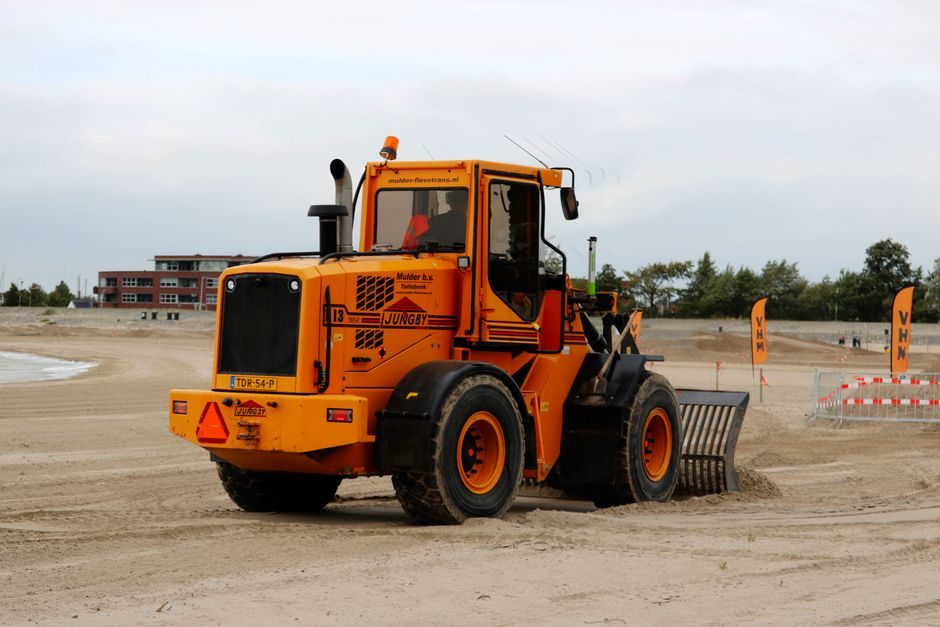
Wheel loaders span roughly 0.3 m³ compact buckets to 9.0 m³ large mining-class buckets, and a peer-level spec review has to lock down operating weight, breakout force and bucket capacity before any brand shortlist [S1].
This article lines up the criteria a process engineer, fleet buyer or rental-house superintendent should score — payload-to-weight, drive type, turning radius, lift height and the build-vs-buy math behind owning a wheel loader versus renting a telehandler or a skid steer loader.
Operating-Weight and Bucket-Capacity Class Gates
Wheel loaders are conventionally split into three operating-weight bands: compact under 6 t with 0.3–1.0 m³ buckets, mid-size 6–18 t with 1.2–3.5 m³ buckets, and large 18 t and above with 4.0–9.0 m³ buckets; the wheel loader operating-weight, powertrain and bucket-capacity class map breaks each band down by typical engine power and tip-load figures. [S1]
Payload-to-operating-weight ratio lands near 1:1.6 to 1:1.8 for general-purpose buckets, which is the spec gate most buyers miss when they focus on raw bucket volume instead of material density [S1].
For a 5 t-class compact machine with a 1.0 m³ general-purpose bucket, expect roughly 50 kW engine power, 38–45 kN breakout force and an 11–12 t static tipping load at full turn; jumping to a 16 t mid-size more than doubles breakout force and quadruples static tipping load, but also raises transport width above 2.8 m and frequently requires a low-bed permit.
Articulated Hydrostatic vs Torque-Converter Powertrains
Compact and most mid-size wheel loaders now ship with hydrostatic drives delivering stepless 0–20 km/h work speeds and 0–35 km/h roading, while large mining-class machines still rely on planetary torque-converter powershift boxes with 4 forward / 4 reverse ranges for the 6–40 km/h haul profile [S1].
Hydrostatic drives cut fuel burn roughly 10–25% in load-and-carry cycles compared with torque-converter peers of equal rated power, but they cap out near 280 kW because of hydraulic-pump displacement limits; above that envelope, a torque-converter driveline is the only option.
Buyers comparing a backhoe loader to a compact wheel loader on the same site should note that backhoes cap bucket capacity near 1.0 m³ and lose hydrostatic efficiency above 75 kW, whereas dedicated wheel loaders keep the same driveline architecture into the 200 kW band — the design space is not interchangeable.
Breakout Force, Lift-Path Geometry and Tipping-Load Discipline
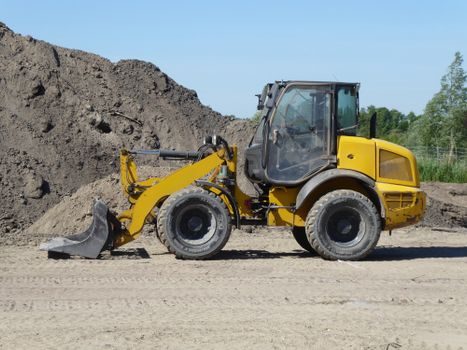
Static full-turn tipping load is the figure that determines real bucket payload; an unballasted 12 t wheel loader typically posts 8.0–9.5 t tipping, so the safe-rated payload per SAE J818 sits near 4.8–5.7 t for a 2.3 m³ general-purpose bucket heaped at 1,800 kg/m³. [S2]
Z-bar loader linkages push 90–95% of breakout force straight into the pile, parallel-lift geometries trade roughly 10–15% of peak breakout for constant rack-back from ground to carry height — the spec engineers spec for palletized or truck-loading work, while Z-bar wins on face-shovel digging.
Lift height to hinge pin separates a 3.0 m wheel loader (low-profile feedlot or underground) from a 4.2 m+ machine capable of loading 4-axle on-highway dump bodies; a 200 mm hinge-pin delta sounds small but flips which trucks the loader can clear without a ramp.
Steering, Articulation and On-Site Maneuverability
A 35–40° articulation angle and a 5.0–6.5 m outer turning radius are typical for a 12 t machine, dropping below 4.0 m for compact units under 6 t; tight-quarter stockpile work is the most common site-failure mode when buyers skip this figure. [S3]
Rear-wheel steer on rigid-frame telehandler-style wheel loaders shrinks the turning radius 15–20% versus articulated peers of the same wheelbase, but it caps travel speeds near 25 km/h and adds a rear-axle wear item the articulated design does not carry [S1].
Telematics, Hydraulics and Operating-Cost Gates
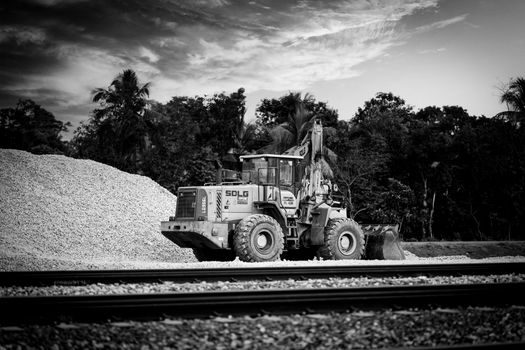
Modern wheel loaders run load-sensing hydraulics with 200–250 bar system pressure and 110–180 L/min pump flow on the 12 t class; pilot-controlled joysticks are standard above 6 t, and ISO 20474 ROPS/FOPS cabs with HVAC are baseline from roughly 8 t upward [S1].
Scheduled service intervals sit near 500 h for engine oil and 1,000 h for hydraulic filters on hydrostatic machines, with first major component overhaul near 8,000–12,000 h on engine and 15,000–20,000 h on the driveline; torque-converter peers stretch those numbers by 20–30% at the cost of fuel burn.
Limitations, Failure Modes and Where a Wheel Loader Is the Wrong Tool
Wheel loaders are built for cycle work on a prepared surface; below 0 °C, hydrostatic drives need cold-start interlocks and arctic-grade hydraulic fluid, while ground pressure near 35–45 kPa for a 12 t machine means soft-footprint work without bog-axle flotation will rut and strand the unit [S1].
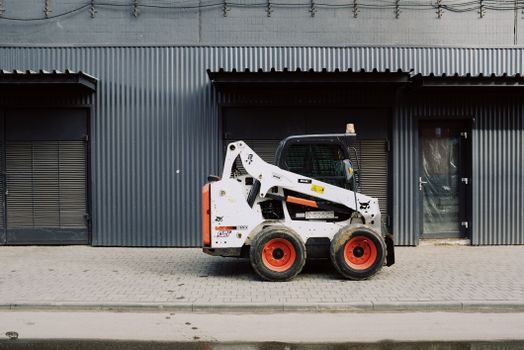
Below the 0.3 m³ compact threshold, a skid steer loader outperforms on pure cycle time, and above the 9.0 m³ mining threshold an electric-drive cable shovel or hydraulic excavator with a 12 m³ face-shovel bucket takes over; the wheel loader sweet spot closes hard near those bookends.
Selection Rules and Trackable 2026 Signals
Watch the EU Stage V / US EPA Tier 4 Final emission re-certification window and the rollout of factory-fit electric-drive compact wheel loaders (battery packs near 60–140 kWh, 4–6 hour continuous duty cycles) — both move first on the same OEM platforms and reset the hydrostatic-vs-torque-converter conversation by mid-2026.