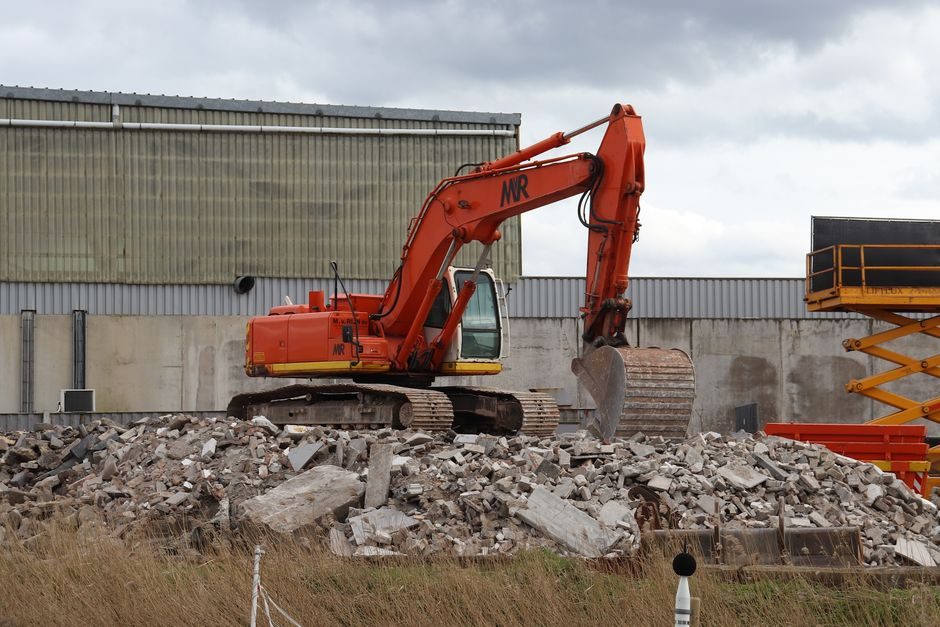
An excavator purchased today will burn through 4-6× its acquisition price in diesel, filters, hydraulic oil, undercartenance work and operator wages before it is sold or scrapped, which is why total cost of ownership (TCO) modelling — not the FOB quote — drives the procurement decision on every well-run site [S3].
TCO itself is a decades-old concept that captures all relevant supply-chain and lifecycle costs of acquiring, using, maintaining and disposing of a given asset, and it does not require pinpoint accuracy on every line item to be useful [S8]. For an excavator class machine, the practical TCO framework is: acquisition + financing + fuel + preventive maintenance + wear parts (undercarriage, GET, hoses) + tires/tracks + operator labour + insurance + downtime cost − residual value. The remaining sections break each lever against the OEM-agnostic selection criteria that actually move the 5-7 year number.
Acquisition vs. Lifecycle Split: The 15-25% Rule
Industry guidance for off-road diesel iron places purchase price at roughly 15-25% of cumulative TCO over a typical 5-7 year ownership window, with the balance consumed by fuel (30-40%), maintenance and wear (20-25%) and operator/financing overhead (15-20%) [S3][S8]. That ratio is what makes the cheapest FOB quote frequently the most expensive machine on the books: a 10% saving on a $180,000 22-ton crawler is wiped out by one undercartenance rebuild ($25,000-40,000) that a heavier-duty competitor would have deferred by 2,000 hours.
For buyers building a model from scratch, the line items map directly onto the structure Microsoft recommends for IT-fleet TCO: enumerate current-state specs, enumerate replacement-state specs, then layer operational costs [S1]. Translated to a 22-ton crawler, that means capturing engine model and rated fuel burn (L/hr at 50%/75%/100% load), hydraulic tank capacity, undercarriage type (standard vs. HD vs. rubber), scheduled service intervals in hours, and expected residual percentage at year 5/7 — before quoting a single FOB number.
Fuel and Lube: The 30-40% Block
Diesel is the single largest TCO line for any diesel-hydraulic excavator. A typical 20-25 ton class machine burns 10-16 L/hr in mixed digging duty, and a 30-ton climbs to 18-26 L/hr under heavy breakout work, which at $0.85-1.10/L site diesel over 2,000 engine hours per year puts annual fuel between $17,000 and $52,000 per unit. That band is why Stage V / Tier 4f aftertreatment health and idle-shutdown programming — not engine brand — dominate fuel TCO on regulated jobsites. [S1]
Lube and consumables layer another 8-12% on top: hydraulic oil (180-320 L sump on a mid-size crawler, $4-8/L plus 2,000 hr change intervals), engine oil (~$3-5/L, 500 hr interval), diesel exhaust fluid for SCR-equipped units (3-6% of fuel volume), and filters every 250-500 hr. Specifying extended-drain hydraulic oil and 1,000 hr engine oil packages is one of the few levers that simultaneously cuts purchase cost (fewer filters stocked) and operating cost; spec sheets for this are openly available on the crawler excavator selection guide reference page.
Wear Parts: Undercarriage, GET and Hydraulics
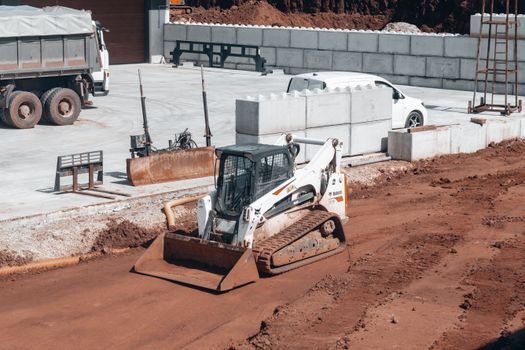
Undercarriage is the excavator line item most often under-budgeted. A standard 22-ton crawler undercarriage (shoes, rollers, idlers, sprockets, track chains) replaces at 3,500-5,000 hr in abrasive conditions and 6,000-8,000 hr in soft-soil highway work, and the parts-only bill runs $18,000-35,000 depending on whether you fit single-grouser, triple-grouser or HD shoes. Bucket ground-engaging tools (GET) — teeth, adapters, side cutters — add another $2,000-6,000 per 1,000 hr on abrasive rock duty, which is why GET-flipping discipline is a TCO line, not a workshop chore. [S2]
Hydraulic hoses and cylinders are the third wear pillar: a mid-size excavator can consume $4,000-9,000/yr in hose replacements on a demolition or quarry application, with cylinder rebuilding at $3,000-6,000 per event every 8,000-12,000 hr. The mitigation is a published hose-routing audit at every 2,000 hr and the OEM's high-pressure hose upgrade package, which the crawler excavator price and cost guide routinely flags as a sub-2% price adder that cuts hose TCO by 30-40%.
Residual Value and Hours Worked
Residual value is the single biggest swing factor in excavator TCO, and it is the line most analysts under-model. A well-maintained 20-ton crawler holds 45-55% of list at 5 years/5,000 hr, but the same machine at 8,000 hr with patchy service history is worth 25-35%, a 20-point spread that flips the entire TCO math. The driver is hours, not calendar years: an excavator that sits idle costs almost nothing in fuel but bleeds value through missed rental opportunities, while a 3,000 hr/yr machine needs documented service to keep residual intact [S2].
Sticking to OEM service intervals, keeping digital service records (many OEM telematics portals export a PDF logbook), and avoiding non-OEM filters on common-rail engines are the three habits that preserve residual. This dovetails with broader fleet audit practice, where TCO modelling on fuel, maintenance, depreciation, financing and energy is the foundation of any electrification or right-sizing roadmap [S2].
Decision Criteria: Diesel vs. Electric and Mini vs. Mid-Size
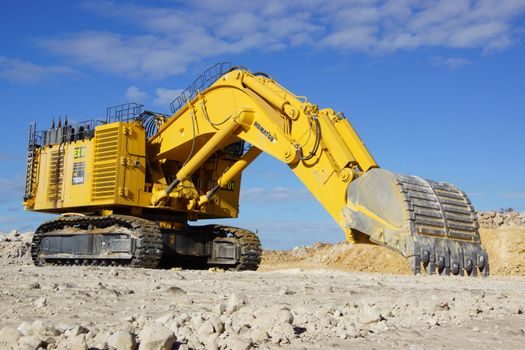
For urban or indoor work, battery-electric mini excavators (1.5-6 ton) cut fuel TCO to zero and reduce scheduled service by 30-40% (no engine oil, no diesel filters), but they add a 25-40% acquisition premium and require on-site 32-63 A charging, so the TCO crossover usually sits at 2,500-3,500 annual hours over a 5-year hold. Below that, diesel wins on TCO; above it, electric wins — and the only way to know which side you are on is to model both, exactly the methodology used in cross-vendor fleet TCO work [S2].
The other recurring decision is mini vs. mid-size. A 5-ton mini excavator burns 3-5 L/hr, transports on a 7,000 kg tag trailer, and fits confined sites, but productivity on bulk excavation is roughly 30-40% of a 22-ton. The TCO break-even is when the 5-ton fleet needs more than 1.5× the hours to move the same bank cubic metres — a calculation that depends on local labour rates, trench length and truck-fill time, all of which the excavator advantages and disadvantages reference lays out by spec line.
Limitations and Failure Modes of the TCO Model
Every TCO spreadsheet has the same weaknesses. Residual value is a forecast, not a fact, and a 5% swing on residual is worth more than a 10% swing on fuel. Downtime cost is the most-often-missed line: an excavator earning $400-700/day on a wet-hire contract loses $1,200-2,100 for every unplanned day out, which is why mean-time-between-failure and parts availability inside 24 hr are real TCO lines, not soft factors. Site diesel price is volatile, and a $0.20/L move on 25,000 L/yr is $5,000/yr that the model rarely holds steady [S3].
The fix is sensitivity analysis, not precision: run a base case, a high-fuel / low-residual case, and a low-utilisation case, then read the deltas. If the ranking of competing machines does not change across the three cases, the TCO conclusion is robust; if it flips, the decision is genuinely close and should be deferred to a pilot deployment, not a single-model spreadsheet [S8].
Procurement Checklist Before You Sign the PO
Before issuing a purchase order, lock five TCO numbers in writing: (1) extended-drain hydraulic and engine oil package availability, (2) undercarriage warranty terms and pro-rated replacement schedule, (3) telematics data export and service-log PDF access, (4) guaranteed buy-back or trade-in residual at year 5/7/10 in writing, and (5) parts-in-warehouse confirmation for the region. These five items, more than the FOB discount, decide whether the machine will land inside or outside the 15-25% acquisition / 75-85% lifecycle split that defines a healthy excavator TCO [S1][S3].
Trackable signals for the next 6-12 months: OEM announcements of Stage V / Tier 5 final aftertreatment simplifications that cut DEF and DPF service hours, and any update to battery-electric mini excavator cycle-life warranties (currently 2,000-3,000 cycles), both of which directly shift the crossover hours for the diesel-vs-electric TCO decision above. Compare those against the published 2026 FOB bands by tonnage before locking the model.
For component-level specifications, see excavator, total station, and pressure transmitter.