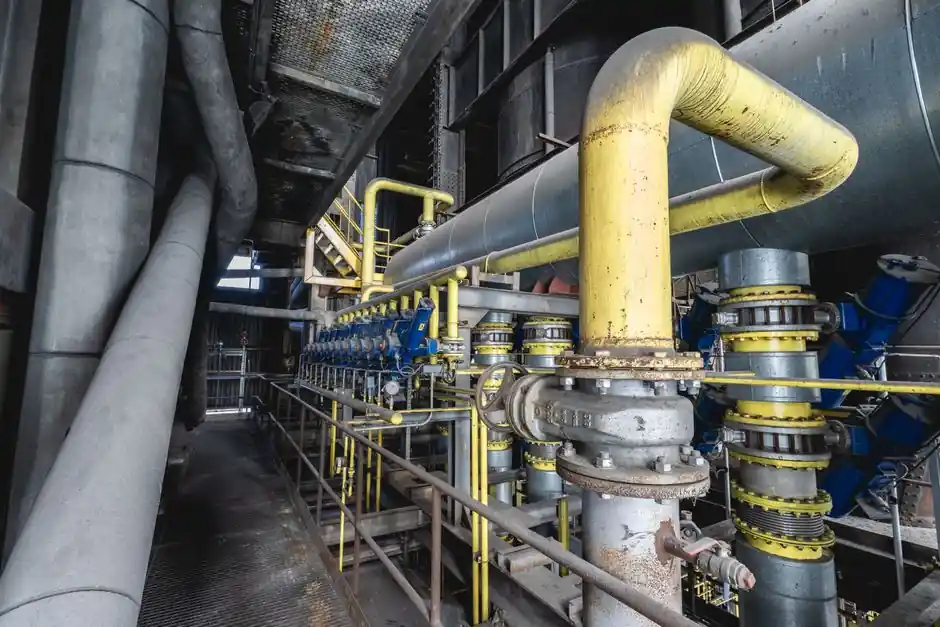
The global Distributed Control System (DCS) market is valued at USD 18.89 billion in 2026 and is projected to reach USD 29.6 billion by 2035, a compound annual growth rate of 5.1% from a 2026 base [S5].
Process control systems, the core DCS application area covering refining, chemicals, power, pharmaceuticals, metals, and food, command an estimated 58% of total demand [S2]. Oil and gas, chemicals, and power generation remain the three primary end-uses, with pharmaceuticals and food processing expanding as batch-oriented automation displaces legacy relay logic [S1].
Market Sizing: Two Forecast Bands Across 2026-2030
The DCS segment within the broader Industrial Control and Factory Automation market is reported at USD 15,973 million in 2025, expanding to USD 20,469.6 million by 2030 at an 8.3% CAGR [S3]. A parallel forecast places the dedicated DCS market at USD 18.89 billion in 2026 growing to USD 29.6 billion by 2035 at 5.1% CAGR [S5]. The 8.3% figure reflects a narrower factory-automation scope, while the 5.1% figure tracks the full process-industry envelope including greenfield refinery, petrochemical, and combined-cycle power retrofits [S3][S5].
Both forecasts converge on the same direction: capex recovery in petrochemicals, EU refinery conversion to renewable-feedstock co-processing, and the need to replace first-generation DCS installations from the 1995-2005 wave are the structural drivers. Refinery and petrochemical operators facing tighter emissions limits are the largest single contributors to controller and I/O replacement demand, while pharmaceutical batch suites are the fastest-growing node in percentage terms [S1][S2].
Why Process Plants Specify a DCS Over PLC or SCADA
A Distributed Control System distributes control across multiple nodes rather than centralising it in a single controller, with each node communicating over a plant-wide data network to provide real-time monitoring of continuous processes [S4]. This architecture minimises single-point-of-failure risk, a design principle that distinguishes DCS from both PLC-based discrete control and SCADA's supervisory monitoring model [S4].
Core components, control nodes, HMI workstations, the data communication network, and field instruments, are tightly integrated rather than assembled from independent subsystems [S4]. For continuous processes in refining, ethylene cracking, ammonia, and power generation, this integration is the reason DCS remains the default specification: control loops close in milliseconds, redundancy is engineered at the controller and I/O level, and the engineering tools support regulatory and advanced-control strategies that PLCs do not natively handle [S4]. SCADA fits water and grid monitoring where supervisory visibility matters more than closed-loop control, while PLCs remain the right tool for assembly-line on/off logic and machine-level sequencing [S4].
Process Industry Use Cases Driving 2026 Demand

Refineries, petrochemical crackers, and combined-cycle power plants continue to absorb the largest share of new DCS orders, with pharmaceuticals, food processing, and metals processing as the high-growth niches [S1][S2]. In pharmaceuticals and food processing, the DCS dynamically adjusts parameters based on real-time data from field instruments, which is the central reason batch-oriented GMP facilities have moved away from PLC-only architectures [S4].
Three use-case patterns repeat across the 2026 order book. First, brownfield controller migration: operators replace obsolete controllers while reusing existing I/O wiring and field instruments to limit downtime. Second, alarm-rationalisation and operator-training simulator projects layered onto an existing DCS to improve safety performance under ISA 18.2 alarm-management programs. Third, integration of process calibration workflows and pressure transmitter diagnostics directly into the DCS engineering environment, reducing the engineering effort for instrument-loop checks at commissioning. Related infrastructure such as flow meter replacements is increasingly specified with HART or Ethernet-APL output to feed the DCS data historian directly rather than through separate protocol converters.
Selection Criteria: Matching DCS Architecture to Process Risk
The decision is not which vendor, it is which architecture matches the process risk profile. Three criteria dominate: controller and I/O redundancy level, the level of integration with field instrumentation, and the openness of the control network to higher-level systems. [S4]
Level of integration with the field layer matters more in 2026 than in previous cycles. Plants that standardised on HART or Ethernet-APL field instruments gain diagnostic data that flows directly into the DCS asset-management module; plants that retained older 4-20 mA-only transmitters do not. This is one reason multifunction process calibrator throughput at commissioning has become a hidden project risk: a high-transmitter-count project with HART-based process control commissioning can absorb 30-40% more engineering hours than a 4-20 mA-only job. Plants building new v-process-line systems should plan calibrator and HART-commissioning tooling in parallel with the DCS order, not after.
Limitations, Constraints, and Common Failure Modes
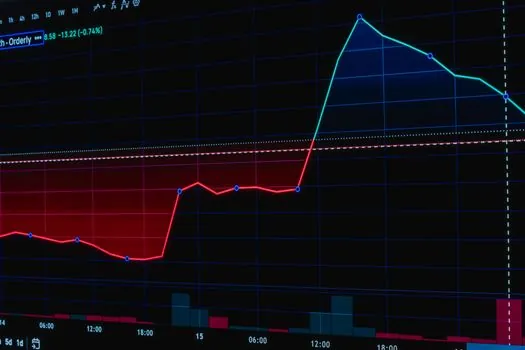
A DCS is not a one-size-fits-all solution. Discrete manufacturing with high-speed on/off logic, such as packaging lines and material handling, is still best served by PLCs, and adding a DCS to such a line adds cost without functional benefit [S4]. Hybrid plants, where a continuous process is bolted to a discrete packaging or bottling line, are common in food and pharmaceuticals, and the engineering effort to integrate the two control layers is consistently the largest source of project delay in 2026 retrofits [S4].
Migration risk is the other dominant failure mode. Running a new DCS in parallel with the legacy system for a cutover window of 6-18 months is standard practice, but the engineering effort to re-document loop drawings, re-test interlock logic, and re-validate safety instrumented functions under IEC 61511 is routinely underestimated. Owners who scope a DCS replacement as a hardware swap rather than a full documentation and validation project encounter budget overruns of 20-35% on the controls portion of the work. Cybersecurity scope is now non-optional: any 2026 DCS order includes a managed-detection-and-response layer for the control network, which adds recurring cost but cannot be omitted for compliance with IEC 62443.
Sourcing, Standards, and Trackable Signals
Two near-term signals will indicate whether the 5.1% and 8.3% CAGR forecasts hold. First, the order intake of the top three DCS vendors through Q1 2027, which is the cleanest leading indicator for greenfield process-industry capex. Second, the publication rate of IEC 62443-3-3 certification updates for control-system components, since certification backlogs of more than 18 months are a known constraint on plant-level cyber-risk-reduction projects. [S3]
For further reading on how adjacent plant-electrical decisions interact with control-system scope, see the engineering analysis of DC microgrids in industrial plants and the rack-density-driven cooling discussion of AI workloads reshaping data center power. Plants that are also evaluating structural choices for new build can compare joining methods in the structural adhesive vs welding guide.