
Hot box resin-coated sand cures fast inside a heated metal core box, with the practical cure window sitting at 450-550°C; box surface temperatures above ~550°C push the resin past full cure into thermal degradation, producing a brittle, carbonised shell [S4].
Foundry process sheets flag the upper bound explicitly: "Box too hot, above 550 degrees (450-550 degrees)" appears in the over-cure column of the same defect matrix that ties hot strength loss to sand grades and blow timing [S4]. The mechanism is the same whether the box is a dedicated hot-box core machine or a shell core shooter with phenolic resin-coated sand.
What "too hot" means in hot box numbers
The working hot box band is 450-550°C at the box surface, with a sand melt-point window normally held at 205-218°C on the resin-coated sand specification [S4]. Operators pushing the cure cycle faster routinely overshoot 550°C; the resin chemistry crosses from a thermoset cross-link regime into oxidative pyrolysis. A cold-box core machine sidesteps the problem because the amine gas cures the binder at room temperature, but a hot box trades that simplicity for cycle time, and pays for it on the upper end of the temperature dial [S3][S7].
Independent process notes from resin suppliers confirm the stored-heat model: sand in contact with the hot core box surface cures first, and only the sand actually touching the box wall hardens, while the insulated core centre can stay uncured if the box is too cold [S3][S6]. That same wall-first cure is what turns against the operator when the wall runs 100°C over target, because the resin there burns rather than cross-links.
Resin chemistry: from cross-link to char
Hot box and warm box resins are typically furan or phenolic formulations set by an acid-salt catalyst, and they harden when the box wall reaches a given temperature [S8]. Below ~450°C the cure is under-set and the core is weak; in the 450-550°C band the cure goes to completion and tensile strength peaks; above ~550°C the binder undergoes oxidative degradation, volatiles escape, and the cured film collapses into a glassy, low-cohesion char. The visible tell is the darkening chain: yellow core means under-cure, brown is normal, and black means the resin is burning on, per the same defect table [S4].
Defect sheets from Midvale tie "heat too high (above 550 degrees)" and "invest too long" to a single over-cure column, and a separate blast-on column lists "core cycle is too long, core is black, resin is burning on" as the failure signature [S4]. Warm box, by contrast, deliberately uses a lower box temperature so the resin only initiates cure inside the box and finishes in a separate dryer, which extends tooling life precisely because the binder never sees the pyrolysis regime [S5].
Mechanical consequences: brittle shell, weak core

Over-cured hot box shells fail in three recognisable patterns. First, the cured layer at the box wall turns glass-hard and shatters on ejection, producing fines and broken edges that are then visible as sand-inclusion and surface-veining defects in the casting. Second, the bond between the burnt skin and the underlying sand collapses, so the core has a hard crust with a crumbly interior, and flexes of a few tenths of a millimetre are enough to crack the crust. Third, residual volatile breakdown products migrate into the mould cavity during pouring, contributing to gas-related defects when the casting solidifies [S2][S4].
The opposite end of the window is also bad: a box below 450°C produces a yellow, under-cured core with low hot strength, and under-cured cores sag, deform on the conveyor, and erode in the iron stream [S3][S4]. The window is narrow on purpose, and the equipment choice (cast iron tool body, electric or gas platens, and a core machine sized to the cycle) is built around holding the wall inside it, not chasing either edge.
Process-side corrections that actually move the needle
Three levers bring a hot box back inside the 450-550°C window without losing cycle time. First, balance the burners: a "burners out in some areas" condition shows up as cold spots and cold sand patches, while a single-zone over-fire shows up as burnt edges; the cure uniformity is a better predictor of brittleness than the average pyrometer reading [S4]. Second, tighten the invest time: a longer-than-needed invest holds the sand against an already-cured face, which is the same heat dose as a higher wall temperature, so "invest too long" is treated as a separate column in the over-cure list [S4]. Third, stabilise the sand: "sand temperature too hot (above 90 degrees)" preheats the resin in the blow tube and skews the cure balance toward the wall, so a sand cooler or buffer hopper is often the cheapest fix on a brittle-core problem [S4].
Sand side, Midvale's defect table separately flags "melt point too low (below 205 degrees)" as a contributing cause of over-cure and brittleness, because a low-melt resin degrades at a lower wall temperature and narrows the safe window by ~20-30°C; this is a specification control problem as much as a machine control problem [S4]. On the related note, sintering behaviour of the silica carrier itself becomes a constraint well before the resin window closes, and a process engineer chasing the upper limit on a hot-chamber machine eventually has to weigh the resin and the sand curves against each other.
Comparison: hot box vs warm box vs cold box vs shell
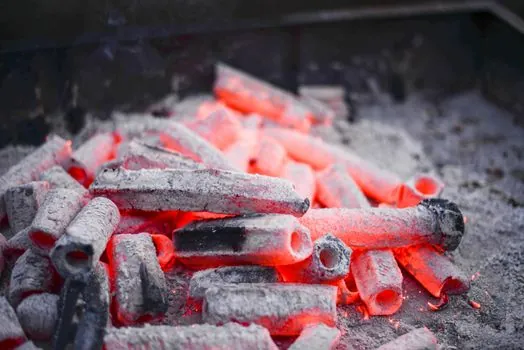
Hot box runs at 450-550°C wall, cures fully in the box, and produces a thin-walled shell; warm box runs cooler, initiates cure in the box, and finishes in a separate dryer, extending tool life at the cost of floor space [S5][S6]. Cold box uses an amine gas through a room-temperature box, so brittleness from overheat is not in scope; the failure mode is amine residuals and bench life instead [S3][S7]. Shell core shooting is the original hot-box derivative and shares the same wall-temperature window, so the same 550°C ceiling applies to a shell core machine running phenolic resin-coated sand [S3][S7]. The decision criterion is cycle time and part geometry: high volume and thin shell geometry favours hot box or shell, thick solid cores favour cold box, and medium volume with long tooling life favours warm box [S1][S5].
For foundries seeing brittle hot box cores, the diagnostic order is: (1) pyrometer the box wall at the hottest and coldest zones against the 450-550°C band; (2) cut invest time in 1-2 second steps and re-check; (3) verify sand temperature is in the 60-80°C range and melt point is at 205-218°C; (4) inspect for burner imbalance and back-draft in the box [S4]. If all four pass and the brittleness persists, the resin grade itself is the next variable, and the cure window is set by the resin supplier's data sheet, not the box's nameplate.
Trackable signal: the 450-550°C operating band and the 205-218°C resin melt-point range are the two values to log on every hot box start-up; a one-week trend against core visual (yellow/brown/black) and tensile scrap rate will separate burner-control issues from resin-batch issues faster than any one-off audit [S4]. A second signal worth tracking is the per-shift frequency of "blasting on" defects, because blasting and over-cure share a common upstream cause in cold box vents and hot box over-temp respectively, and the trends move in opposite directions when a fix lands [S4].
See also our earlier report, Why EPDM Price Tracks Ethylene and Propylene Monomer Cost.