
Wire mesh panels split into four construction families — welded, woven, crimped, and hexagonal — with selection driven by aperture size, wire diameter, and base metal [S1][S2].
Anping County in Hebei remains the dominant Chinese manufacturing cluster, with audited suppliers like Anping Dechengli (est. 2006, 101–200 employees) producing black iron wire, galvanized iron wire, welded mesh rolls and panels, and PVC-coated chain link under ISO 9002-controlled lines [S3]. Welded mesh panels from this cluster list at US$ 0.50–2.00 per square meter at 100 m² MOQ, with 2.0/3.0/4.0 mm wire diameters and 50×50 mm apertures as the most quoted spec band for fencing and construction [S4].
Welded Mesh Panels: Strength and Dimensional Stability
Welded mesh panels are made by resistance-welding orthogonal wire sets at every intersection, producing rigid sheets that hold shape under load — typically specified for concrete slab reinforcement, machine guards, and security partitions [S1][S6]. Wire diameters of 2.0 mm, 3.0 mm, and 4.0 mm are the most common commercial bands, paired with apertures from 25×25 mm up to 100×100 mm, and panel stock sizes commonly cut to 4'×8' (1.22×2.44 m) for North American distribution with same-day shipping [S4][S6].
Surface treatment drives service environment: hot-dip galvanized (zinc coating typically 60–100 g/m²) for outdoor fencing, electro-galvanized for indoor partitions, and PVC-coated (0.40–0.60 mm polymer over 2.5–3.5 mm galvanized core) for coastal or chemical exposure [S3][S4]. Welded panels cannot be rolled tightly without cracking welds, so logistics favor flat-pack shipping — a real cost driver for orders above 1,000 m².
Woven Wire Mesh: Aperture Precision for Filtration
Woven wire mesh uses over-under warp and weft interlacing, with four canonical weaves: plain, twilled, plain Dutch, and twilled Dutch — each giving different aperture stability and flow characteristics [S2]. Plain weave offers the widest aperture range (typically 0.025 mm to 25.4 mm) with 1:1 wire-count symmetry; twilled weave adds weft displacement over two warps to allow finer wires at heavier counts; Dutch weaves pack more weft than warp wires to create slit-like apertures, the geometry behind most industrial filter cloth [S2].
Material selection maps to chemistry: stainless steel (AISI 304/316) covers 80% of food, pharma, and chemical filtration; brass, phosphor bronze, copper, Monel, aluminum, and nickel fill the remaining specialty roles for EMI shielding, marine, and aerospace [S2]. For paper-machine forming fabrics, polyester monofilament and nylon monofilament compete with stainless and bronze wires, serving as the dewatering medium that defines paper surface quality [S9]. Selecting a woven mesh by mesh count alone — without naming the weave — is the most common RFQ error.
Crimped and Knitted Mesh: Pre-Deformation for Heavier Gauges
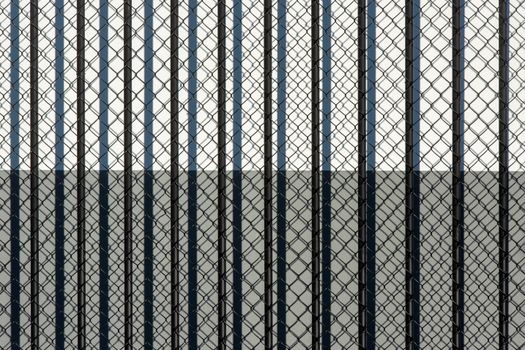
Crimped wire mesh pre-deforms the warp and weft wires with a corrugation press before weaving, locking them in place and allowing wire diameters of 2.0–12.0 mm that plain weaving cannot hold flat [S2][S10]. Sub-types include plain crimp, intermediate crimp, lock crimp, flat top crimp, and slot-hole crimp — each giving different aperture stability and throughput for vibrating screens in mining, quarry aggregate, and coke plants [S2].
Stainless steel crimped mesh is the standard for acid/alkali screening, oilfield mud screens, and electroplating rinse-tank filtration because the crimp geometry sheds blinding particles and resists deformation under vibration [S10]. Knitted mesh — formed by looping a single wire into interlocking loops rather than weaving — is the construction behind mist eliminators, plastic extruder screens, automotive airbag cushions, and rebuildable atomizer wicks; densities reach 0.1–0.3 g/cm³ in compressed form [S2].
Hexagonal, Chain Link, and Expanded Metal: Fence-Line Workhorses
Hexagonal wire netting (chicken wire) uses a three-twist hexagonal cell, with galvanized or PVC-coated iron wire from 0.5 mm to 4.0 mm, and is specified for poultry enclosures, garden fencing, and slope stabilization with rock-fill gabions [S1][S3]. Chain link fence — interlocking steel wire bent into a diamond pattern — is the dominant perimeter security mesh in North American commercial sites, with hot-dip galvanized or PVC-coated finishes in 1.8–4.0 mm wire gauges [S3].
Expanded metal mesh is cut and stretched from a single steel sheet, giving a diamond pattern with no welded or woven joints — the spec of choice for anti-slip walkway grating, heavy-duty machine guards, and architectural facades because it cannot unravel [S1]. For deeper material comparison on open area and pattern geometry, see the spec-side decision map for perforated metal sheet selection. On the fencing side, steel mesh panel applications overlap with welded and expanded product lines for construction sites.
Selection Criteria: Aperture, Wire, Material, and Application Fit

Five criteria drive panel choice: (1) required aperture size and tolerance, (2) wire diameter and tensile strength, (3) base metal and coating for corrosion environment, (4) panel format (roll vs cut sheet) for handling, and (5) whether the application is structural reinforcement, separation/filtration, or barrier/security [S1][S2]. For an apples-to-apples read, the four main construction types line up against typical aperture range, max wire diameter, and primary use as follows:
<strong>Welded panels</strong>: aperture 6–100 mm, wire 2.0–8.0 mm, primary use concrete reinforcement, machine guards, security partitions [S1][S4][S6]. <strong>Woven mesh</strong>: aperture 0.025–25.4 mm, wire 0.02–2.0 mm, primary use filtration, sieving, EMI shielding [S2]. <strong>Crimped mesh</strong>: aperture 1–50 mm, wire 2.0–12.0 mm, primary use vibrating screens, mining aggregate, coke plants [S2][S10]. <strong>Hexagonal and chain link</strong>: aperture 13–75 mm hexagonal, 25–100 mm diamond, wire 0.5–4.0 mm, primary use fencing, gabions, slope stabilization [S1][S3]. Welded panels win on rigidity; woven mesh wins on precision aperture; crimped mesh handles the heaviest gauges on vibrating decks; hexagonal/chain link wins on cost-per-meter for long fence runs [S1][S2][S3].
Where Wire Mesh Panels Underperform
Welded panels fail in vibrating applications because weld points fatigue faster than parent wire; crimped or woven mesh is the correct substitute [S2]. Woven stainless mesh with plain weave holds only 1:1 wire count symmetry — fine filtration below 100 mesh (aperture under 0.15 mm) requires Dutch weave or twilled Dutch to avoid aperture drift under differential pressure [S2].
Galvanized wire mesh should not be specified for chloride-rich, low-pH, or marine-immersion service — zinc coatings dissolve quickly and rust-through follows within 12–24 months in such exposure; stainless 316 or PVC-coated stainless is the correct substitute [S3][S10]. Plain iron wire mesh without any coating will oxidize visibly within weeks in humid outdoor storage, so unpacked inventory at the buyer site should be scheduled, not stockpiled. For line-side process integration, wire rod stock specs upstream determine the maximum drawable diameter for the panel maker.
Standards, Sourcing, and Buyer-Side Red Flags
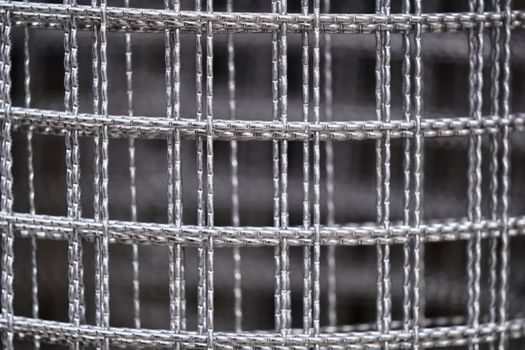
Reputable Chinese mesh manufacturers operate to ISO 9001 or ISO 9002 quality systems with documented incoming-wire inspection, weld-pull testing, and zinc-coating weight verification [S3]. Anping County remains the densest cluster, with audited suppliers on Made-in-China.com, Goldsupplier, and Alibaba offering FOB Tianjin or FOB Huanghua consolidation for mixed-container loads of welded panels, hex netting, and chain link [S3][S4].
Verified product SKUs from one audited Anping supplier list 2.0/3.0/4.0 mm hot-dip galvanized welded panels at 50×50 mm aperture, MOQ 100 m², US$ 0.50–2.00/m²; stainless steel woven cloth, crimped mesh, and chain link are also stocked as standard catalog items [S4]. The buyer-side red flags to watch: vague “industrial grade” labels without wire diameter or zinc-coating weight, MOQ below 50 m² on welded panels (signals trading-company resold stock, not factory-direct), and any RFQ that omits the weave type for woven cloth. Specifying the wire rod grade, the construction type, the aperture, the wire diameter, and the surface finish — in that order — eliminates 90% of the spec gaps that lead to wrong shipments. For context on adjacent metal-fabric decisions, cast aluminum vs window and door applications and aluminum sheet vs window and door spec mapping carry the same decision discipline into non-mesh product lines. See also the spec rationale behind mesh belt conveyor selection for process-line woven mesh applications.