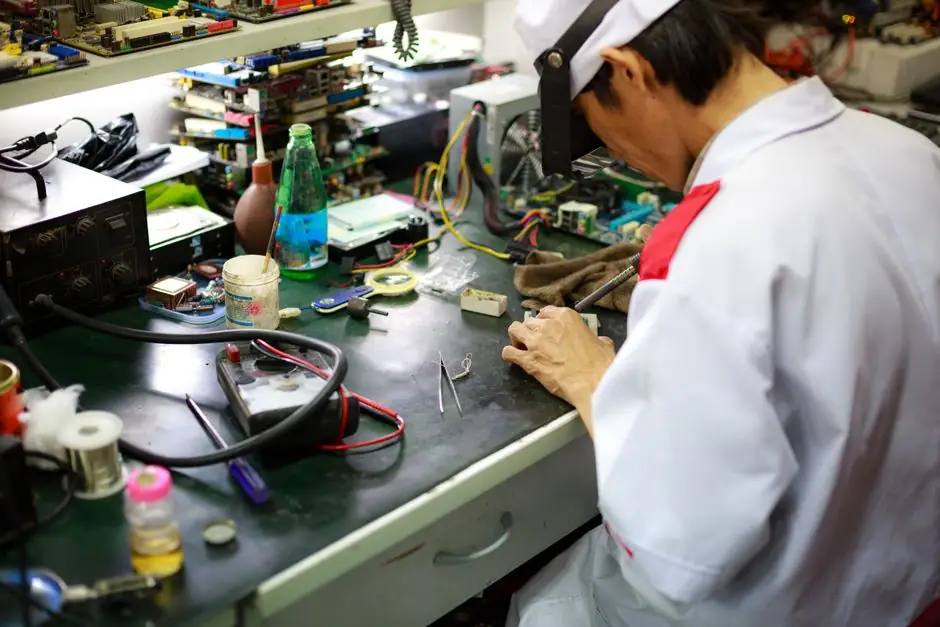
Zinc die casting machines running electronics-housing tooling typically extend mold life by 20–40% when thermal control, precision maintenance, predictive sensing, and operational discipline are applied together [S1].
The typical envelope is a 200-ton hot-chamber cell casting Zamak 5 (ZnAl4Cu1) enclosures at 419°C melt, with wall sections down to 1.5 mm and part weights around 420 g [S3]. Maintenance cost is dominated by mold failures, which account for roughly 65% of unplanned downtime losses; thermal fatigue alone drives 78% of premature mold failures per North American Die Casting Association data [S1][S2].
Baseline Machine Envelope and Why Zinc Differs from Aluminum
Zamak alloys melt between 385–420°C, about 200°C below typical aluminum die casting melt temperatures, which puts measurably less thermal stress on dies, shot sleeves, goosenecks, and ejector pins [S2]. Because zinc is non-abrasive against tool steel, mold life on equivalent geometries runs 30–50% longer than on abrasive alloys, with energy consumption dropping about 25% on the same tonnage [S1]. For a reference electronics-housing part, the SINAMICS Control Unit CU305 housing is 190 × 72 × 55 mm, weighs 420 g, and is cast at 1.5 mm wall thickness on a 200-ton machine, then trimmed, CNC machined, and assembled with an EMC gasket [S3]. Buyers and maintenance leads should anchor specifications to the broader zinc die casting machine class rather than treating it as a generic die casting machine category, because hot-chamber zinc cells have very different wear patterns than cold-chamber aluminum or magnesium units.
Daily and Scheduled Maintenance: Symptom, Cause, Action
Each shift should start with targeted cleaning of the shot sleeve, nozzle, and gooseneck interior; zinc oxide buildup in the nozzle is the leading root cause of cold-shut and short-shot defects in electronics housings, where any residual particle is a short-circuit risk [S3][S6]. A tiered lubrication regimen follows: high-temperature grease on guide pins and hinge points every 8 hours, daily hydraulic level and filter visual checks, weekly hydraulic circuit pressure testing for valve response and seal integrity, and plunger-tip replacement on cumulative cycle count rather than calendar time [S1]. Hydraulic oil viscosity should be sampled monthly; deviation beyond ±10% indicates contamination or oxidation, both precursors to pump seizure and seal blow-by [S1]. Maintenance teams in non-ferrous smelting environments report that disciplined lubrication alone cuts wear-related failures by 30% and extends component service intervals by 60%, figures consistent with peer-reviewed Journal of Manufacturing Systems work cited in 2023 [S1]. For a structural frame of reference, see the broader aluminum die casting machine maintenance literature, which shares the same hydraulic and clamping logic but differs sharply on shot-sleeve wear.
Thermal Control: Where 78% of Mold Failures Originate

Thermal fatigue accounts for 78% of premature mold failures in die casting, per industry data from NADCA, and the dominant failure sites are gates, runner channels, and vent lands where temperature gradients concentrate stress [S1]. Three controls cut this risk in practice: conformal cooling channels that follow part geometry, real-time mold-surface monitoring held within ±5°C across a production run, and stress-optimized cycle profiles with gradual ramp/cool transitions rather than abrupt setpoint changes [S1]. The point that catches most electronics-housing programs off guard is solder and wash at the gate: stable temperature at the runner prevents the molten zinc from sticking and tearing the cavity surface, a defect that on a 1.5 mm-wall housing shows up as a flash of burr or a leak path after CNC machining [S1][S3].
Predictive Maintenance Stack: Sensors, Edge, Models
Conventional time-based inspections on zinc cells either over-replace parts or miss catastrophic events, with unplanned downtime averaging $18,000 per hour per a 2022 International Zinc Association study, of which mold-related failures drive 65% [S2]. A practical predictive maintenance stack layers piezoelectric vibration sensors on the injection mechanism and platen, thermal imaging cameras on heating barrels and cooling channels, acoustic emission sensors on the mold for micro-crack stress waves, and pressure transducers on the hydraulic and injection circuits [S2]. Edge devices preprocess RMS vibration and thermal gradients at the source, then a machine-learning layer, typically a Random Forest classifier for mold-life prediction and an LSTM network for hydraulic leak forecasting, correlates temperature spikes with lubrication-pump performance to flag failure precursors hours in advance [S2]. A European automotive supplier running similar electronics-grade zinc tooling reported a 40% drop in mold replacement costs after deploying piezoelectric cavity-surface wear tracking per cycle [S2].
Electronics-Housing Specific Risks: Cavity Cleanliness and Net-Shape

Electronics housings are judged on cavity cleanliness as much as on outer dimensions, because residual particles in a sealed enclosure become short-circuit risks once the PCB is installed [S3]. The dominant production route is net-shape or near-net-shape die casting to minimize post-machining, which means most of the cleanliness burden moves from secondary machining to mold design and the cleaning line [S3]. A practical post-clean handling logic for a deep-cavity box looks like this: machining chips concentrate near hole exits and thread starts, fine particles persist in blind pockets and thread roots after bulk cleaning, and uneven drying leaves moisture in concave areas that later interacts with coating edges and screw threads [S4]. A buyer- or maintenance-side audit should therefore treat the inside cavity as a delivery surface, not as empty space, and ask the foundry for evidence on automatic cleaning, dry-line, and ultrasonic cleaning rather than accepting only a clean exterior photo [S4]. Material standards for adhesion and dimensional verification commonly reference ASTM D3359 and ISO GPS principles, although a buyer should confirm the exact revision on the certificate of conformance [S4].
Comparison: Maintenance Options for a Zinc Electronics-Housing Cell
Three maintenance philosophies are common on electronics-housing cells, and they line up against four decision criteria as follows. Reactive (run-to-failure) maintenance has the lowest upfront tooling cost and the highest unplanned downtime, typically measured in the $18,000/hour band, with 65% of losses tied to mold events [S2]. Scheduled (calendar-based) maintenance has moderate cost and moderate downtime, but tends to over-replace low-wear components and under-replace high-cycle ones, because zinc's lower thermal load breaks the assumption that calendar hours map to wear hours [S2]. Predictive (sensor + ML) maintenance has the highest upfront cost in sensors, edge compute, and integration, but reports 40% lower mold replacement cost in documented European deployments and 30–60% longer component intervals where lubrication discipline is layered on top [S1][S2]. For most electronics-housing programs with 1.5 mm walls and EMC gasket interfaces, the practical answer is a hybrid: scheduled lubrication and hydraulic checks on a fixed cadence, predictive sensors on the mold and injection circuit, and a hard escalation rule that any ±5°C drift on monitored mold surfaces triggers a stop-the-line review rather than a calendar-based reset.
When to Repair vs When to Escalate
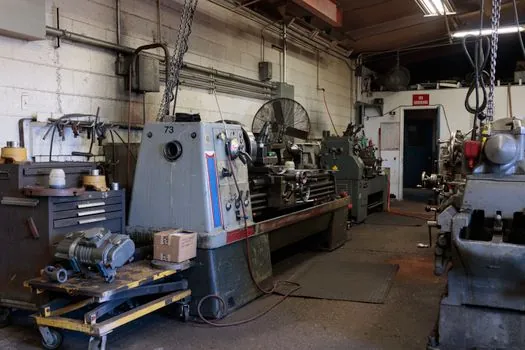
Replace the plunger tip on cumulative cycle count, not on calendar time, because zinc's lower melt temperature decouples calendar hours from tip wear [S1]. Replace nozzle and gooseneck components when acoustic emission or thermal-imaging trends show rising baseline, before the visual solder/wash signature appears at the gate, because once that signature shows on a 1.5 mm-wall housing, the cavity is already damaged and reworking is more expensive than the preventive part [S1][S2]. Escalate to the die builder when conformal cooling channels show localized hot spots that ±5°C control cannot hold, when EDM crack repairs have been performed more than twice on the same gate, or when CMM dimensional checks on machined features fall outside the ISO GPS tolerance band specified on the drawing [S4]. Do not attempt field repair of micro-cracks flagged by acoustic emission; these are stress-wave precursors that reappear within a few hundred cycles if the die is not pulled and vacuum-heat-treated [S2].
The two trackable signals to watch over the next quarter are foundry-published post-clean cavity inspection data, particularly particle counts and dryness verification on deep-cavity boxes, and any updates to NADCA or IZA guidance on thermal-fatigue thresholds for thin-wall zinc housings, which directly affect when ±5°C monitoring becomes a contractual rather than optional requirement. For related materials decisions on the electronics side, the UHMWPE grade map and the PTFE dielectric trade-off brief cover insulation and dielectric choices that pair with zinc enclosures.