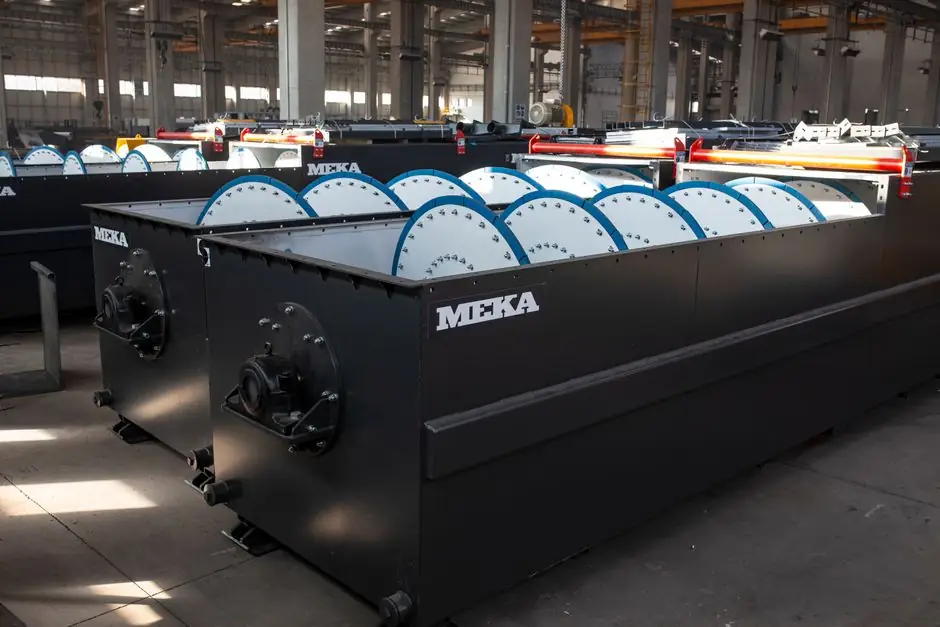
Foundry sand reclaimer commissioning is a four-stage gate: material characterisation, mechanical dry-run, energy ramp (1,200 to 1,500°F thermal / pneumatic scrubbing for mechanical), and a 72-hour acceptance trial that must hit 95% reclaimed / 5% new sand blend before sign-off [S1][S2].
Commissioning engineers should treat the reclaimer as a process unit, not a black box, because the binder system, fines load, and target throughput determine every pass/fail threshold [S1][S4]. The scope below covers pneumatic, vibratory, and thermal families, with the tests that have to be on the ITP (Inspection and Test Plan) before any production tonnage is released.
Material Characterisation Before the Skid is Energised
OEMs run the incoming sand through their own lab before quoting a unit, because reclaimed-sand quality is set by the feed, not the machine [S1][S5]. The minimum characterisation pack is LOI (loss on ignition), AFS grain fineness, clay content, and pH, plus a residual binder screen that separates resin-bonded from bentonite-bonded streams [S1]. Simpson Group's Pro-Claim test cell runs the customer's actual sand to pick the right model and the right number of cells before a purchase order is cut, which is the cheapest insurance against an undersized unit [S1].
Thermal units add a TGA (thermogravimetric) sweep to map the combustion window of the organic binder, which the Finnish centralised plant trial showed is the deciding factor: alkaline phenolic no-bake reclaimed cleanly, furan no-bake gave mixed results, and green sand failed to reach acceptable properties in the same furnace [S4]. The same study also flagged raw-material variability in the furan stream as a commissioning risk, so any thermal acceptance test must hold the binder source constant across the trial [S4].
Mechanical Pre-Energy Checks (All Reclaimer Types)
Before burner ignition or blower start, a cold rotation check at 10% rated RPM for one hour confirms bearing temperature rise stays below 15°C, seal faces are seated, and the retort or scrub tube is free of transport damage [S2][S5]. Pneumatic units (Simpson Pro-Claim class) then run a turbo-blower no-load test to verify motor amps, vibration velocity under ISO 10816-3 limits, and the dust-collector duct negative pressure at design CFM [S1].
Vibratory batch reclaimers (General Kinematics VIBRA-MILL class) need a separate vibratory acceptance: amplitude, counterweight phase angle, and isolation pad deflection are trended for 30 minutes, with no-load current draw within the OEM's nameplate window, since these set the scrubbing energy that determines binder removal efficiency [S6]. A 20-mesh screen on the discharge of thermal units is checked for blinding at this stage, because any carryover of oversize metal will fail the sieve analysis later [S2].
Thermal Ramp and Temperature Profiling
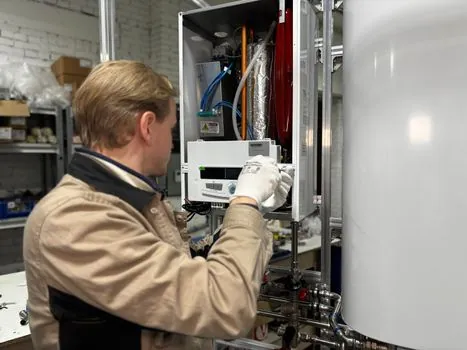
Indirect-fired rotary retorts (EnviroAir class) ramp the sand bed from ambient to the 1,200 to 1,500°F operating window over a 2 to 4 hour window, with three thermocouples logging the bed, shell, and exhaust to confirm the indirect-fire design (no flame impingement on the sand grains) is intact [S2]. The ramp is held at 1,200°F for 30 minutes to combust light organics, then stepped to the 1,500°F setpoint for the heavy-binder burn-off, with the retort exhaust hood and dust collector already in service to capture volatile combustion products [S2].
The Sappinen et al. trial at the Aalto / Timexcon plant used repurposed sand-dryer equipment and confirmed that the rotating drum furnace architecture can deliver thermal reclamation at centralised scale, with sampled material lab-tested after each run for sand quality against the Finnish foundry acceptance limits (2018-09) [S4]. For any new thermal installation, sample ports at the retort inlet, mid-bed, and cooler discharge are non-negotiable, because a 50°C drift at the bed mid-point is the first sign of refractory wear or burner imbalance [S2][S4].
Throughput, Fines, and Cooling Acceptance
Thermal units are rated in tons per hour (EnviroAir's six standard models span 0.25 to 6 t/h), and the acceptance gate is sustained throughput at design tonnage for eight continuous hours, with operating cost held below the OEM's $7.00/ton benchmark [S2]. The cooling drum must discharge sand 10 to 30°F above ambient, a tight window that proves the heat-recovery drum is sized correctly and that the downstream sand reclamation unit is not choking the cooler exhaust [S2].
Fines removal is verified by the air-classifier differential pressure and by sieve analysis of the discharge: AFS fineness and LOI must match the lab trial results within 5% absolute, or the classifier vanes need re-trim [S2][S5]. For pneumatic units, the equivalent gate is sand-grain impact count: one foundry reported grains circulating 30 or more times through the Pro-Claim before discharge, which is the kind of number to trend on the SCADA during acceptance to prove scrubbing energy is on target [S1].
Acceptance Trial and Performance Guarantees
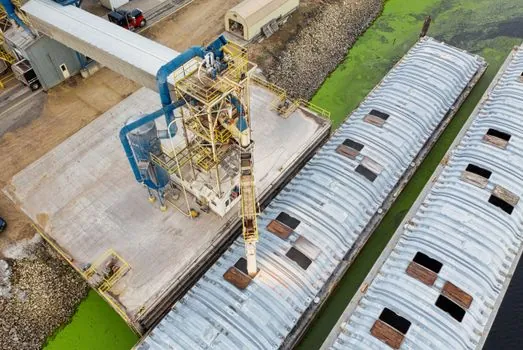
The formal acceptance trial runs 72 hours at design throughput on production sand, with the foundry's existing muller line closed-loop on the reclaimer discharge so the system reaches steady state [S1][S2]. Simpson's published reference case moved from a 40% reclaimed / 60% new blend at start-up to 95% reclaimed / 5% new at steady state, and that 95/5 number is the de facto industry performance bar for chemically bonded and green sand reclaimers, though it is not a universal guarantee and depends on binder chemistry [S1].
Thermal units add an LOI-on-reclaimed-sand limit (typically below 0.5% for chemically bonded systems) and a tensile-check on standard test bars made from 100% reclaimed sand on the tensile testing machine, because mould strength is the real downstream test of whether the reclaimer is doing its job [S1][S4]. Sign-off requires the OEM's process engineer, the foundry's production lead, and a third-party QA witness all countersigning the same data set, with any deviation recorded as a punch-list item with a 30-day close-out. construction machinery and equipment for material handling upstream of the reclaimer is a separate commissioning chain, but the conveyor interlocks must be proved before the reclaimer is fed.
Common Commissioning Failures and Their Signals
Three failure modes show up repeatedly on new installations: (1) thermal units running below 1,200°F, which leaves organic binder half-burnt and causes LOI excursions; (2) pneumatic units with insufficient blower pressure, which under-scrubs the grain and gives low reclamation yield; and (3) vibratory units with counterweight phase drift, which over-processes the grain and fractures silica, raising AFS fines above the spec band [S1][S2][S6]. Each shows up first in the sieve analysis and tensile test data, which is why those two tests are run at 4-hour intervals during the 72-hour acceptance, not just at start and end [S1].
Trackable next signals for any new reclaimer: the first three months of OPEX per ton (vs. the OEM's stated less than $7.00/ton for thermal, and the Pro-Claim published savings claim of 75 to 90% new-sand cost offset for pneumatic), the first major binder-source change, and the first 1,000-hour vibration survey on rotating elements [S1][S2]. Foundries that skip the lab trial at OEM site consistently pay 10 to 20% in extra commissioning time on-site, because the unit is being tuned to sand it has never seen before [S1].
Background reading: Molybdenum Demand 2026-2030: Steel, Catalysts, and Supply-Side Bind Points.