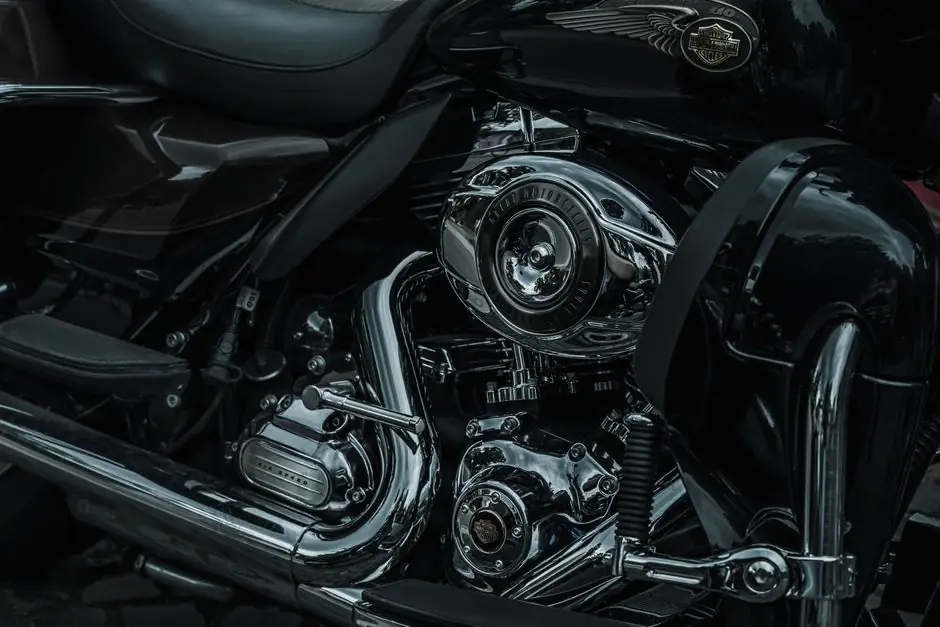
Automotive zinc die casting is dominated by hot-chamber machines with clamping forces from roughly 80 t up to 800 t or more, and shot weights commonly ranging from under 1 oz to about 10 lb per cycle [S2][S4].
Selection is driven by four spec gates: part mass and wall thickness, alloy grade (commonly Zamak 3, 5, 7, or ZA-8/12), annual volume, and the in-house finishing and CNC capacity that supports near-net-shape output [S1][S2][S3].
Hot-Chamber vs Cold-Chamber for Zinc
Zinc alloys melt at approximately 380 to 420 °C, well below the 660 °C aluminum liquidus, so a hot-chamber die casting machine is the default platform for zinc: the molten metal stays inside an integral furnace and injection sleeve, giving shorter cycle times and lower specific energy per shot than a cold-chamber unit [S3][S4]. Cold-chamber cells are still used for large zinc structural parts where shot weight exceeds the hot-chamber limit, and for plants that run mixed aluminum and zinc campaigns on the same press [S2]. For a focused view on cold-chamber and hot-chamber platform differences on the aluminum side, see the aluminum die casting machine specification reference; for a generalist baseline on machine classes, see the die casting machine encyclopedia entry.
Clamping Tonnage and Shot Weight Mapping
Cast-Parts, in operation since 1994, ships aluminum parts from 0.001 lb to 5 lb and zinc parts from under 1 oz to several pounds per shot, with typical lead times of four weeks and expedited lots under two weeks [S2]. Bardane Manufacturing runs 23 die casting machines in a 93,000 sq ft facility, with downstream CNC machining, drilling, tapping, and light assembly on the same site [S1]. As a rule of thumb that holds across the suppliers surveyed, small zinc hardware (under 1 oz, wall thickness under 1.5 mm) maps to 80 to 150 t hot-chamber presses, while automotive structural brackets and housings in the 1 to 5 lb band push tonnage into the 250 to 600 t class, and large converter housings or body hardware near the 10 lb ceiling require 800 t or larger cold-chamber cells [S2][S4].
Zinc Alloy Grades and Why They Matter for Cars
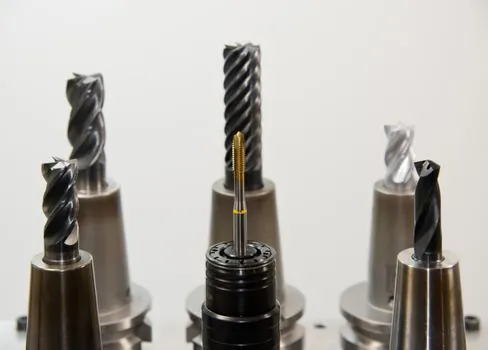
Zinc die casting alloys in automotive service are concentrated in the Zamak family (3, 5, 7) and the higher-aluminum ZA-8 and ZA-12 grades, with selection driven by a balance of castability, as-cast strength, ductility, and creep resistance [S3]. Zamak 3 is the general-purpose benchmark for dimensional stability and finish; Zamak 5 adds a small copper content for higher tensile strength and is widely used for brackets and housings; Zamak 7 reduces impurities to support plating and cosmetic chrome on decorative trim; ZA-8 and ZA-12 push the strength ceiling for structural nodes and thin-wall sections [S3]. The Spanish-language zinc die casting industry reference flags that zinc die casting cycle rates are markedly faster than aluminum or magnesium at equivalent tonnage, and that die life regularly exceeds 1,000,000 shots, which directly reduces tooling amortisation per part [S3].
Selection Criteria: What to Score a Vendor and a Machine On
A spec-first buyer should score any candidate zinc die casting partner on six verifiable items: ISO 9001:2015 or IATF 16949 certification status, machine count and tonnage range, in-house secondary operations (CNC, drilling, tapping, finishing), alloy inventory and traceable melt chemistry, demonstrated die life, and real lead time for both prototype and production runs [S1][S2][S6]. Bardane is certified to ISO 9001:2015 by TUV-Rheinland of North America and runs 23 die casting machines, which makes it a useful benchmark for mid-tier North American capacity [S1]. Exact Tool combines four-slide and conventional die casting dies with precision stampings, illustrating the niche of low-volume multi-process suppliers that automotive Tier 2s use for short-run zinc hardware [S6]. Asia-based suppliers such as the Zinc Die Cast 2022 group and Made-in-China listings show large model ranges and aggressive pricing in the 30 to 36 US-cent range for commodity inside-corner connectors, which sets the cost floor for high-volume commodity zinc hardware [S4][S8].
Comparison: Hot-Chamber Zinc vs Aluminum vs Magnesium for Auto Parts
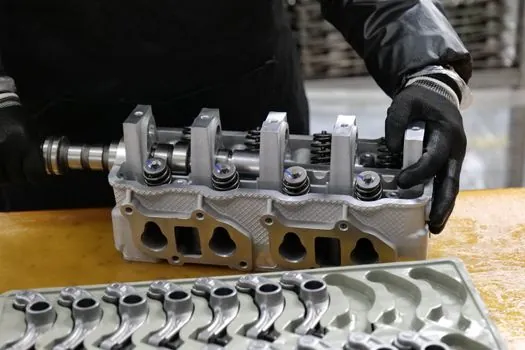
Across the three dominant light-alloy die casting platforms, hot-chamber zinc wins on cycle time and tooling life, aluminum cold-chamber wins on specific strength and high-temperature performance, and magnesium cold-chamber wins on the lowest density but requires strict melt-handling controls [S3]. Zinc castings cycle materially faster than aluminum or magnesium at the same tonnage, tool life often exceeds 1,000,000 shots, and near-net-shape output lets buyers eliminate most secondary machining on small-to-medium parts [S3]. Aluminum cold-chamber remains the right call for high-temperature under-hood nodes, structural crash-relevant body nodes, and large thin-wall panels where a zinc alloy's 380 to 420 °C process window and creep limits are disqualifying [S2]. For buyers evaluating magnesium as a third axis, the magnesium die casting machine spec map for hardware plants covers the platform comparison in detail, and the gravity die casting machine reference explains the lower-pressure alternative for low-volume structural castings.
Use Cases in Automotive Subsystems
Automotive applications group cleanly into three bands by zinc die casting machine class: small cosmetic and functional hardware (door handles, seatbelt anchors, badges, instrument cluster frames) on 80 to 200 t hot-chamber cells; interior and chassis hardware (window regulators, mirror brackets, door module housings, roof rail nodes) on 200 to 500 t cells; and larger structural or converter-related nodes (battery enclosure brackets for EVs, seat frames, larger converter housings) on 500 to 800 t+ presses where shot weight approaches the multi-pound range [S2][S3][S4]. Zinc's near-net-shape behaviour is a real cost lever here, because it lets Tier 1s collapse milling, drilling, and insert press-fitting into a single cast-and-trim operation, with tool life beyond 1,000,000 shots amortising die cost across high-volume programmes [S3]. Buyers looking at adjacent light-alloy decisions for rail, aerospace, or hardware-plant capacity can cross-reference the magnesium die casting machine selection for rail components and the magnesium die casting machine selection for aerospace components articles for direct platform trade-offs.
Limitations, Failure Modes, and Sourcing Constraints
Zinc die casting is not a universal answer in automotive: at sustained service temperatures above roughly 100 to 120 °C, ZA-8 and ZA-12 retain strength better than Zamak grades but still trail aluminum A380 or AlSi10MnMg on creep, so under-hood or near-exhaust nodes remain aluminum cold-chamber territory [S2][S3]. Defect modes that buyers must monitor on incoming lots include cold shuts on thin walls below 0.8 mm, porosity on thick sections above 3 mm without proper cooling, and dimensional drift on long production runs where die heating and cooling balance is not tightly controlled [S2][S3]. On the sourcing side, North American shops such as Bardane (23 machines) and Cast-Parts (aluminum and zinc since 1994, four-week standard lead time) offer scale and certification, while LA-based DiecastingZinc and the Asia Products group target shorter runs and lower piece-price commodity work respectively [S1][S2][S4][S5]. Verify any claim of "auto-grade" zinc die casting by asking for the actual alloy designation, the NADCA or equivalent process-control documentation, the die life record in shots, and the real cycle time in seconds at the specified wall thickness.
Trackable next signals for buyers before issuing an RFQ: the actual Zamak or ZA grade certified on the material test report, the demonstrated cycle time and clamp tonnage on a sample part, and the verified ISO 9001:2015 or IATF 16949 audit scope covering zinc die casting at the issuing plant [S1][S2][S3]. For a broader view of platform trade-offs including the vacuum die casting machine option and the zinc die casting machine reference for porosity-sensitive nodes, consult the linked encyclopedia entries before locking the machine class.