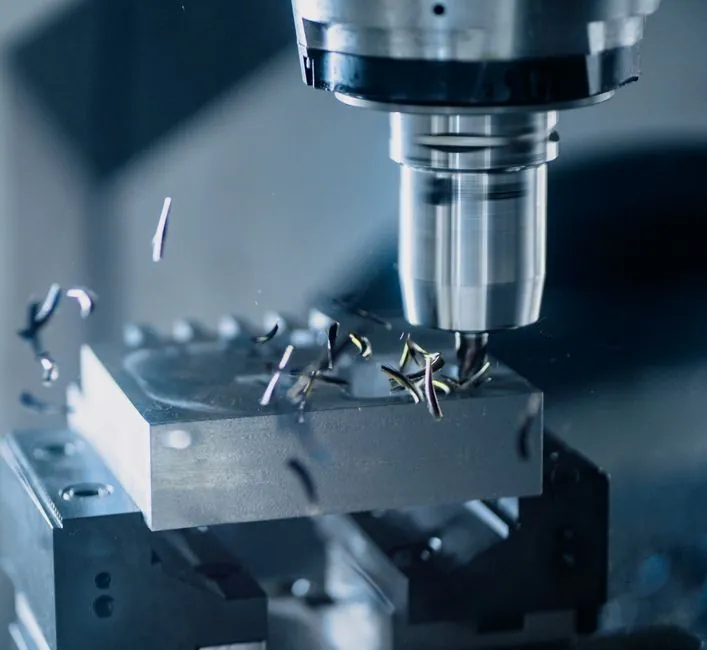
Hardware-grade zinc die casting production in 2026 is anchored by hot-chamber machines running Zamak 2, 3, 5, and 8 alloys, with clamping force windows from 120 tons up to 1650 tons covering part weights from 0.5 g miniature fittings to 50 kg gravity-cast components [S1][S2].
Selection for hardware buyers (locks, window fittings, faucets, fasteners, decorative hardware) hinges on three machine spec axes: clamping tonnage vs projected part area, shot sleeve capacity vs part weight, and hot-chamber vs cold-chamber architecture, with the dominant 2026 supplier base concentrated in IATF 16949-certified Chinese factories and US specialty shops [S1][S2][S4].
Machine architecture: hot-chamber vs cold-chamber for Zamak
Hot-chamber zinc die casting machines dominate hardware production because Zamak alloys melt at 380 to 387 °C, well below the 420 to 430 °C melt point of typical magnesium and far below aluminum's 660 °C, allowing the gooseneck and plunger to stay immersed in molten metal without iron pickup [S1].
Hardware foundries in 2026 quote hot-chamber clamping tonnage windows of 120 to 1650 tons for zinc and magnesium die cast parts, with 23-machine US plants and 120-ton-to-1650-ton Chinese foundries running mixed zinc and aluminum cells on the same floor [S1][S4]. For zinc-only hardware runs, hot-chamber is the default; cold-chamber cells are reserved for the same factory's aluminum or magnesium work and rarely specified for pure Zamak hardware.
Selection criteria: tonnage, shot weight, and projected area
Rule of thumb used by 2026 hardware buyers: required clamping tonnage equals projected part area (cm²) multiplied by a material-specific intensification pressure, typically 30 to 50 MPa for Zamak, which is roughly half the pressure required for aluminum HPDC [S1][S2]. A 50 cm² Zamak lock body, for example, falls inside a 160 to 250-ton clamp window on most supplier lines.
Shot weight sets the sleeve size. Miniature Casting Corporation quotes a 0.5 g to 0.5 lb (approximately 225 g) per-shot envelope across its miniature zinc cells, covering the bulk of door hardware, window fittings, and electronics enclosures [S2]. Chinese tier-1 suppliers extend the upper end with 1650-ton clamps feeding part weights that overlap into gravity-cast territory up to 50 kg for non-hardware structural castings on the same die casting machine platform [S1].
Alloy map: Zamak 2, 3, 5, 8 for hardware duty
Zamak 3 is the default general-purpose hardware alloy, used for locks, window hardware, and consumer fittings where castability and dimensional stability dominate the spec [S1]. Zamak 5 adds roughly 1% copper for higher creep strength and is the spec for security hardware, threaded inserts, and any fitting that carries a sustained load.
Zamak 2 is the hardest and strongest of the family and is reserved for wear-loaded hardware such as window gearing and high-cycle lock bolts, while Zamak 8 (sometimes called Zamak 7 equivalents) is the plating-friendly grade for decorative hardware that requires consistent chromate and electroless nickel adhesion [S1]. IATF 16949 certification at the foundry level is the gating audit for any hardware buyer shipping into automotive sub-assemblies; ASIA Products and Bardane list ISO and process-control regimes covering Zamak 3 and 5 hardware runs but not all sites hold the automotive-tier IATF credential [S3][S4].
Hardware-specific use cases and machine fit
Window and door hardware (hinges, handles, escutcheons, lock bodies) is the cleanest fit for 200 to 800-ton hot-chamber cells, with shot weights in the 50 to 500 g band and cycle times under 60 seconds on a four-cavity die [S1][S3]. Miniature and sub-miniature hardware such as electronics fasteners, pen clips, and small lock cylinders drop into 120 to 250-ton cells, and the Miniature Casting line is explicitly designed for sub-gram Zamak shots in the 0.5 g class [S2].
Decorative and plating-heavy hardware (faucet handles, door knockers, furniture trim) is a Zamak 3 or 8 application where the lower hot-chamber metal contamination budget pays back in scrap reduction; a complementary reference on zinc die casting machine selection for pump and valve production walks the same tonnage vs shot-weight logic for higher-pressure fluid-handling hardware.
Limitations, failure modes, and process gates
Hot-chamber Zamak cells fail in two recurring modes on hardware runs: (1) gooseneck iron pickup above 420 °C melt, which manifests as porosity and hard-spot inclusions in lock and hinge bodies, and (2) flash and short-shot when a worn toggle clamp lets the die open under the 30 to 50 MPa intensification pressure. Hardware buyers should spec a die-height tolerance band, shot weight repeatability within ±2%, and a documented preventive-maintenance interval for the gooseneck and plunger [S1][S2].
Foundries that mix aluminum and zinc on the same clamp without a dedicated cold-chamber pot risk cross-alloy contamination; Chinese tier-1 shops commonly isolate zinc cells in a dedicated bay and run IATF 16949 process FMEAs on the Zamak 2, 3, 5, 8 alloy stack [S1]. For electronics housing work that drops into Zamak but pushes into magnesium territory for weight, magnesium die casting machine specs for electronics housings covers the adjacent selection logic.
Comparison of 2026 supplier profiles for hardware buyers
Four sourcing lanes define the 2026 hardware market. (1) Chinese tier-1 high-volume (GC Precision / aludiecasting): 120 to 1650 tons, Zamak 2/3/5/8, IATF 16949, finished-surface options including powder coating, anodizing, and electroplating, exporting to USA, Canada, Germany, France, Italy, Finland, Switzerland, Cyprus [S1]. (2) US miniature specialists (Miniature Casting): 0.5 g to 0.5 lb shot envelope, ISO-certified, family-owned, 60+ years of history, sub-miniature lock and hardware work [S2]. (3) Indian finished-product houses (ASIA Products / zincdiecast): door and window fittings and zinc faucet handles, in-house tool room, CNC machining, surface finishing, mechanical assembly [S3]. (4) US mid-tier custom (Bardane): 93,000 sq ft facility, 23 die casting machines, aluminum and zinc, CNC secondary, Jermyn PA [S4].
Decision rule: high-volume decorative and lock hardware below 500 g per shot is best served by Chinese tier-1 hot-chamber cells; miniature and sub-gram hardware is best served by US specialty shops; finished-fittings ready for retail (faucets, door handles) is best served by Indian or Chinese vertically integrated houses with in-house surface finishing and assembly [S1][S2][S3]. For a heavier hardware duty cycle that drifts into structural castings, gravity die casting machine cells cover the 50 kg upper band reported by Chinese foundries [S1].
Quality, standards, and audit posture
Hardware foundries serving automotive and security markets hold IATF 16949, the automotive quality-management standard that gates Zamak 2, 3, 5, 8 production lots into OEM sub-assemblies [S1]. Miniature Casting and ASIA Products document ISO certification for process control and risk management across Zamak 3 and 5 runs but do not advertise the same automotive-tier scope [S2][S3]. Surface-finish work for hardware is performed in-house at the major Chinese and Indian houses (electroplating, powder coating, anodizing, painting, silk-screen) and is treated as a process step rather than outsourced, which shortens the hardware buyer's audit chain [S1][S3].
Buyers specifying hardware castings for medical, defense, or pressure-bearing duty should request a documented IATF or AS9100 scope statement and a per-alloy melt log; this gates 2026 RFQs and is the practical substitute for the missing industry-specific zinc hardware standard. For buyers also evaluating aluminum hardware cells or hybrid lines, the aluminum die casting machine selection path runs in parallel and uses the same clamping tonnage vs projected area math but at a higher intensification pressure and a cold-chamber architecture.
Trackable next signals: monitor whether Chinese tier-1 foundries extend their upper tonnage above 1650 tons for Zamak work, and whether US miniature shops publish per-alloy FMEA summaries on Zamak 2 versus Zamak 8 for security hardware.