
Yttria-stabilized zirconia (Y-TZP, 3 mol% Y2O3) and magnesia-stabilized zirconia (Mg-PSZ, 8–10 mol% MgO) are the two structural grades buyers actually order in 2026, with 95% and 99% alumina-zirconia composites appearing as the cost-down option for tubes and setters [S1][S3][S5].
Zirconia competes against alumina and silicon carbide on a toughness-vs-cost axis: an unfilled zirconia rod, plate or tube from Chinese industrial suppliers lists at roughly US$5–25 per piece at 1–1,000 piece MOQ [S1][S2][S6], with smaller optical-fiber sleeve formats starting near 10 m.t. minimum order quantity and 100 m.t./month supply capability [S4].
Material Family: Y-TZP, Mg-PSZ, ZTA and the Y2O3 Lever
3 mol% Y2O3-stabilized tetragonal zirconia polycrystal (Y-TZP) is the default high-toughness grade for rods, plungers and fiber sleeves — fracture toughness is a defining advantage over 95–99% Al2O3 [S1][S2][S5]. 8–10 mol% MgO-stabilized cubic zirconia (Mg-PSZ) trades toughness for higher thermal-shock tolerance and is more common in foundry setter plates and molten-metal contact parts [S3]. ZTA (zirconia-toughened alumina), listed as 96% Al2O3 balance ZrO2 on Chinese catalog pages, is the price-down hybrid where Al2O3 does the wear work and ZrO2 adds crack-bridging [S6]. The Y2O3 content is the single biggest buying lever: 3 mol% pushes strength and toughness up; 5–8 mol% pushes thermal stability and cubic-phase content up at the cost of peak strength [S1][S5].
Stabilizer choice also fixes the operating envelope. Y-TZP grades are typically rated for continuous service near 800–1,000 °C before tetragonal-to-monoclinic degradation accelerates; Mg-PSZ tolerates higher peak temperatures and is widely listed for furnace setter service [S3][S5]. For wet, acid-alkali service, all three families (Y-TZP, Mg-PSZ, ZTA) are listed as corrosion-resistant on Chinese manufacturer pages, but the composite (ZTA) inherits the Al2O3 chemical envelope — a relevant constraint when buyers compare it to a silicon carbide alternative [S5][S6].
Form Factor Catalog: Tubes, Rods, Setters, Filters and Sleeves
Buying zirconia in 2026 mostly means buying one of five form factors, each with a distinct price band and MOQ. Insulating zirconia-alumina rail-guide tubes (99% Al2O3 / ZrO2) list at US$10.00–25.00 per piece on Made-in-China, with the 99% Al2O3 body doing the dielectric work and a ZrO2 wear surface taking mechanical contact [S1]. Plain zirconia ceramic rods under the "wear-resistant material" category sit in a similar US$5–25 piece range, supplied against 1–1,000 piece orders [S2][S6]. High-purity zirconia setter plates for furnace loading are catalog items on Alibaba at piece-level MOQ [S3]. Small-diameter zirconia sleeves for optical fiber draw are quoted at 10 m.t. minimum order quantity with 100 m.t./month supply capability — i.e. a mill-scale product, not a piece-part [S4]. Zirconia ceramic foam filters for molten metal pour complete the catalog, listed from Pingxiang Sanhe Ceramics at US$3.00 per piece for 500-piece MOQ from Jiangxi, China [S9].
The form factor dictates the spec sheet you need to gate on. Tubes and rods are sold on outer diameter, inner diameter, length, surface roughness (Ra) and straightness; setters are sold on flatness, planarity, load rating at temperature and corner radius; optical-fiber sleeves add sintered grain size and porosity; filters add PPI (pores per inch) and burst strength. A buyer who treats a tube quote as a setter quote — or vice versa — wastes the first two RFQ rounds.
Spec Gate: Density, Hardness, Grain Size and Surface
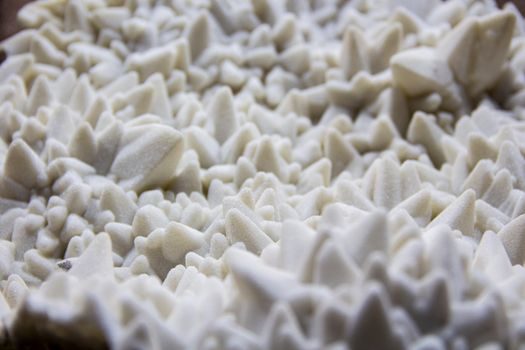
Four numbers catch roughly 80% of the field rejections on zirconia RFQs: sintered density, Vickers hardness, average grain size, and as-sintered surface roughness. Sintered density for Y-TZP should sit at 6.00–6.05 g/cm³ (theoretical ~6.10 g/cm³); for Mg-PSZ near 5.70–5.80 g/cm³; for ZTA (96% Al2O3) near 4.10–4.30 g/cm³ — a quick way to catch an under-fired or under-pressure batch [S5][S6]. Vickers hardness for Y-TZP is typically quoted around 1,200–1,300 HV; for 96% Al2O3 ZTA near 1,500–1,700 HV; for Mg-PSZ in the 1,000–1,100 HV band. Grain size for Y-TZP should be sub-micron (0.3–0.5 µm) for maximum toughness; coarser grain sizes drop strength sharply and are a common cost-down move at low-tier suppliers.
Surface finish is the second-order lever buyers underestimate. As-sintered Ra on Chinese industrial-grade zirconia rods is commonly 0.8–1.6 µm; a ground or polished finish to Ra 0.2–0.4 µm adds 30–80% to piece cost but is mandatory for seal faces, bearing seats, and fiber-optic sleeve ID. For dental-grade zirconia (a separate catalog — see [S7]), buyers route through a different supply chain: e.max / Zirconia crown and bridge products from Shenzhen denture manufacturers like Ming Hao Dentures, with material reference such as Roland DWX-50 (Japan) milling, at MOQ not specified and unit pricing around US$45 [S7]. Industrial and dental zirconia share the powder but diverge sharply on spec documentation, traceability and audit cost.
Price Lever: MOQ, Customization and Incoterm
Three knobs move the ex-works price on a 2026 RFQ: minimum order quantity, customization (geometry, holes, threads, metallization), and Incoterm. On Made-in-China listings, US$5.00 per piece holds for 1–999 piece orders, and drops to US$0.01 per piece at 1,000+ pieces for one standard zirconia tube SKU — i.e. tiered pricing rewards committing to a single catalog geometry in volume [S6]. The 99% Al2O3 / ZrO2 rail-guide tube holds a tighter US$10–25 band, with less room to drop, because the geometry is more specialized [S1]. The 500-piece MOQ zirconia foam filter at US$3.00 per piece is a different value proposition — already a finished consumable, not a stock blank [S9].
Customization is where RFQs derail. Aerospace, architectural, ceramic decoration, electronics, medical and refractory are all listed as customization sectors on a single Made-in-China catalog page [S6] — that breadth is a tell that the supplier is a job shop, not a dedicated line. Expect drawing review charges, NRE tooling, and 4–8 week sample lead times when the geometry is non-catalog. For mill-scale product (optical fiber sleeves, 10 m.t. MOQ), Incoterm swings the real cost more than unit price: FOB Shanghai vs CIF vs DDP can shift landed cost by 8–15% depending on container availability in 2026 [S4]. General industrial procurement, where buyers compare across bearing, seal and structural ceramic categories, follows the same MOQ-and-customization logic as the globe valve buying guide — geometry and lot size dominate the final landed number, not the headline unit price.
Quality, Standards and Supplier Vetting

Zirconia spec sheets cite ISO/ASTM ceramic test methods more often than application-specific standards, and that creates a documentation gap buyers need to close. Density and porosity are typically reported per ASTM C373; elastic modulus per ASTM C623; Vickers hardness per ASTM C1327; flexural strength per ASTM C1161 (3-point or 4-point bend on a standardized bar) [S5][S6].
Supplier vetting in mid-2026 is dominated by the same three signals: audited-supplier status on B2B platforms, published production capacity, and willingness to share lot-level test reports. Audited suppliers on Made-in-China (e.g. Pingxiang Sanhe Ceramics, Jiangxi) carry a credibility premium on the platform listing itself [S9]. Manufacturers that publish "100+ happy customers, 280+ working hours, 300+ types of products" — the marketing line on Exasci's product page — are signaling job-shop breadth, not depth; pair that claim with a request for a sample lot test report before any volume commitment [S5]. A second practical signal: ask for the powder grade (Tosoh, Saint-Gobain, Shandong Sinocera) and the pressing method (cold isostatic press vs uniaxial). The answer separates a sintering house from a broker faster than any audit checklist.
Failure Modes Buyers See in the Field
Three failure modes drive most zirconia warranty claims: low-temperature degradation (LTD), thermal-shock fracture, and surface-initiated chipping from poor grinding practice. LTD is the slow-acting killer of Y-TZP in humid service: water vapor at 150–300 °C drives tetragonal-to-monoclinic transformation on the surface, microcracking follows, and surface lift-off appears after 1,000–5,000 hours. Mitigation is grade selection (move to 5Y-PSZ or Mg-PSZ if the service envelope includes wet heat) or surface sealing — both of which add cost [S3][S5]. Thermal-shock fracture hits Mg-PSZ setters and zirconia pouring components when the heating rate exceeds the grade's allowable ΔT; refractory setters are not immune, and the failure is usually visible as a single clean crack across the plate [S3].
Grinding damage is the silent third mode. Y-TZP is sensitive to surface grinding damage because the tetragonal phase is metastable — a heavy pass can trigger the very phase transformation the material is sold to resist, weakening the surface by 20–40% before the part ever ships. Specifying a final surface grind with diamond, light pass depth, and a post-grind anneal is the cheapest insurance a buyer can buy on a custom zirconia RFQ. The same "spec the finish, not just the material" logic appears in the check valve buying guide — finish and machining practice decide the field life more often than the base spec does.
Trackable signals for the next buying cycle: (1) a zirconia ceramic tube price index and 96% Al2O3 / ZrO2 catalog delta, (2) audited-supplier count on Made-in-China and Alibaba for "zirconia ceramic setter" RFQs, and (3) any shift in Tosoh / Sinocera Y2O3-stabilized powder spot price — that single raw-material move sets the floor on every Y-TZP quote landed in 2026.
For component-level specifications, see linear guide, and crossed roller guide.