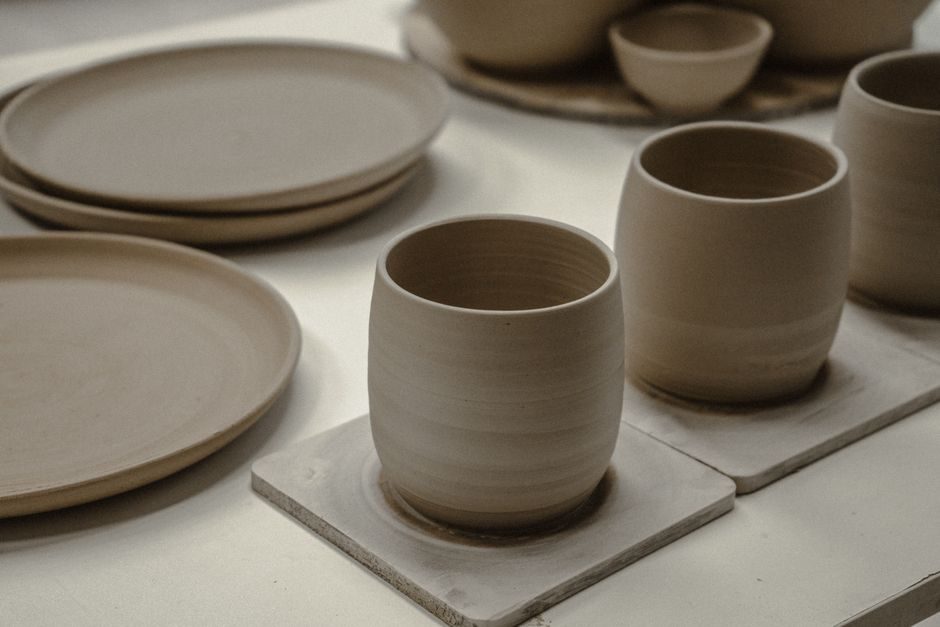
Zirconia (ZrO₂) ceramic delivers a flexural strength up to 1000 MPa, fracture toughness of 7–10 MPa·m^0.5, and Vickers hardness of 11–13 GPa — the highest room-temperature toughness of any oxide engineering ceramic, and the single biggest reason it dominates wear, cutting, and pump-seal applications [S6].
The same material sits at roughly 8.5 on the Mohs scale, melts at about 2700 °C, and has an elastic modulus near 200 GPa, behaving mechanically much closer to steel than to traditional alumina — and that combination is what makes zirconia the default answer whenever a designer says "I need a ceramic that won't shatter" [S6][S7].
Mechanical Properties: Why 3Y-TZP Out-Toughes Alumina
Transformation-toughened 3 mol% yttria-stabilized zirconia (3Y-TZP) hits flexural strength of 900–1200 MPa in vitro and fracture toughness of 9–10 MPa·m^0.5 — roughly 2× the toughness and 1.5–2× the strength of standard alumina grades [S1]. The mechanism is stress-induced tetragonal-to-monoclinic (t→m) phase transformation at the crack tip, which closes the crack and absorbs energy; that is the actual physics behind every spec sheet that quotes "transformation-toughened" zirconia.
For sliding parts in pumps and industrial ceramic valve seats, this translates into real-world lifetimes that justify a unit cost typically 3–5× higher than alumina: a zirconia seal face tolerates dry-run excursions and particle-laden fluids that would chip an alumina face within hours. Kyocera's fine-ceramics catalog specifically calls out sliding pump components, industrial cutters, scissors, and kitchen knives as core uses, all of which depend on the t→m toughening mechanism rather than raw hardness [S8].
Thermal, Electrical, and Chemical Behaviour
Zirconia carries a melting point around 2700 °C but, surprisingly for a high-temperature ceramic, has low thermal conductivity — the same property that makes it feel "warm" on a watch case is exactly what limits its use as a heat-spreading substrate [S6]. The dielectric constant is approximately 3× that of sapphire, so zirconia watch cases and smartphone backs do not block NFC, GPS, or wireless-charging signals — a behavioural advantage over metal alloys in wearable electronics [S3].
Chemically, fully sintered zirconia is resistant to attack by most acids and alkalis at room temperature, is non-magnetic, and is electrically insulating, with an elastic modulus (~200 GPa) and a coefficient of thermal expansion close to that of iron and steel [S7].
Where Zirconia Wins vs Where It Loses

Zirconia is the right pick when you need any of: (a) high fracture toughness under impact or bending load, (b) a non-magnetic, electrically insulating part that still tolerates mechanical abuse, (c) tight CTE matching to steel, or (d) biocompatible, low-ion-release surfaces for medical or food-contact use [S3][S7]. It is the wrong pick when you need high thermal conductivity, true translucency for optical or anterior-dental use, or the lowest possible unit cost — a wear plate in a bulk-material chute should be alumina or silicon carbide, not zirconia.
The opaque, slightly chalky white appearance is the dominant weakness in dental and decorative applications: monolithic zirconia crowns in the anterior sextant look noticeably less natural than layered glass-ceramic, and the literature flags this as the main reason zirconia cores are veneered with feldspathic porcelain in front-zone restorations [S1][S5].
Low-Temperature Degradation (LTD) and Aging
The same t→m phase transformation that toughens zirconia also ages it: in the presence of water or humidity at 150–400 °C, the surface grains spontaneously transform to the monoclinic phase, surface uplift occurs, and micro-cracks initiate — this is low-temperature degradation, sometimes called "aging" [S6]. The mitigation is to use Mg-PSZ (magnesium-partially-stabilized zirconia) or to add a small fraction of alumina as a grain-boundary phase, both of which trade peak toughness for aging resistance.
In practice, a 3Y-TZP part specified for a 200 °C wet service (sterilization autoclaves, steam lines, food processing) should be qualified for LTD, not just for as-sintered flexural strength. Sources note that partially stabilized grades such as 35% PSZ show "promising" short-term results but still lack long-term clinical data — a flag that buyers should demand aging data, not just brochure numbers, for any medical or implant-grade application [S1].
Processing Routes and Form Factors
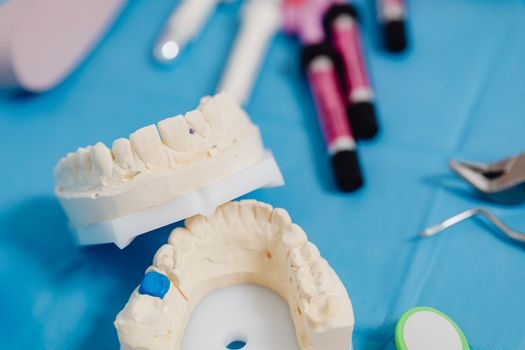
Two industrial routes dominate: soft-machining of pre-sintered 3Y-TZP blanks followed by sintering (a ~20–25% linear shrinkage must be compensated in the CAM step), and hard-machining of fully dense pre-sintered blanks at ~99% theoretical density, which needs rigid CNC and diamond tooling [S1]. Soft-machining is the route behind every CEREC-style dental block; hard-machining is the route for large industrial ceramic bearing races and pump sleeves where green-body shrinkage tolerance is unacceptable.
Mass-production forming options include dry pressing, injection molding, slip casting, and gel-casting — the choice is driven by geometry complexity and annual volume rather than by the chemistry, since the powder (Y₂O₃-stabilized ZrO₂) is essentially the same across all routes [S2][S3]. Tolerances after sintering are typically ±0.1–0.5% on dimension, with surface finishes down to Ra 0.02 µm achievable by post-sinter polishing for seal and bearing faces.
Application Map: What the Spec Sheet Tells You to Specify
For sliding pump components, valve seats, and high-precision ceramic bearing rollers, specify 3Y-TZP (ZrO₂ + 3 mol% Y₂O₃) with a published fracture toughness ≥ 8 MPa·m^0.5 and a grain size ≤ 0.5 µm, and verify the supplier has a hardness figure in the 11–13 GPa Vickers range [S6][S7][S8]. For cutting tools, scissors, and kitchen blades, the same 3Y-TZP grade is the industry default because the combination of edge retention and chemical inertness out-performs hardened tool steel in food-contact use [S8].
For wear-resistant structural liners in chutes and cyclones, alumina-toughened zirconia (ATZ) or zirconia-toughened alumina (ZTA) often beats pure zirconia on cost per square metre — pure zirconia's unit price makes it uneconomic for bulk lining, while ATZ keeps most of the toughness benefit at a lower material cost. For decorative or wearable casings, mirror-polished zirconia delivers a jade-like finish and supports wireless charging and NFC, which is why several flagship smart-watch lines have moved from 316L stainless to zirconia in the last product cycles [S3].
Comparison at a Glance: Zirconia vs Alumina vs Silicon Carbide
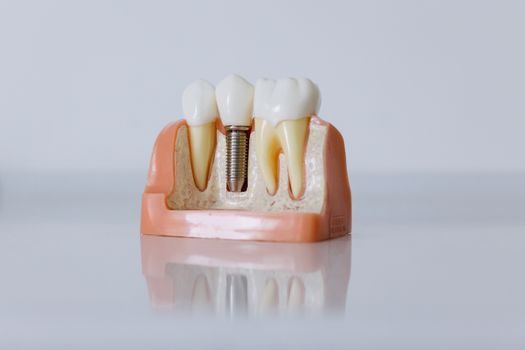
On fracture toughness, zirconia (7–10 MPa·m^0.5) beats alumina (~3–4 MPa·m^0.5) by 2–3× and approaches silicon carbide (~4–5 MPa·m^0.5) only on raw hardness, not toughness [S6]. On hardness, SiC (~25 GPa) is roughly 2× zirconia, so SiC wins for abrasive sliding wear where zirconia would still out-perform alumina. On thermal conductivity, SiC (~120 W/m·K) is an order of magnitude above zirconia (~2–3 W/m·K), so any heat-sink or rapid-thermal-cycling application belongs to SiC, not zirconia. On cost per kg, alumina is the cheapest, zirconia sits in the middle, and SiC (sintered) is the most expensive of the three — which is why zirconia is the right "toughness-per-dollar" answer for sliding seals and bearings, but never for a refractory lining or a kiln shelf.
A watchmaker reading a spec sheet should walk away with three numbers: fracture toughness ≥ 8 MPa·m^0.5, hardness 11–13 GPa Vickers, and a stated LTD rate (mass gain or monoclinic fraction after a defined steam-aging cycle, typically 134 °C / 0.2 MPa / 5 h). A pump engineer should add CTE match to the parent metal (≈ 10–11 × 10⁻⁶/K for zirconia vs ≈ 12 × 10⁻⁶/K for carbon steel) and a surface-finish callout (Ra ≤ 0.4 µm wet, Ra ≤ 0.1 µm dry) to the print [S7].
Sourcing, Standards, and What to Verify Before Buying
Acceptance testing should reference ISO 6474 (implants-grade zirconia, currently in its third edition) for medical applications, ISO 13356 for surgical-grade Y-TZP, and ASTM F2393 for zirconia femoral heads, with hardness and toughness tested per ISO 14705 or ASTM C1161 — buyers who skip these references and only ask for "high-purity zirconia" usually get an off-spec, unstabilized powder sold at a premium [S1][S6].
On the supply side, Chinese producers in Zibo, Shandong (a documented cluster in the CERADIR supplier index) list raw materials as Y₂O₃-stabilized ZrO₂ powder, and several vendors publish the same CeramaZirc Ultra Tough or partially-stabilized grade names — which means a buyer's real job is auditing grain size, density, and LTD data, not chasing brand names [S2][S4]. Track the next two signals: (a) whether suppliers publish ISO 6474 / ASTM F2393 test reports for medical-grade lots, and (b) whether the zirconia-vs-alumina price spread per MPa·m^0.5 narrows or widens over the next two quarters — both are leading indicators of where zirconia will pick up share in structural wear parts.
Related analysis: Truck-Mounted Concrete Pump TCO: Cost Drivers, Lifetime Math, and Sourcing Specs.