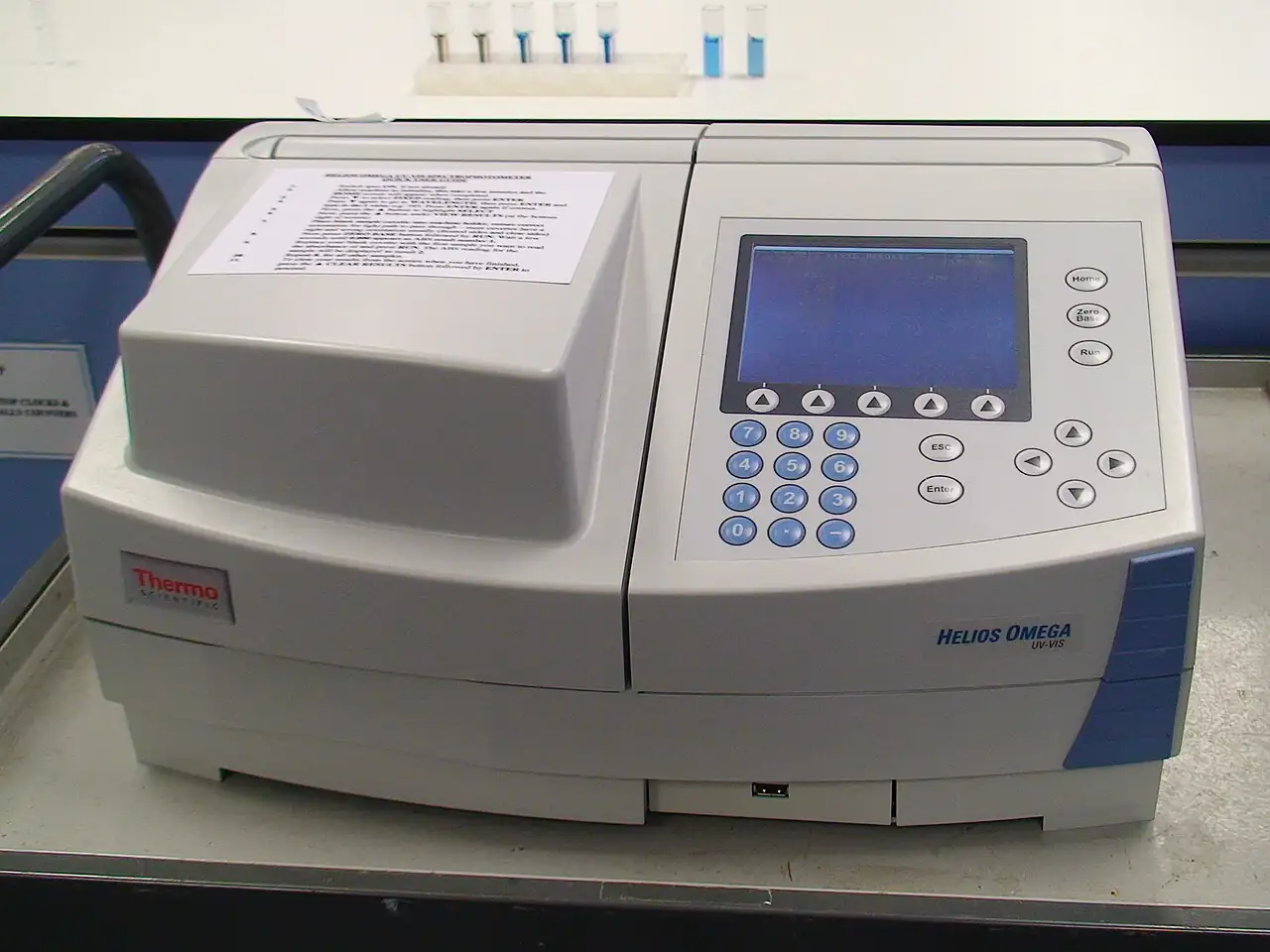
An online phosphate analyzer is a wet chemistry monitor that measures phosphate in water by molybdenum blue colorimetry: the sample is dosed with acidified molybdate reagent, reactive orthophosphate forms phosphomolybdic acid, a reducing agent converts it to an intensely blue complex, and a photometer reads the absorbance every 5 to 15 minutes. Sold as an orthophosphate analyzer for stream by stream control and often just called a phosphate meter at the plant level, it exists for two duties that no proxy measurement covers: drum boilers dosed with trisodium phosphate residual treatment, where the analyzer closes the loop on the chemical feed pump and guards against hideout and carryover, and wastewater plants holding nutrient permits on total phosphorus, commonly 0.1 to 1 mg/L as P, where compliance is a number, not a trend.
Procurement engineers meet these analyzers in the water chemistry rooms of power stations, beside package boilers in industrial plants, and on the effluent monitoring panels of municipal and industrial wastewater works. The decision this page settles is the species and the basis of the number, reactive orthophosphate or total phosphorus after digestion, reported as P or as PO4 with a factor of about 3.07 between them, the ranges and stream count per cabinet, what hot boiler samples and dirty effluent streams must be conditioned to before the chemistry sees them, and what the reagent supply chain costs per year. The answer lands as an RFQ line set, and every chapter below feeds that line set.
This page treats the phosphate analyzer as a purchasing object: the molybdate chemistry behind the number, the honest ranges and cycle times of the boiler and wastewater families, what reactive orthophosphate against total phosphorus and the as P against as PO4 basis mean on a permit or a chemistry log, what the sample chain must deliver to the cell, and how all of it is written into an RFQ. It is written for engineers who issue purchase specifications, not for readers who want a brochure summary.
Chapter 1 / 06
What a Phosphate Analyzer Is and What Is Being Decided
A phosphate analyzer is a small automated chemistry line with a photometer at the end. Sample is drawn continuously or on demand, metered into a reaction path, dosed with molybdate and reducing reagents, held while color develops in a heated or timed section, and read as absorbance that the analyzer converts to a concentration through its calibration. The measurement cycle takes 5 to 15 minutes, family accuracy lands around 2 to 5 percent of reading, and ranges span the 0.01 to 50 mg/L class from permit level monitoring on effluent to residual control on boiler drum water. It is a chemical plant that produces data, and the purchase succeeds or fails on the same things any chemical plant does: feed conditioning, reagent logistics, and validation discipline.
Two duties justify a dedicated wet chemistry monitor for this one species. In drum boiler water treatment, trisodium phosphate is dosed to hold a residual, commonly 5 to 15 mg/L as PO4 in the coordinated pH phosphate programs of the higher pressure drum units, because the phosphate buffers the boiler water against caustic and acidic excursions and precipitates hardness that slips through pretreatment. The dosing pump is a metering pump running day and night, and without a continuous residual number the program is run blind on grab samples once a shift. At high load, phosphate hides out onto drum internals and returns at low load, and only a continuous analyzer exposes that swing. In wastewater, effluent permits regulate total phosphorus, with limits commonly in the 0.1 to 1 mg/L as P class, and the compliance measurement after digestion is a total phosphorus number the plant reports against its permit. Both duties buy the same cabinet with different chemistry modules and ranges, which is why the RFQ has to state the duty rather than the box.
What is being decided in this purchase is five commitments at once. First the species: reactive orthophosphate, which is what the molybdate chemistry measures directly and what boiler residual control wants, or total phosphorus, which adds polyphosphate and organic phosphorus after a digestion step and what nutrient permits demand. Second the basis: reported as PO4 or as P, with a mass factor of about 3.07 between them, and a mismatch between permit basis and analyzer basis is a compliance error, not a rounding issue. Third the stream commitment: how many sample points feed one cabinet, because sequencing shares one chemistry line and one photometer. Fourth the sample chain: boiler samples arrive hot and pressurized, effluent streams arrive with solids, and the analyzer cell wants neither condition. Fifth the operations commitment: reagent bottles, tubing service, check standards, and the validation schedule against the laboratory. A quotation that answers only the range line is a box price, not a measurement.
The instrument lives among the water chemistry siblings, and the RFQ should name the boundaries. A silica analyzer on the same panel guards the steam turbine against the neutral species that volatilizes with steam, an orthogonal threat to the same boiler. An ammonia analyzer tracks feedwater amine and, in wastewater, the nutrient partner of phosphorus in the aeration basin arithmetic. A dissolved oxygen meter watches the aeration basin biology that the phosphorus chemistry feeds. A pH meter carries the boiler program state and the coagulation state of the effluent plant, and on drum units the phosphate residual and the pH move together, which is the entire logic of coordinated treatment. A conductivity meter, in cation configuration where steam purity is audited, is the cheap continuous proxy for ionic carryover and never resolves phosphorus speciation. An ORP meter carries disinfection and redox state in the effluent plant where phosphorus removal chemistry also lives. None of these substitutes for the wet chemistry number, and mature panels run several of them against shared sample conditioning infrastructure.
The wider analytical family sits farther out and is named only to fix the boundary. In the laboratory, the spectrophotometer is the referee, running the same molybdenum blue chemistry on the bench for the validation record. A gas analyzer belongs to flue and off-gas matrices, a moisture analyzer to solids water content, a densitometer to density and concentration accounting, and none of them touches aqueous phosphorus. Compressed to one sentence, the decision is whether a defensible continuous phosphate number is bought as a system, species and basis matched to the permit or the program, streams matched to the plant, sample chain matched to the taps, and reagent logistics matched to site reality, or as a cabinet part number connected to the nearest convenient line. The chapters that follow supply the chemistry, the hardware families, the datasheet rows, the selection logic, and the failure modes needed to write it the first way.
Chapter 2 / 06
How Molybdate Colorimetry Works
The chemistry is a two step color build, the same reaction family the laboratory runs as Standard Methods 4500-P. In the first step, the sample is dosed with ammonium molybdate in acid solution, and reactive orthophosphate, PO4 that is free to react on the analyzer timescale, combines with the molybdate to form phosphomolybdic acid, a yellow complex. In the second step, a reducing agent converts the molybdenum in that complex to molybdenum blue: the ascorbic acid variant, 4500-P E, is the common online implementation, with antimony potassium tartrate speeding the reduction, while the stannous chloride variant remains a recognized alternative. The photometer reads the blue at roughly 700 to 880 nm, with 880 nm the usual line for the intense absorption peak. In words, absorbance is proportional to concentration through the Beer Lambert relation, and a calibration built on standards converts absorbance to milligrams per liter. The full cycle, dose, react, reduce, read, rinse, repeats every 5 to 15 minutes.
The word reactive deserves its own paragraph because it is where field arguments start. The direct chemistry responds to dissolved inorganic orthophosphate, the fraction a boiler residual program doses and the fraction algae and bacteria assimilate first in a basin. Acid hydrolyzable phosphate, the older polyphosphate fraction in condensate returns and detergent residues, converts to orthophosphate under hot acid and is measured by an added hydrolysis step, giving the acid hydrolyzable number. Total phosphorus additionally counts organic phosphorus bound in biomass and waste matter and requires a digestion, persulfate or acid oxidation, before the color step. Wastewater permits are written on total phosphorus; boiler residual control wants reactive orthophosphate as PO4; aeration basin dosing feedback usually wants reactive orthophosphate because that is the biologically available fraction. An RFQ that writes the word phosphate without writing ortho, hydrolyzable, or total has not specified the measurement.
The basis row is arithmetic and it is non-negotiable. Phosphorus mass and phosphate mass differ by the molar ratio of PO4 to P, about 3.07 to 1, so a residual of 10 mg/L as PO4 is the same physical water as 3.26 mg/L as P. Permits in most jurisdictions are written as P; boiler chemistry logs are written as PO4; datasheets offer either or both. The analyzer basis, the display basis, and the reporting basis must each be stated in the purchase, and the conversion factor written into the DCS mapping rather than improvised at commissioning, because a factor applied twice is a permit violation and a factor omitted is a program run at a third of its intended residual.
Interferences set the honest limits of the photometry. Sample color and suspended solids scatter and absorb at the measurement wavelength, so dirty effluent streams need filtration or the analyzer's background blank correction, and high iron and high silica both bias the molybdate chemistry at concentrations common in some groundwaters and paper mill streams. Turbidity is the routine offender, which is why the effluent duty pairs the cabinet with a turbidity meter trend on the same panel and a filtration stage in the sample chain. Temperature matters to color development rate, so the reaction path is heated or timed against a reference and the sample is required to arrive in a stable window of roughly 5 to 50 deg C. None of these interferences is exotic; each is a datasheet question with a datasheet answer, and chapter 4 turns them into rows.
Performance spans are family wide and consistent across the established makers. Ranges run from 0.01 to 50 mg/L as P across the family, with the Phosphax sc class covering about 1 to 50 mg/L and low range constructions such as the NP6000sc class reaching the 0.01 to 10 mg/L spans that permit monitoring demands, and boiler duty sitting comfortably in between. Accuracy is quoted around 2 to 5 percent of reading, cycle times run 5 to 15 minutes, and multi stream cabinets sequence 2 to 6 sample points through the shared cell. Reagent consumption lands at two to four bottles of 1 to 3 L replaced every month to quarter, which is the line item the storeroom lives with and the paragraph chapter 4 expands.
Chapter 3 / 06
Analyzer Types, Construction, and Duty Boundaries
The wet end is common to the family. Sample enters through a solenoid valve at the cabinet inlet, is lifted by a peristaltic sample pump or drawn by a syringe unit, and is metered into a mixing and reaction cell where the reagents join it in fixed proportion. Reagent delivery is peristaltic on most cabinets, with ruggedized executions dosing by a small metering pump head where tube wear is unacceptable, and each bottle, molybdate, acid, reducer, and diluent on some configurations, sits in a cradle with level sensing wired to the alarm set. The reaction path is heated or thermostatted, the developed sample passes through a photometer cell with an LED source and reference channel, and the spent sample drains as low pH waste into a contained drain arrangement. It is exactly this shared wet end that makes the stream count and the chemistry module the real product decisions rather than the enclosure label.
Four constructions cover the market. The single stream cabinet dedicates the chemistry to one point and one cycle clock, the right purchase for a package boiler house or one effluent outfall. The multi stream sequencer routes 2 to 6 sample points through a solenoid valve manifold into the shared cell, with the latency arithmetic the buyer must do: six streams on a 10 minute determination gives each point a fresh value each hour, adequate for steady residual trending and slow for catching a dosing failure. The total phosphorus construction adds the digestion module, heated persulfate or acid oxidation upstream of the color step, extending the determination by several minutes and consuming more reagent per cycle, and it is the only construction that answers a total phosphorus permit. The laboratory reference family, the bench spectrophotometer with manual chemistry kits, remains the referee and the field check, never the continuous guard.
The comparison table compresses the families into the form a specification meeting argues from; values are the common spans of the established families and must be confirmed against the model datasheet before order.
Family
Construction and streams
Range class
Duty it wins
Single stream orthophosphate cabinet
2 to 4 reagent bottles, peristaltic or metering pump dosing, photometer, one inlet
1 to 50 mg/L as P class on the Phosphax sc family
Package boilers, single outfalls, dosing loop feedback
Multi stream sequencer
Solenoid valve manifold, 2 to 6 streams, shared cell, priority modes on some
Per stream ranges set at commissioning
Chemistry rooms watching drum, feed, and condensate together
Total phosphorus with digestion
Persulfate or acid digestion module ahead of the color step
0.01 to 10 mg/L as P class on low range constructions
Effluent permit compliance on total phosphorus
Laboratory spectrophotometer reference
Bench photometry with manual or kit chemistry
Method detection to low microgram per liter class
Validation referee and periodic surveys, not continuous duty
Duty boundaries keep the families honest against each other. The sequencer wins on cost per point wherever a chemistry shelter exists and an hour per point of latency is acceptable, which is most steady residual duty. The single stream cabinet wins where one point matters and deserves its own clock. The digestion construction is not an upgrade bought casually: it answers a permit written on total phosphorus, and if the permit says total and the cabinet measures reactive ortho, the gap between the two is exactly the polyphosphate and biomass fraction the permit exists to control. And no member of the family replaces the panel beside it: the boiler wants the residual number and the steam purity train at the same time, and the effluent plant wants the phosphorus number and its nutrient partners on the same schedule.
Chapter 4 / 06
Key Specification Parameters
The datasheet rows below decide whether a quoted analyzer matches the duty; values are stated as the common industrial spans of the established families and must be confirmed against the model datasheet before order.
Attribute
Typical range or options
What it decides
Species
Reactive orthophosphate, acid hydrolyzable, or total after digestion
Whether the number answers a boiler program or a permit
Reporting basis
As PO4 or as P, factor about 3.07 between them
Permit compliance and DCS mapping without conversion errors
Range per stream
0.01 to 50 mg/L family, set per stream at commissioning
Coverage from permit limits to drum residuals
Accuracy
About 2 to 5 percent of reading, family typical
Margin against the control band, not the limit
Cycle time and streams
5 to 15 min per determination, 1 to 6 streams
Update rate per point after sequencing arithmetic
Sample conditions
5 to 50 deg C window, regulated, bubble free, filtered as method requires
Sample conditioning sizing and shelter needs
Reagent set
2 to 4 bottles of 1 to 3 L, monthly to quarterly replacement
Annual volume, storage, and delivery cadence
Outputs and protocol
4 to 20 mA per stream, Modbus, high and low concentration alarms
DCS integration and alarm routing
Cabinet and power
IP54 to IP65 typical, 100 to 240 VAC
Siting in the chemistry room, shelter, or analyzer kiosk
The reagent row deserves its own paragraph because it becomes the operating budget. A cabinet cycling continuously consumes its reagents per determination: two to four bottles of 1 to 3 L replaced every month to quarter on typical duty, so the annual purchase is four to sixteen bottle sets plus check standards plus tubing kits, and the total phosphorus digestion constructions consume more per cycle than the direct orthophosphate chemistry. Shelf life runs 3 to 12 months by reagent, and storage temperature is part of the logistics answer, because a shelter in a hot climate without storage discipline spends its accuracy budget in the stockroom. The RFQ should demand the estimated monthly consumption at the offered stream count and cycle time, not the per determination volume, because that is the number the storeroom lives with.
The duty table below pairs the two principal applications with the construction and spans they imply.
Duty
Species and basis
Construction to specify
Watch items
Drum boiler phosphate residual
Reactive orthophosphate, as PO4, residual 5 to 15 mg/L program
Single or two stream cabinet, fast cycle, sample cooling
Hideout swings at high load, dosing pump interlock logic
Effluent permit compliance
Total phosphorus, as P, 0.1 to 1 mg/L limit class
Digestion construction, low range spans, filtered sample
LAT verification, digestion completeness, blank discipline
Aeration basin dosing feedback
Reactive orthophosphate, as P, basin concentration band
Sequencer stream on the shared chemistry shelter
Solids in the sample, update latency against dosing rate
Intake and process protection
Reactive orthophosphate, site selected basis
Single stream economy cabinet
Range headroom over storm event peaks
The sample chain rows decide uptime more than the analyzer does, and they are specification lines, not site improvisations. The sample conditioning system brings a boiler sample down from line conditions through a cooler to below about 40 deg C and a pressure regulator to 1 to 2 bar, with short insulated runs so events reach the cabinet rather than aging in tubing. An effluent stream arrives with suspended solids, so the chain carries a filter stage and a fast loop, a continuous bypass flow that keeps the line fresh while the analyzer meters its aliquot, with the solenoid valve at the cabinet inlet isolating the chemistry between determinations. Integration rows close the specification: each stream carries its own 4 to 20 mA output or mapped Modbus register, and the conditioned line confirms its own health with a temperature transmitter and a pressure transmitter, while a flow meter with local indication catches the silent starvation of a pinched line. On the effluent side, the mass arithmetic that permit reporting eventually demands, kilograms per day of phosphorus, is concentration multiplied by flow, which is why an electromagnetic flowmeter on the outfall line belongs on the same panel budget as the analyzer.
Chapter 5 / 06
Selection Decision Factors and RFQ Language
The selection sequence runs as a checklist, and each line eliminates a class of quotations before price comparison begins.
Write down the question the number answers: boiler residual control, permit compliance, or basin dosing feedback, and let the question pick the species, reactive orthophosphate or total phosphorus.
Fix the basis: as P or as PO4, stated for the analyzer display, the DCS mapping, and the report, with the 3.07 factor written into one place only.
Fix stream count and accept the latency arithmetic: streams times cycle time is the per point update interval, and priority interrupt is the answer when one point must be fast.
Characterize each sample at the tap: temperature, pressure, solids load, distance to the cabinet, and the conditioning hardware each tap needs, cooler, regulator, filter, fast loop.
Fix the reagent logistics: bottle set size, monthly consumption estimate at the offered duty, shelf life, storage conditions, and delivery cadence.
Fix the calibration and validation regime: automatic zero, check standard schedule and reservoir, and the laboratory comparison method and frequency.
Fix the integration: outputs per stream, protocol, alarm routing, and the data logging that audits and chemistry reports require.
Add the siting lines: cabinet rating, power, contained acidic waste drain with neutralization where the site requires it, and freeze protection for unheated shelters.
Against the neighboring measurements the phosphate analyzer holds specific ground, and the comparison belongs here in the selection chapter rather than in a page title. The silica analyzer beside it in the power plant chemistry room guards the turbine against the volatile neutral species, and the two wet chemistry cabinets routinely share one sample conditioning system and one shelter, which is why the conditioned panel is usually specified once for the whole room. The ammonia analyzer covers the feedwater amine on the power side and the nitrogen partner on the wastewater side, where the aeration basin arithmetic also needs the dissolved oxygen meter for the biology that takes the phosphorus up. A pH meter and an ORP meter carry program and disinfection state respectively and neither resolves phosphorus speciation, which is precisely the division of labor that justifies this cabinet beside them. The conductivity meter in cation configuration remains the cheapest continuous ionic proxy on steam, and a turbidity meter trend is the interference watchdog on dirty effluent duty. In the laboratory the spectrophotometer is the referee whose periodic comparison keeps the online number defensible. The wider family sits farther out: a gas analyzer for flue matrices, a moisture analyzer for solids, a densitometer for density accounting, none a substitute here. On the hydraulic side, the electromagnetic flowmeter on the outfall is what turns concentration into kilograms per day, and a simple flow meter on each conditioned sample stream is what proves the sample is alive.
The application map below compresses the practice into the form a project file carries.
Application
Construction to specify
Check before order
Drum boiler residual watch
Two stream cabinet, orthophosphate as PO4, cooled conditioned sample
Cycle time against hideout swings, dosing interlock, reagent alarms
Effluent total phosphorus permit
Digestion construction, low range as P, filtered fast loop
LAT verification support, digestion completeness, blank handling
EBPR aeration basin feedback
Sequencer stream sharing the chemistry shelter
Solids filtration, update latency against dosing rate changes
Once-through and supercritical units
No phosphate program, no analyzer for residual, water chemistry elsewhere
Do not carry drum boiler practice into all volatile treatment plants
The RFQ block should be written once and reused: quantity and family; stream count with each point named and its range and species stated; reporting basis, as P or as PO4, with the conversion factor stated once; accuracy and detection at the tightest stream; cycle time and the resulting per point update interval; sample conditions at each tap, temperature, pressure, solids, distance, and the conditioning hardware offered; reagent set sizes, monthly consumption estimate, shelf life, and waste handling with neutralization; outputs, protocol, alarm routing, and data logging; calibration regime with check standard interval; and the validation method and frequency against the laboratory. A quotation returned without the species and basis answered, or without the per point update arithmetic, is incomplete at any price.
Chapter 6 / 06
Installation, Standards, Failure Modes, and Maintenance
Installation is a conditioning exercise before it is an instrument exercise. The sample conditioning system that feeds the analyzer brings the boiler sample down through a cooler and regulator to the cell's window, keeps effluent streams filtered and fresh through their fast loops, and lands the cabinet in a conditioned space, because reagent stability, photometer drift, and drain behavior all assume livable temperatures. Sample taps must be representative: the drum line or downcomer for residual duty, the outfall downstream of the final treatment step for permit duty, each with a short insulated run. A solenoid valve at the cabinet inlet, a flow meter with local indication on the conditioned line, and a temperature transmitter plus pressure transmitter completing the condition record are standard companions. The waste drain carries spent reagent at low pH continuously, so it is sized for that flow, contained, and routed to neutralization where site rules require it.
Commissioning earns the trust the datasheet claims. Verify the automatic zero and the photometer reference, run the first check standard and record recovery, and run the first grab comparison against the laboratory spectrophotometer so the online number starts life anchored. Check the sample for bubbles at the cell, verify the rinse behavior between streams on a sequencer, because carryover from a drum point at 15 mg/L into an effluent point at 0.3 mg/L is the classic false alarm source, and force every alarm once, reagent low, sample fault, calibration failed. Verify the 4 to 20 mA scaling end to end into the DCS, including which basis the signal carries, as P or as PO4, because that single mapping error is the most expensive one in the plant. A commissioning record with those five lines turns the first audit into a formality.
The standards frame is method based. Standard Methods 4500-P, with the ascorbic acid variant as the reference implementation, is the colorimetric practice the laboratory referee runs and the one most online cabinets automate. EPA methods in the 365 series carry the same chemistry for regulatory reporting in the United States, and EN and ISO phosphorus methods trace to the same reaction family. The sampling discipline, how the grab or the online tap is taken, transported, and conditioned, governs whether the number means anything, and permit duty adds the holding time and verification requirements of the reporting program. Citing the method and the sampling practice together in the RFQ tells the supplier the buyer knows the number is a chain, not a box.
Failure modes follow a short and predictable list. Reagent exhaustion is the silent flatline: the analyzer keeps producing numbers that stop tracking the process, so reagent level alarms must be enabled, wired, and taken seriously. Photometer interference from turbidity and iron reads as drift or as biased highs on dirty streams, remedied by the filter stage and the background blank correction rather than by recalibration. Pump tube wear on the peristaltic section starves the chemistry and shows as failing check standards long before anyone opens a door; tube replacement every 3 to 6 months is the budget line. Photometer source drift is compensated by the automatic reference on established families, and a drifting reference is a diagnostic alarm, not a calibration knob. A bubble in the flow cell reads as a sudden absorbance excursion or a failed determination, fixed at installation with vertical runs and bubble traps. And on effluent duty, seasonal swings challenge the fixed dilution of some constructions: storm dilution at the low end and industrial peaks at the high end are both handled by automatic ranging where the family offers it, and the failure mode is a concentration beyond the top of span reported as the top of span, which is why high alarms and validation grabs belong in the program.
Maintenance is deliberately boring and budgeted in consumables. Weekly: reagent level check, alarm review, and the check standard recovery logged by the analyzer. Monthly: tubing inspection, photometer cell cleaning, and a grab sample comparison against the laboratory spectrophotometer. Quarterly: reagent line replacement, conditioning skid service, and a full calibration with fresh standards. Spares held on site: one reagent set, one tubing kit, one check standard, one filter element. The throughline of this page is that an online phosphate monitor is a chemical plant that produces data: fed with conditioned sample, fresh reagent, and a validation schedule, it holds its stated class for years, and starved of any of the three it produces numbers that look exactly as authoritative as good ones.
FAQ
Should I measure orthophosphate or total phosphorus?
Let the question pick the species. Boiler residual control wants reactive orthophosphate, the fraction the treatment program doses and the fraction the molybdate chemistry reads directly. Effluent permits are written on total phosphorus, which counts polyphosphate and organic phosphorus as well and requires a digestion step ahead of the color measurement. Basin dosing feedback usually wants reactive orthophosphate because that is the biologically available fraction. An RFQ that does not state the species has not specified the measurement.
What is the difference between reporting as P and as PO4?
They are the same physical phosphorus expressed against different reference masses, and the molar ratio of phosphate to phosphorus is about 3.07. A boiler residual of 10 mg/L as PO4 equals about 3.26 mg/L as P. Permits in most jurisdictions are written as P while boiler chemistry logs are written as PO4, so the analyzer display basis, the DCS mapping, and the report basis must each be stated in the purchase, with the factor applied in exactly one place.
What range and cycle time can I expect?
Family ranges span 0.01 to 50 mg/L as P across the established lines: the Phosphax sc class covers roughly 1 to 50 mg/L for residual duty, and low range constructions reach the 0.01 to 10 mg/L spans that permit monitoring demands. Accuracy runs about 2 to 5 percent of reading, and one determination takes 5 to 15 minutes, longer where a total phosphorus digestion precedes the color step. On a sequencer, multiply streams by cycle time to get the per point update interval.
What sample conditioning does the analyzer need?
The cell wants a continuous, bubble free sample in the 5 to 50 deg C window, pressure regulated to about 1 to 2 bar. Boiler samples arrive hot and pressurized, so the sample conditioning system contributes a cooler, a regulator, isolation, and short insulated runs from the tap. Effluent streams arrive with solids, so the chain adds a filter stage and a fast loop to keep the line fresh. A temperature transmitter and pressure transmitter on the conditioned line confirm the two variables the chemistry assumes.
How much reagent does an online phosphate analyzer consume?
Plan on two to four bottles of 1 to 3 L replaced every month to quarter on typical duty, with total phosphorus digestion constructions consuming more per cycle than direct orthophosphate chemistry. Annual purchases land at four to sixteen bottle sets plus check standards and tubing kits. Shelf life runs 3 to 12 months by reagent, and storage temperature is part of the logistics answer. Demand the estimated monthly consumption at your offered stream count and cycle time in the quotation, not the per determination volume.
How is the online number validated against the laboratory?
Three layers: the analyzer zeros itself automatically between determinations, a check standard of known concentration runs on a schedule with recovery logged, and a grab sample is compared against the laboratory spectrophotometer running the same molybdenum blue chemistry as Standard Methods 4500-P. The comparison frequency is monthly to quarterly in common practice, and it is the layer that makes the online trend defensible in an audit. A datasheet quoting only the machine zero is quoting a third of a calibration story.
Where does the phosphate analyzer sit among the other water chemistry instruments?
On the power panel it sits beside the silica analyzer, which guards the turbine against the volatile neutral species, and shares sample conditioning infrastructure with the ammonia analyzer and dissolved oxygen coverage. The conductivity meter remains the cheap ionic proxy but never resolves phosphorus speciation, and the pH meter tracks the program the phosphate residual buffers. On the effluent panel it pairs with nutrient and solids instruments, with the turbidity trend watching the interference that dirty streams bring. None of them substitutes for the wet chemistry number.