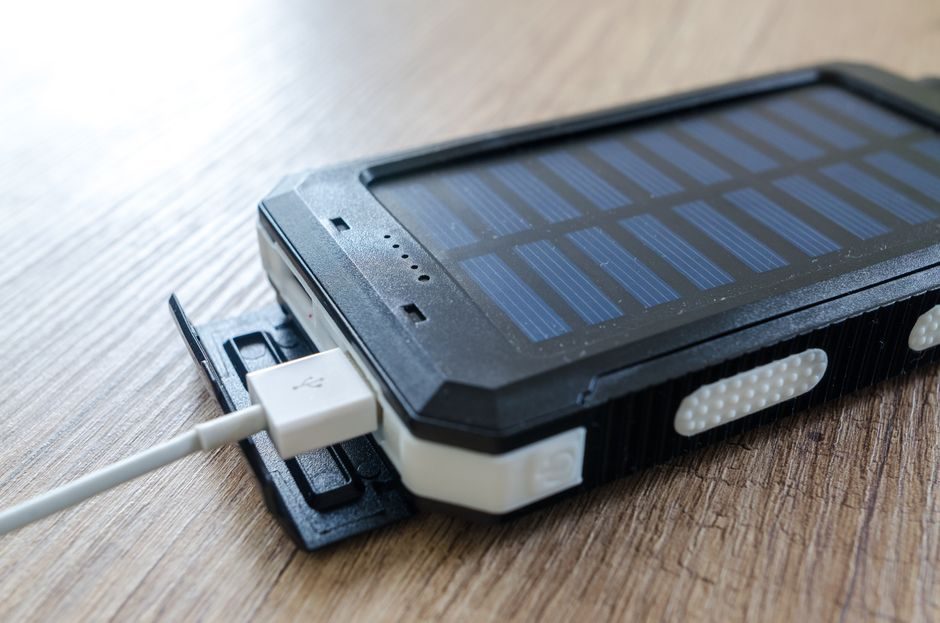
Made-in-China.com listed 49,329 Li-polymer battery-pack SKUs across 1,494 suppliers as of 2026-06-05, with entry-level pouches starting at US$0.8-1.2/piece (3,000-piece MOQ, Mica Power) and 5-12kWh LFP home-storage packs from Shenzhen Yison priced at US$1,079-1,189/piece (1-piece MOQ) [S1].
Chemistry mix is bifurcating: lithium-polymer (pouch, 3.7V nominal, LFP cathode 51.2V/64V packs) and Ni-MH (AAA 9.6V 800mAh, US$1.20-1.76/piece) dominate consumer/light-industrial SKUs, while custom Li-ion RV/mobile storage packs (Anhui Wanfeng) sit at US$260-500/piece (100-piece MOQ) [S3][S6]. Industrial 18650 cell demand is anchored on four cell families from LG Chem, Samsung SDI, Murata (post-July-2016 Sony battery-division acquisition) and Panasonic [S4], with PLC-controlled formation and aging racks now standard across Chinese pack-assembly lines feeding those cell families into finished packs.
Price bands by chemistry and form factor (2026-06 snapshots)
Li-polymer pouches at the consumer end cluster at US$0.8-5/piece (3,000-piece MOQ) with 3.7V nominal cells carrying RoHS, CE and UN38.3 certifications [S1]. Mid-band 853450-format 3.7V 1,500mAh Li-polymer cells (Shenzhen Kebe) list at US$1.20-2.00/piece (3,000-piece MOQ) with UN38.3 + RoHS + CE for power-bank, UPS and solar-storage integration [S2].
Stationary-storage LFP packs (51.2V/64V nominal, 5-12kWh class, BMS-integrated, square form factor, packaged installation) are the high end at US$848-1,189/piece (1-piece MOQ) from Shenzhen Yison (model Lfeli-48314-02) and Shenzhen Outputs Power [S1]. Custom RV/mobile Li-ion storage from Anhui Wanfeng lands at US$260-500/piece (100-piece MOQ), dustproof and lightweight [S6]. Ni-MH AAA power-tool packs (Henan Cns Energy) sit at US$1.20-1.24/piece (10,000-piece MOQ) [S5].
Cell-maker concentration behind 18650 industrial packs
The 18650 cylindrical format remains the dominant industrial cell type, with global manufacturing concentrated across four majors: LG Chem, Samsung SDI, Murata (which acquired Sony's battery division in July 2016) and Panasonic [S4]. Sony's re-entry into EV-grade cells is now overlaid on the consumer/industrial base the four majors already serve, putting cylindrical-cell supply into a structurally tight band for 2026 procurement.
Mica Power's 701235-format 3.7V 240mAh Li-polymer with UN38.3 is the lowest-cost 2026 entry point at US$0.8-1.2/piece (3,000-piece MOQ), and runs across toys, electric tools, cameras and watches [S1]. That single SKU illustrates how Chinese pack assemblers are pinning safety/compliance to UN38.3 transport testing plus CE/RoHS as the default 2026 buyer-facing certification stack, regardless of end use.
Comparison: pouch LiPo vs 18650 Li-ion vs LFP stationary vs Ni-MH
On four decision criteria drawn from the listings: (1) entry price — Ni-MH AAA US$1.20-1.24/piece (10,000 MOQ) and LiPo pouch US$0.8-1.2/piece (3,000 MOQ) lead [S1][S5]; (2) energy density per cell — 18650 cylindrical and 3.7V LiPo pouches are the workhorses, 1,500mAh in 853450 format at US$1.20-2.00/piece [S2][S4]; (3) cycle life and stationary duty — LFP 51.2V/64V 5-12kWh packs at US$1,079-1,189/piece (1-piece MOQ) target home storage, with high discharge rate and BMS [S1]; (4) rugged/outdoor duty — Anhui Wanfeng dustproof custom Li-ion at US$260-500/piece (100-piece MOQ) for RV/camper/mobile [S6].
For a buyer: specify Ni-MH only where the application tolerates 1.2V cells and high cycle counts at low cost (power tools, lamps, toys); specify LiPo pouch where thin/light form factor and 3.7V nominal matter (wearables, smart devices, cameras); specify 18650 cylindrical packs where industrial supply chain maturity, BMS ecosystem and 3.6-3.7V cylindrical interchangeability are priorities [S1][S2][S3][S4]; specify LFP 48V/51.2V stationary packs for residential or light-commercial storage where cycle life and thermal stability outweigh volumetric energy density [S1]. Buyers should also weigh complementary chemistries in parallel, as discussed in the sodium-ion supply map and the sodium-ion 2026 chain analysis.
Standards and compliance stack across 2026 listings
UN38.3 transport testing for lithium cells, plus CE and RoHS, is the recurring compliance triplet in consumer-grade LiPo SKUs (Mica Power 701235, Shenzhen Kebe 853450, Outputs Power pouch) [S1][S2]. Ni-MH industrial packs from Henan Cns Energy carry RoHS and CE (CE certified valid since 2025-03-21 per listing) for power-tool and lamp duty [S5]. Ni-Cd listings also follow the same RoHS/CE pattern, reflecting how EU buyer expectations in 2026 are forcing Chinese assemblers to maintain certification currency on every chemistry family [S5].
For stationary 5-12kWh LFP packs the certification stack typically extends to UN38.3 plus BMS-level cell-level fusing and high-rate discharge ratings, with the Shenzhen Yison Lfeli-48314-02 being representative of 51.2V nominal, square form-factor packaged construction [S1], and pressure sensor-based cell swelling monitoring increasingly common on higher-end residential SKUs alongside the BMS fusing stack. The 2026 landscape and top-OEM share breakdown for upstream lithium cell makers is mapped separately in the lithium manufacturer share 2026 piece.
Use-case fit: where each pack family earns its slot in 2026
Lightweight LiPo (Yison Lfeli-60100, 64V nominal, US$848-960/piece) targets portable devices where thin profile and medium discharge are non-negotiable; high-rate LiPo (Yison Lfeli-48314-02, 51.2V, US$1,079-1,189/piece) targets applications needing high discharge current within a packaged square enclosure [S1]. Outputs Power's tailored ultra-thin LiPo with BMS (US$1-5/piece, 100 MOQ) covers tablet/laptop/handheld consumer electronics series-parallel configurations [S1].
For power-tool and electric-toy duty, Ni-MH 9.6V/14.4V AAA-format packs at US$1.30-1.76/piece remain the cost default, with cycle life and low internal resistance explicitly called out by Henan Cns Energy in its 2026 listing [S3][S5]. For residential storage, RV-camper and mobile off-grid, the LFP 5-12kWh and dustproof custom Li-ion segments are the 2026 growth tier, with multiple Chinese assemblers now offering 1-piece MOQ to reduce buyer inventory risk [S1][S6].
Sourcing signals and limitations to track into H2 2026
Watch the 18650 cylindrical cell allocation: with the four-major concentration (LG, Samsung SDI, Murata ex-Sony, Panasonic) and Sony's EV push layered on top, spot pricing for 18650 cells in industrial packs will likely track cell-maker announcements through H2 2026 [S4], with downstream servo motor-driven winding and tab-welding capacity inside Chinese pack plants the second-order constraint to watch on lead times. Sodium-ion chemistry is the parallel-track risk to monitor — the sodium-ion supply tightening piece tracks cell specs and sourcing risk for buyers who hedge LiPo/LFP exposure.
Trackable nodes: (a) UN38.3 + CE/RoHS recertification cycles on Henan Cns Energy Ni-MH and Ni-Cd SKUs, with the CE-valid-since-2025-03-21 marker as the visible baseline [S5]; (b) MOQ flexibility on 5-12kWh LFP home-storage packs — 1-piece MOQ at Shenzhen Yison is the 2026 low end and worth re-quoting at higher volumes [S1]; (c) cross-check LFP and sodium-ion UPS-stationary quotes, since the UPS overlap is where 2026 demand is converging per the sodium-ion UPS integration coverage.