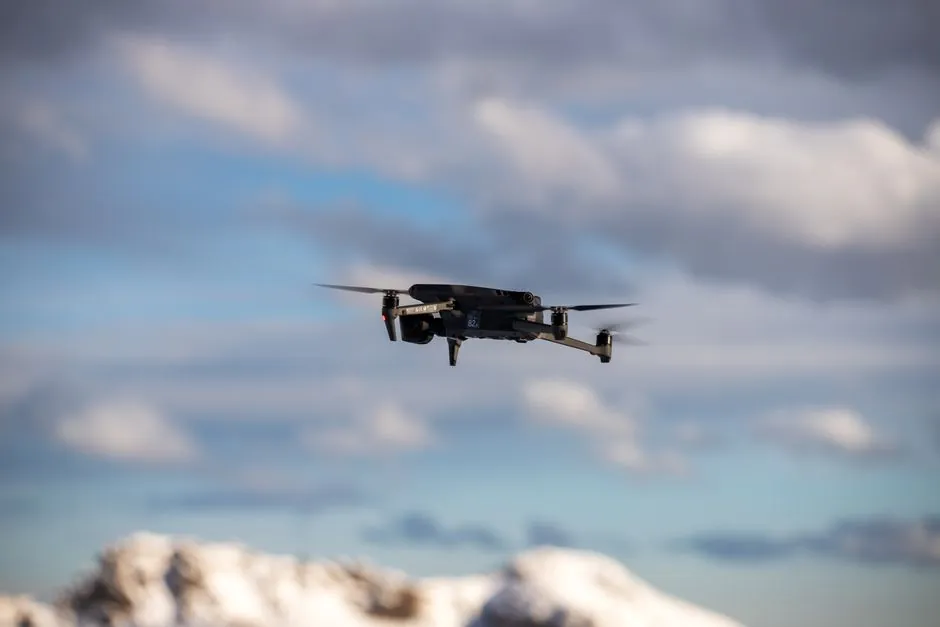
The commercial drone competitive landscape in 2026 is no longer a single-vendor category, with the data and analytics layer now drawing drone service providers, geospatial software firms, and Drone-as-a-Service (DaaS) operators into direct competition for the same enterprise contracts [S3].
A 2026-2035 market report published 12 hours before the article date names DroneDeploy, AeroVironment, and Terra Drone as the named comparators in the data services segment, while flagging AI reality capture and BVLOS (Beyond Visual Line of Sight) integration as the two capability axes reshaping vendor positioning [S3].
Three-way split: hardware OEM, software platform, DaaS operator
The report explicitly segments the competitive landscape into three participant types: drone service providers (those flying and collecting), geospatial software companies (those processing and selling analytics), and DaaS providers (those wrapping flight, processing, and deliverable into a subscription) [S3].
This matters for specifiers because procurement language written in 2022, when most RFPs assumed a hardware vendor with optional software, now misfires on at least two of the three 2026 buyer profiles: software platforms that never own airframes, and DaaS operators that never sell software licenses separately. A 2026 BVLOS integration push is the most concrete differentiator named in the report, since it determines whether a vendor can legally scale past visual-line-of-sight operations under the applicable aviation authority [S3].
Named comparators: DroneDeploy, AeroVironment, Terra Drone
DroneDeploy is positioned in the geospatial software camp, where the value sits in stitching flight imagery into orthomosaics, point clouds, and CAD-ready surfaces rather than in airframe manufacturing [S3].
AeroVironment sits in the hardware-and-defense camp, leveraging small UAS (Unmanned Aerial Systems) heritage from military and tactical programs into commercial inspection and surveying channels [S3].
Terra Drone is positioned in the DaaS and services camp, where recurring-revenue contracts rather than unit sales define the book of business [S3]. The cross-comparison is clean: DroneDeploy monetizes per processed acre, AeroVironment monetizes per delivered airframe plus service hours, and Terra Drone monetizes per managed inspection cycle. Buyers comparing the three on the same RFP need to normalize that revenue basis before any apples-to-apples score.
AI reality capture and BVLOS as the two capability axes
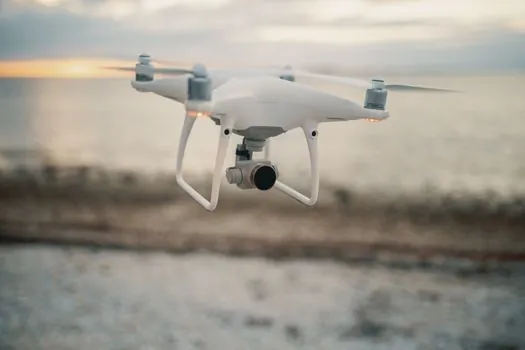
AI reality capture covers automated flight path planning, real-time object detection on the edge, and downstream photogrammetry that converts raw imagery into survey-grade deliverables without manual tie-pointing [S3]. The capability matters because it collapses the labor cost in processing, which historically dominated a survey mission's billable hours.
BVLOS integration covers the regulatory and ground-based detect-and-avoid stack that lets a single operator control multiple aircraft past visual range. The 2026 report flags this as a competitive axis rather than a solved baseline, which is consistent with the still-fragmented state of national BVLOS rulemakings across the US (FAA Part 108 discussions), the EU (U-space airspace), and the UK ( CAA BVLOS framework).
Who each camp is for, and who it is not for
Hardware OEMs (AeroVironment profile) fit defense, public safety, and industrial inspection buyers who need an airframe they can maintain, logbook, and rebuild; they are not the right answer for an enterprise that wants monthly rooftop thermal scans as an operating expense line [S3].
Geospatial software platforms (DroneDeploy profile) fit surveying, construction, and mining firms that already own or contract their own flight crews and need a software backbone for processing, sharing, and integrating outputs into GIS and BIM pipelines; they are not the right answer for a buyer who has zero aviation capability in-house [S3].
DaaS operators (Terra Drone profile) fit asset owners in oil and gas, utilities, and infrastructure who want deliverables on a recurring schedule with zero capex on aircraft or pilots; they are not the right answer for projects where the data is the proprietary product and the buyer wants to retain every raw frame in-house [S3].
Limits, failure modes, and what the 2026 data does not tell you
The 2026-2035 report names participants and capability axes but does not publish installed-base counts, revenue share, or unit shipment figures for any of the three named vendors in the article body, so direct market-share ranking is not supportable from this source [S3].
Failure modes specific to the 2026 stack include: software-only vendors losing renewals when a DaaS competitor bundles processing into a turnkey contract; hardware OEMs losing deal velocity when their BVLOS approval lags a software-and-services rival; and DaaS operators losing margin when AI reality capture drives processing cost toward zero and customers start demanding price cuts. Buyers who spec on 2022 assumptions, where hardware was the dominant line item, will systematically over-weight airframe specs and under-weight software API and BVLOS certification in 2026.
Procurement criteria: 4-axis comparison for 2026 specifiers
For a specifier writing an RFP in 2026, four criteria separate the three named vendors: (1) revenue basis (software license vs airframe + service vs subscription); (2) regulatory ceiling (BVLOS approval status, not Part 107 visual-line-of-sight baseline); (3) data ownership clause (raw frames delivered vs processed deliverables only); and (4) integration surface (GIS, BIM, and PLC telemetry hooks for plant-floor handoff) [S3].
Engineering buyers should also note that drone-based inspection increasingly feeds the same pressure transmitter and flow meter data streams that plant DCS systems consume, so the drone data API contract matters as much as the airframe payload. For work sites where the drone is monitoring actuator and valve health on unreachable assets, the industrial valve inspection deliverable and the drone vendor's leak-detection AI module are the procurement decision points, not the airframe price. Related coverage on demand-side divergence is in the Drone Demand 2026-2030 segment split.
Track two signals over the next quarter: any FAA BVLOS rule publication that names a 2026 effective date, and any of the three named vendors filing a public BVLOS waiver list update, since both moves reset the competitive ranking on axis (2) above [S3].