
Global drone demand from 2026 through 2030 is splitting into three measurable lanes: military swarm and counter-drone systems tracking roughly 25-27% compound annual growth, education-sector procurement adding about USD 1,198 million between 2025 and 2030 at a 19.9% CAGR, and a new Europe-only Drone-as-a-Service (DaaS) channel built around EASA regulatory compliance [S3][S4][S1].
The supply side is responding in kind: counter-UAS specialist DroneShield, trading at A$3.9039 on 12 March 2026, announced an EU manufacturing facility on 11 March 2026 targeting an annual production-capacity scale-up from approximately A$500 million in 2025 to about A$2.4 billion by end-2026, framed against the EU's ReArm Europe Plan / Readiness 2030 initiative [S5]. That single capacity move is roughly a 4.8x expansion in twelve months and is a cleaner read on defense-side demand than any forward multiple.
Swarm Drone Systems: USD 3.18B in 2026 to USD 8.28B by 2030
The broader drone swarm systems market is valued at roughly USD 3.18 billion in 2026 and is projected to reach USD 8.28 billion by 2030, growing at around 27% CAGR [S3]. Within that, the swarm drone defense sub-segment alone sits at approximately USD 3.16 billion in 2026, expanding to roughly USD 7.69 billion by 2030 at a 25% CAGR, which means defense is the single largest line item inside the swarm family and not a side category [S3].
Counter-swarm technology is the parallel growth story, running from about USD 2.03 billion in 2026 to nearly USD 4.95 billion by 2030, a 24-25% CAGR that essentially matches the offensive swarm segment and confirms that detect-and-defeat spend is being written into the same procurement line items as the platforms themselves [S3]. North America currently leads defense-driven swarm adoption, while Asia-Pacific has emerged as the dominant region in several related drone categories, and named industry participants include Boeing, Lockheed Martin, Northrop Grumman, BAE Systems, Thales, Elbit Systems, Shield AI, Anduril Industries, AeroVironment, and Kratos Defense [S3]. The fastest-expanding sub-segments are swarm-management software and mesh-network communication, which matters to buyers because those line items tend to be locked-in earlier than airframes and create multi-year recurring revenue tails [S3].
Education-Sector Drones: USD 1.198B Additive Spend 2025-2030 at 19.9% CAGR
Global drone technology in the education sector is forecast to grow by USD 1,198,140.7 thousand (USD 1.198 billion) during 2025-2030, accelerating at a CAGR of 19.9%, with the vendor analysis covering around 25 named suppliers [S4]. By application, the market splits into security surveillance and learning, and by end-user into higher education and K-12, with K-12 typically the larger unit volume and higher education the larger dollar volume [S4].
By type, education buyers are choosing across wing, multi-rotor, single-rotor, and hybrid drones, and the report flags three growth drivers: increased emphasis on STEM education, BYOD policy adoption, and government initiatives promoting drones in classrooms [S4]. Two forward product features are flagged as demand catalysts: increasing adoption of online retail channels for educational products, and incorporation of thermal-imaging features in drones to improve learning in low-light conditions [S4]. Named vendors include BETAFPV, DJI, Parrot Drones SAS, Pix4D SA, Skydio, Yuneec, Holybro, Makeblock, LocoRobo, Robolink, DroneBlocks, and DroneDeploy, with regional coverage segmented across North America, APAC, Europe, South America, and Middle East and Africa [S4].
EU Drone-as-a-Service: Compliance, Not Hardware, Is the 2026 Differentiator
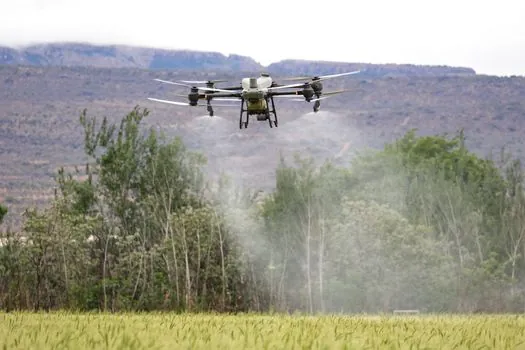
Altaviator, a Europe-focused Drone-as-a-Service platform, is going live on 1 September 2026 and already has 451+ companies on its waiting list, with positioning built around EASA drone regulations and GDPR data-protection requirements rather than airframe performance [S1]. The platform aggregates infrastructure inspection, mapping and surveying, agriculture and land monitoring, security and site monitoring, and aerial data and analytics, with the explicit value proposition that buyers do not need to manage UAV fleets or chase multi-jurisdiction aviation paperwork themselves [S1].
The technical gate that separates viable DaaS providers in the EU from generic drone operators is documented as EASA drone regulations and GDPR, which means operators must hold certified pilot credentials, standardized workflows, and audit-trail data handling per country [S1]. Use cases Altaviator is targeting, including energy-asset and wind-farm inspection, high-resolution geospatial output for construction, and surveillance at logistics hubs, all sit inside industrial flow meter and pressure transmitter telemetry environments where the data product has to be auditable to feed downstream SCADA and predictive-maintenance systems, not just pretty maps.
Counter-Drone Manufacturing Capacity: A$500M to A$2.4B in Twelve Months
DroneShield's 11 March 2026 EU facility announcement targets an expansion of total annual production capacity from approximately A$500 million in 2025 to an expected A$2.4 billion by end-2026, a 4.8x scale-up, aligned with the EU's ReArm Europe Plan / Readiness 2030 initiative [S5]. On the revenue side, DroneShield's full-year 2025 results reported 276% year-on-year revenue growth to A$216.55 million, with an additional A$21.7 million in new western military contracts announced on 26 February 2026 for Q1 2026 delivery and a reported potential sales pipeline of A$2.3 billion [S5].
Independent third-party coverage of the 2026-2030 horizon carries a 12-month price-target range of A$4.80 to A$4.90, with Simply Wall St's DCF fair value at A$4.90 implying 32% upside on the March 2026 print and Bell Potter holding a buy rating with a trimmed A$4.80 target after FY2025 results, trading at 35x CY26 estimated EV/EBITDA at a discount to its global drone peer group [S5]. DroneShield is positioning its radio-frequency detect-and-defeat portfolio as a market-leading C-UAS offering, and the EU plant adds a second production geography on top of the existing Australian footprint [S5].
Drone Delivery: A 10-Year Revenue Ramp to 2036
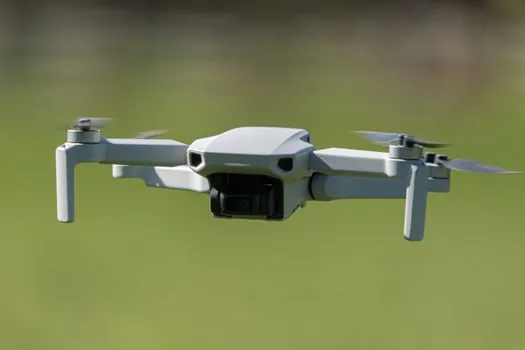
Statista's drone delivery revenue forecast series tracks global drone delivery service revenue between 2026 and 2036, anchoring the long-tail demand curve outside the 2026-2030 horizon that swarm and education data cover [S2]. The series is the standard reference for the 10-year logistics case and is widely cited in commercial UAV pitch decks as the upper-bound revenue opportunity for last-mile drone operations [S2].
Comparison: Three Drone Demand Lanes on Five Decision Criteria
Buyers, investors, and procurement teams looking at 2026-2030 drone demand need to read the three lanes against the same five criteria to avoid mixing up market structures: [S3]
Lane 1 (Swarm + Counter-drone defense, USD 3.18B to USD 8.28B at ~27% CAGR [S3]): buyer type is government defense and prime contractors, primary standard is military procurement frameworks with EASA as a secondary overlay in Europe, growth driver is military modernization plus AI-driven coordination, supply concentration is high (Boeing, Lockheed, Anduril, AeroVironment, Kratos among named players), and lead time is 18-36 months for airframes and 6-12 months for software [S3].
Lane 2 (Education, +USD 1.198B 2025-2030 at 19.9% CAGR [S4]): buyer type is K-12 and higher education institutions, primary standard is local education procurement with CE/FCC for hardware safety, growth driver is STEM emphasis and BYOD policy, supply concentration is fragmented (around 25 named vendors including DJI, Parrot, Skydio, BETAFPV), and lead time is 30-90 days for off-the-shelf classroom kits [S4].
Lane 3 (EU Drone-as-a-Service, qualitative, going live 1 September 2026 [S1]): buyer type is enterprise industrial and infrastructure operators, primary standard is EASA drone regulations and GDPR, growth driver is regulatory outsourcing and certified pilot scarcity, supply concentration is low and pre-market (Altaviator is the named example with 451+ companies on its waitlist), and lead time is project-based service contracts rather than hardware purchase [S1].
The decision rule for specifiers is straightforward: if your 2026-2030 horizon is dominated by government contracts and detect-defeat capability, you are in Lane 1 and should track counter-drone capacity like DroneShield's A$500M to A$2.4B ramp [S5]; if it is K-12 and higher-ed procurement, you are in Lane 2 and should track BYOD and thermal-imaging rollouts [S4]; if it is industrial asset inspection or mapping under EU privacy law, you are in Lane 3 and should pre-qualify DaaS providers against EASA and GDPR documentation before any airframe conversation [S1].
Standards, Sourcing Signals, and What to Track Next

Across all three lanes the common technical thread is audit-trail data: swarm systems need mesh-network logging for defense accreditation, education buyers increasingly require GDPR-aligned student data handling even outside the EU, and EU DaaS providers must demonstrate certified pilot credentials and standardized workflows per country [S1][S3][S4]. DroneShield's EU plant is a direct response to the ReArm Europe Plan / Readiness 2030 initiative, so any 2026-2030 demand forecast that ignores that program is under-counting European counter-drone procurement by a wide margin [S5].
Three trackable signals for the next six to twelve months: DroneShield's reported A$2.3 billion pipeline conversion rate as the EU plant ramps through end-2026 [S5]; Altaviator's 1 September 2026 platform go-live and the first 100 enterprise customer announcements [S1]; and the next Statista update to the 2026-2036 drone delivery revenue series, which is the long-tail upper bound for logistics use cases [S2]. For comparison with adjacent industrial sourcing pressure in the same window, see the Industrial Ethernet Supply Shortage 2026 risk map and the 5G industrial module shortage 2026 risk map, both of which feed the connectivity stack that drone telemetry and swarm mesh networks sit on top of.
For component-level specifications, see industrial valve.