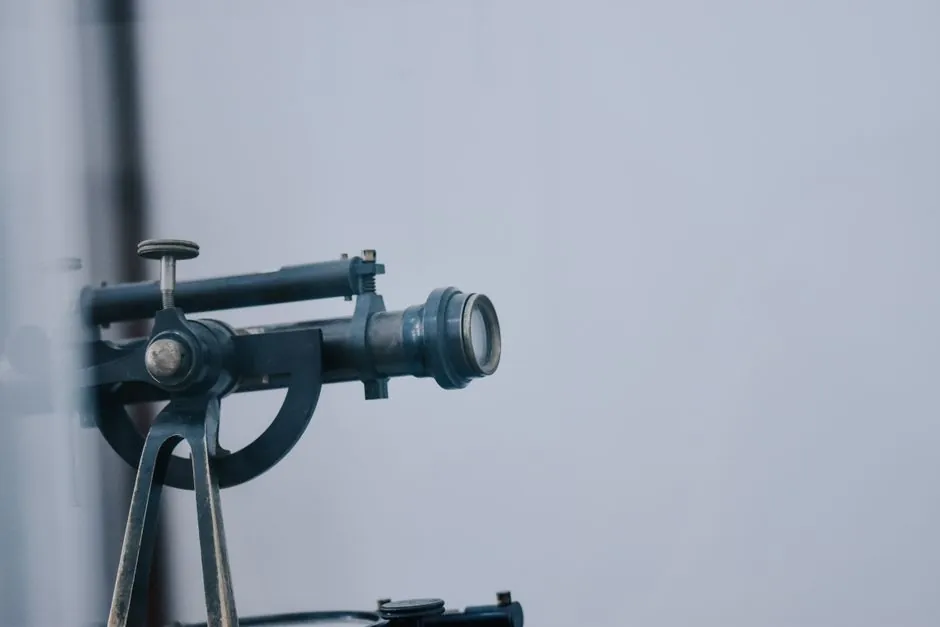
A 360-degree rotating base with a fine adjustment knob for line lasers is a dedicated mounting accessory, not a laser by itself, and it solves one specific problem: pointing the beam to a target without re-levelling the instrument.
Manual versions on the market accept both 1/4"-20 and 5/8"-11 instrument threads via a top screw and ship with a micro-adjust knob for azimuth trimming [S1]. Motorised variants add a remote-controlled 3-speed drive, height adjustment, a 2200 mAh lithium battery, and a 1/4"-20 to 5/8"-11 adapter, with a typical retail price of $155.87 [S5].
How the base actually moves the beam
The rotating base is a low-profile turntable that sits between the laser body and the tripod, and the laser is locked to the top plate by a centre screw [S1]. The top plate rotates on a precision bearing race so the beam can sweep a full 360° around the plumb point without the operator walking around the tripod.
The fine adjustment knob is a slow-pitch worm or eccentric drive that turns coarse hand-rotation into millimetre-scale azimuth changes at the target wall. On motorised bases this knob is replaced by a 3-speed electric drive paired with an infrared remote, letting a single operator align the line without touching the instrument [S5]. Pivot-around-point fine adjustment lets the laser line be moved while the intersection of the vertical lines stays anchored, which is the feature that actually justifies the accessory on layout work [S4].
Thread fit, weight, and what mounts on top
Instrument threads on line lasers are concentrated on two sizes: 1/4"-20 for compact cross-line and point lasers, and 5/8"-11 for surveyors' and contractors' instruments. The micro-adjust bracket from the consumer channel accepts both via a captive centre screw, so the same base can carry a Huepar HM03CG-class 360° laser or a heavier rotating instrument without an extra adapter [S1].
Motorised bases ship with a separate 1/4"-20 to 5/8"-11 adapter and add a 2200 mAh lithium pack plus detachable tripod legs, so the unit is self-supporting on a slab and does not need a separate elevator column [S5]. For benchtop or short-range alignment, a YEVOLT-pattern 1/4" universal-fit non-slip base is a third option that drops the rotation knob in favour of a friction pad [S6].
Comparison of the three base styles sold today
Three functional classes of base are commonly stocked for line lasers, and they trade off cost against alignment precision. [S2]
Manual micro-adjust bracket: low-cost turntable with a knob, dual 1/4" and 5/8" centre screw, retail around $19.99, best for short-range indoor layout where the operator can reach the unit [S1]. Motorised 3-speed base: remote-controlled 360° rotation, height adjustment, 2200 mAh battery, 1/4"-20 to 5/8"-11 adapter, list $155.87, suited to ceiling and long-wall jobs where walking to the laser is impractical [S5]. Magnetic swivel base: integrated into the laser itself rather than sold as a separate accessory, gives 360° rotation against a steel surface, common on self-levelling cross-line models such as the Huepar HM03CG and the Walmart-listed green-beam self-levelling level [S2][S3].
On three decision criteria, the manual bracket wins on cost and simplicity, the motorised base wins on single-operator workflow and reach, and the magnetic swivel wins on portability because there is no separate bracket to carry. For hobby and DIY picture-hanging work, the magnetic swivel is usually enough; for daily layout of partitions or cabinets, the micro-adjust bracket is the better buy; for ceiling-grid or long-facade layout, the motorised base earns its price.
Accuracy interaction with the laser body sitting on top
The base does not generate accuracy, it preserves it. The Huepar HM03CG tested in the Bob Vila 2026-03-27 review was rated at 1/9 inch at 33 feet, and the review team noted its strong magnetic mount, fine adjustment knob, and rotating head as the combination that made the unit feel precise in the hand [S3].
Other models on the same comparison table illustrate the spread: Klein Tools 93LCLS at 3/32 inch at 33 feet, DeWalt DCLE34020G at 1/8 inch at 30 feet, Skil LL932201 at 3/16 inch at 30 feet, Bosch GLL 30 at 5/16 inch at 30 feet [S3]. A sloppy base will bleed 1/8 inch or more at 30 feet even off a level instrument, which is why the fine adjustment knob is specified as a micro-adjust rather than a coarse handle. Where a single operator needs to nudge the line to align with a chalk reference, the worm or eccentric drive on the base is the mechanism that delivers the sub-tick movement.
Standards, certification, and what is actually verified
Most rotating bases in this category are sold as general hardware rather than as measurement instruments, so they carry consumer-grade compliance marks rather than ISO 17123-style accuracy certification. The YEVOLT 1/4" rotating base is explicitly listed as CE certified, which covers the EU safety, health, and environmental protection requirements for that product class [S6].
Threading follows the photographic and surveying conventions of 1/4"-20 and 5/8"-11 UNC, which is why a single adapter bridges the two systems on motorised bases [S5]. Buyers should distinguish between a base that lists a beam-accuracy figure (a property of the laser) and a base that lists CE or equivalent (a property of the mechanical accessory); the two certifications answer different questions.
Where a rotating base earns its slot, and where it is overkill
For interior fit-out, tiling, cabinetry, and partition walls, the rotating base pays back the time it takes to plumb the laser once and then walk around the room twisting the knob. It is less useful for short one-shot jobs like hanging a single shelf, where a simple torpedo level is faster. For outdoor concrete or earthwork, the more relevant accessory is a detector and a staff, not a fine-adjust knob. [S3]
For more on how rotary motion interfaces with heavy equipment, see this timing belt selection guide for steel mill drives, which covers the same bearing-and-race motion principles at much higher loads. Shops that already use these bases for laser alignment will recognise the same micro-adjust behaviour on rebar benders; the 135° seismic hook bending breakdown uses an analogous fine-adjust workflow to hold angle tolerance.
Selection checklist before buying

Match the base thread to the laser thread (1/4"-20 for compact cross-line models, 5/8"-11 for surveyors' units, or buy a base that accepts both) [S1][S5]. Decide between manual micro-adjust, motorised remote, or magnetic swivel based on whether one operator can reach the unit during alignment [S2][S3][S5]. Confirm CE or equivalent marking if the base will be used on a commercial site, and check that the listed load rating covers the laser body plus any receiver or detector mounted on top [S6].
Watch for two failure modes: backlash in the fine adjustment knob, which shows up as the line creeping when the knob is released, and slip between the top plate and the tripod thread, which throws the plumb point off as the laser rotates. A base with a detachable tripod leg set and a 2200 mAh battery will outlast a friction-pad-only base on daily work [S5][S6].
Final tracking signals to watch over the next quarter: price movement on the $19.99 manual bracket tier [S1], any new CE-marked magnetic swivel bases that integrate a fine adjustment knob, and updates to the Huepar HM03CG and competing 360° self-levelling lasers that may bundle their own rotating base rather than treat it as a separate accessory [S3].
Component reference pages worth checking: mold base, molding line, and automatic molding line.
