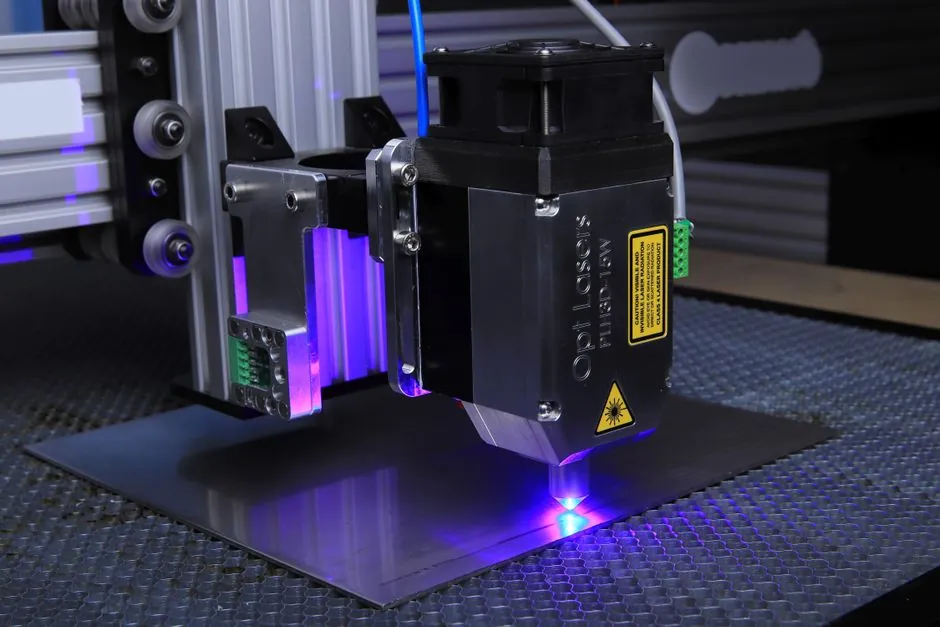
5N (99.999% purity) ytterbium oxide (Yb2O3) is the feed material of choice for ytterbium-doped gain media, because the simple 2F7/2 to 2F5/2 electronic structure of the Yb3+ ion delivers a small quantum defect, upper-state lifetimes on the order of 1-2 ms, and a broad gain bandwidth suitable for both kilowatt-class industrial fiber lasers and femtosecond mode-locked systems [S2].
Demand splits across three technical lanes: kilowatt Yb-doped fiber and Yb:YAG lasers for sheet-metal cutting and welding, Yb-171 trapped-ion qubits with reported coherence times around 1,000 ms on commercial platforms, and 171Yb optical lattice clocks at NIST and PTB that have demonstrated fractional frequency agreement of 1 part in 10^18 [S3]. The high-purity 5N specification is what enables the laser-active Yb3+ fraction to stay above the impurity-quenching threshold in doped fiber preforms and Yb:YAG crystal boules.
Why 5N Purity Is the Working Specification
Ytterbium oxide for laser gain media must hold transition-metal and other rare-earth contaminants to trace levels, because co-dopants such as Er3+ in Er-Yb co-doped amplifiers and quenching ions such as Fe2+, Cu2+, and OH- will lift the lasing threshold and shorten the upper-state lifetime [S2].
Yb2O3 absorbs pump light efficiently near 976 nm, with a high absorption cross-section that lets Yb-doped fiber lasers convert diode pump photons into 1.0-1.1 micron laser output with wall-plug efficiencies that older Nd:YAG and CO2 systems cannot match [S1]. This same absorption band is what makes Yb attractive for in-band pumping schemes where pump and laser photons sit close in energy, minimising thermal loading on the host and allowing kilowatt-class continuous-wave output from a single fiber oscillator-amplifier chain [S2].
Fiber Lasers and Solid-State Hosts: A Criteria Comparison
Yb3+ is unusual among rare-earth laser ions because it can be hosted in crystals, ceramics, and glasses, and the host choice drives the application: Yb:YAG dominates high-power thin-disk and industrial rod lasers because of its thermal conductivity, Yb:KGW and Yb:KYW are preferred for femtosecond mode-locked oscillators thanks to their broader gain bandwidth, and aluminosilicate glass fibers carry the kilowatt-class continuous-wave and pulsed industrial market because of their long interaction length and surface-area-to-volume cooling geometry [S2].
Across these hosts, the comparison on the four spec criteria that matter to a process engineer reads as follows. Output wavelength spans roughly 1030 nm in Yb:YAG, 1030-1070 nm across the Yb-doped glass and crystal family, with frequency-doubled green and tripled UV extensions available through nonlinear conversion [S5]. Pulse width: mode-locked Yb fiber and thin-disk systems reach pulse widths as short as 50 fs with peak powers in the gigawatt regime [S5]. Power scalability: fiber and thin-disk geometries place every part of the gain medium near a cooled surface, removing the bulk-crystal heat-removal ceiling that limits Nd:YAG [S5]. Wall-plug efficiency: the small quantum defect and efficient 976 nm diode pumping push Yb systems ahead of alternative ultrafast laser technologies on electrical efficiency, which is a key argument for high-throughput manufacturing [S5].
The quasi-three-level behaviour that comes with the same small quantum defect is the engineering trade-off: Yb lasers must be pumped with relatively high intensity to maintain population inversion, and short-wavelength operation has to manage reabsorption losses from the thermal population of the lower laser level [S2]. Photodarkening in Yb-doped aluminosilicate fibers is a separate, well-documented degradation mode that drives the cerium and phosphorus co-doping recipes used in high-power fiber laser preforms.
Yb-171 Trapped-Ion Qubits: A Different Pull on the Same Isotope

Trapped-ion quantum computing platforms have standardised on Yb-171 because its hyperfine clock transition in the microwave band, plus its narrow optical transition near 369.5 nm, allow laser cooling, state preparation, and readout with the same ion, and IonQ's published commercial systems report qubit coherence times of roughly 1,000 ms, which is the headline number that the trapped-ion community uses when comparing against superconducting and neutral-atom platforms [S3].
This is the same Yb-171 isotope that NIST and PTB use in optical lattice clocks, which means the isotope-enrichment and reduction-to-metal supply chain that feeds the quantum-computing industry overlaps almost completely with the metrology supply chain, and the material form demanded at the qubit fab is the high-purity fluoride or oxide precursor rather than the bulk oxide sold for steel and aluminium alloy additions [S3]. For a specification engineer, the practical consequence is that 5N Yb2O3 lots destined for quantum-device production are typically accompanied by tighter assay data on isotopic composition and on metallic impurities below 1 ppm, whereas laser-grade lots are graded primarily on rare-earth purity and OH content.
Optical Lattice Clocks: A Small but Strict Specification Pull
171Yb optical lattice clocks at NIST and PTB have demonstrated inter-clock fractional frequency agreement of 1 part in 10^18, which is the published best-in-class figure that drives the SI-second redefinition conversation and feeds into defence and navigation applications [S3]. The lattice clock pulls a much smaller volume of material than the fiber-laser market, but the specification is strict: the strontium-style and ytterbium-style lattice clocks both need isotopically enriched 171Yb, and the same laser-cooling transition at 399 nm that is used for first-stage cooling in ion traps is used for the magneto-optical trap stage of neutral-atom lattice clocks [S3].
The German metrology institute PTB runs a parallel single-ion programme, and the redundancy of the Yb-171 clock work between NIST and PTB is the structural reason that even a slow ramp in the precision-metry budget translates into a non-negotiable volume of enriched Yb-171 fluoride or oxide at the 5N specification.
Industrial Welding Radiography and Other Sidelights
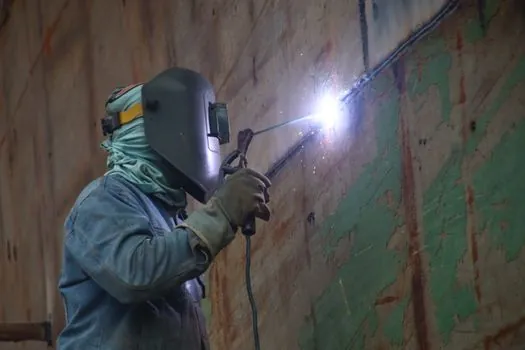
One common vendor-page error worth flagging: ytterbium-169 is the isotope used in industrial weld-inspection radiography as a gamma source, not in medical X-ray diagnostics, and the two applications must not be conflated in a purchasing specification [S3]. Separately, Yb2O3-stabilised zirconia and Yb-silicate environmental barrier coatings for gas turbine hot sections remain research-stage rather than mass-produced, so a buyer looking for a 5N Yb2O3 lot should not expect a co-product supply chain for that end use to support a pull on the same material.
Selection Criteria: Specifying 5N Yb2O3 for the Right End Use
A buyer should pick the 5N Yb2O3 grade against the eventual host and end use, not against a generic purity label. For Yb-doped fiber laser preforms, the critical impurities are transition metals (Fe, Cu, Ni) and hydroxyl content, both of which raise the photodarkening rate and the passive loss floor of the fiber. For Yb:YAG or Yb:KGW crystal growth, the critical impurities are competing rare-earth ions (Er, Tm, Ho, Nd) and anion impurities (OH-, F-, Cl-) that become inclusions in the boule. For Er-Yb co-doped amplifiers, the specification also includes an Er:Yb ratio window typically expressed in atomic percent. For Yb-171 qubit and clock work, the additional layer is an isotopic assay with the 171Yb fraction specified against the 168, 170, 172, 174, and 176 natural-abundance isotopes. [S2]
Material conversion from oxide to the laser-active host typically starts with dissolving Yb2O3 in acid, purifying by solvent extraction or ion exchange, and converting to the precursor form (chloride, fluoride, or nitrate) that the crystal-growth or fiber-doping process requires; this is the same general route used for other rare-earth laser ions, and the route is what links the 5N oxide market to the fiber-converter equipment category in supplier catalogues. Industrial laser-system builders and their tier-2 suppliers share this same Yb2O3 lot pool, and the Yb-doped fiber subcategory inside the broader lighting-equipment-and-electric-lamps taxonomy is where the end-use parts land in a sourcing database.
Trackable signals to watch: published expansion plans from the small number of commercial Yb-171 trapped-ion platforms, the next NIST or PTB inter-clock comparison result, and the rare-earth oxide price-quote sheets that reflect the small but visible premium on 5N Yb2O3 over 4N grades. The same signals will also reflect any ramp in kilowatt Yb fiber-laser shipments to the automotive body shop and electronics manufacturing lines that drive the bulk of demand [S1][S3].
For component-level specifications, see construction machinery and equipment.
For related coverage, see Bipolar Plate Stamping and Laser Welding Automation for PEM Fuel Cells.