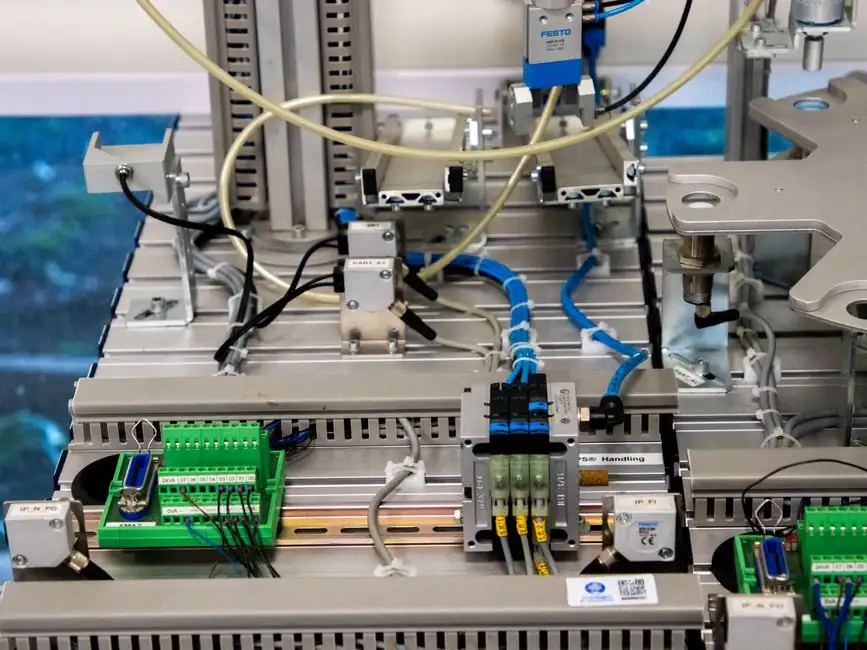
Channel density is the single biggest lever on remote I/O panel cost: ODOT's high-density remote I/O architecture supports 32 modules per bus, each module built with 16 channels, yielding a maximum of 512 I/O points per network segment [S5], while DirectIndustry-listed high-density systems scale further to 64 modules at 16 channels each, for 1024 I/O points with hot-swap on the backplane [S1].
Snap-density matters because the surrounding hardware, terminals, fuses, and DIN-rail real estate, scales almost linearly with module count, not with channel count, so a 32-point module typically halves the per-point wiring and footprint versus an 8-point module on the same field signal type [S4].
Where 8-Channel Modules Still Win
Eight-channel modules remain the default on Rockwell POINT I/O systems, where the family is explicitly described as offering 1 to 8 points per module for "just-what-you-need granularity" to reduce system cost and size, and the catalog groups 8-channel current input modules as a standard high-density option [S2]. Practical projects confirm the pattern: 8-point form factors dominate retrofit panels where the cabinet is already laid out for 12 mm terminal blocks, where per-channel fusing is mandatory, or where only four to six signals of a given type (e.g. PNP proximity inputs) exist in a local cluster.
Counter-argument on power and density: Analog Devices' high-channel-density reference design reports that an 8-channel digital module draws over 2 W while a 32-channel module draws over 8 W, so 8-channel designs spread heat and inrush across more modules, simplifying cabinet thermal design at the cost of more wiring [S3]. That thermal headroom is one reason the remote I/O module catalog tier is unlikely to disappear, even as 32-point density becomes the greenfield default.
16-Channel Modules: The Greenfield Workhorse
Sixteen-channel modules sit in the engineering sweet spot for most new PLC panels: ODOT's CN-series and CT-series remote I/O both use 16 channels per module as the standard density, with LED indication per channel, and 12M backplane bus delivering a 2 ms refresh for 32 digital modules on the same segment [S5]. The DirectIndustry market survey echoes this, listing 16-channel and 16-I/O modules as the most populated filter tags in the high-density category, well ahead of 32-I/O listings [S1].
Opto 22's SNAP-IDC-16 and SNAP-IAC-16 family confirms the 16-point form factor covers the full signal-type matrix (10 to 32 VDC/VAC inputs, 90 to 140 VAC inputs, 180 to 280 VAC inputs, plus isolated 16-point outputs), all on the same 1500 V field-isolation rating that the 32-point modules use, which is a clear OEM signal that 16-point is the lowest common-denominator density the ecosystem will support [S4]. On Ethernet-APL and PROFINET segments, pairing the 16-point base with a cyclic RPI in the 1 to 4 ms range is a common practice for high-speed discrete control, as discussed in the EtherNet/IP RPI for remote I/O selection guide.
32-Channel Modules: Lowest Per-Point Cost, Highest Wiring Risk
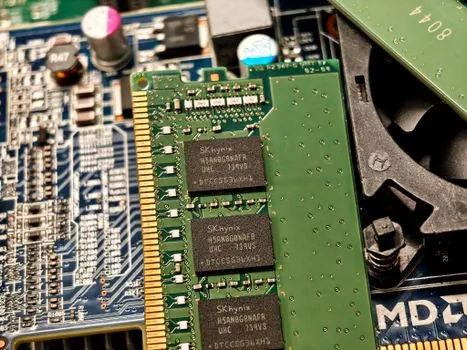
Thirty-two-channel modules hit the lowest per-point cost in any cabinet: Opto 22 SNAP-IDC-32 / SNAP-ODC-32-SRC / SNAP-ODC-32-SNK deliver 32 points in a single module, with 1500 V field isolation, and up to 16 such modules on a SNAP rack for a maximum of 512 digital points per rack [S4]. The IAI remote I/O unit specification uses 32 I/O points per station as a fixed design point for both the input-only and output-only versions, suggesting 32-point density has become a standard for high-point-count actuator and sensor networks [S6].
Engineers who specify 32-point modules must accept three trade-offs. First, wiring harness density: 32-point modules use dual 8-point connectors or 34-pin headers rather than per-channel screw terminals, so every field wire lands via a pre-made harness or breakout board [S4]. Second, single-point failure blast radius: a failed 32-point module takes out 32 signals versus 8, so redundant power feeds and module-level diagnostics carry more weight, which the relay interface module ecosystem is often used to mitigate. Third, heat and inrush: a 32-channel module can draw over 8 W, more than triple the 2 W budget of an 8-channel module, so cabinet ventilation and backplane power supply sizing must be checked at the panel-design stage [S3].
Decision Matrix: 8 vs 16 vs 32 Channel Selection
Use the table below as the spec-first selection rule. Per-point cost and panel density both increase as you move from 8 to 16 to 32 points; fault containment, wiring flexibility, and thermal headroom all move in the opposite direction. [S2]
Eight-channel modules fit retrofit panels under 64 I/O points per cabinet, applications with mixed signal types in a small cluster, and any project where per-channel fusing or per-channel relay isolation is required; 16-channel modules are the default for new PLC cabinets in the 64 to 512 I/O point range and pair cleanly with standard PROFINET, EtherNet/IP, and Modbus TCP adapters listed in the ODOT CN-80xx family [S5]. Thirty-two-channel modules suit marshalling cabinets above 512 I/O points where harness wiring is pre-built and a single 24 VDC power distribution can feed a full rack of 16 modules at 32 points each, i.e. SNAP high-density digital modules provide up to 512 digital points per rack, with up to 16 modules per rack and 16 or 32 input or output points per module [S4].
Limits, Failure Modes, and Standards Anchors
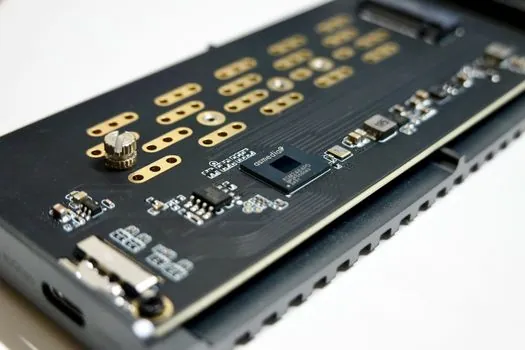
The biggest physical limit on 32-channel adoption is connector density, not the module itself: Opto 22 specifies dual 8-point connectors (16 points total per connector pair for the 16-point modules, 32 points via two such pairs on 32-point modules), and any field-side wiring harness must be ordered to match the exact module pinout, which means stocking one spare harness per unique signal mix [S4]. The 8-channel and 16-channel modules are still the only practical option for AC-voltage digital inputs (90 to 140 VAC and 180 to 280 VAC variants are cataloged only in the 16-point SNAP-IAC family) because the per-channel isolation creep and clearance requirements push connector size beyond what a 32-point form factor can hold safely [S4].
On the power and protocol side, the maximum supported node count per bus is the real constraint: DirectIndustry-listed systems cap at 32 modules per segment with 16 channels each for 512 I/O points [S5], and at 64 modules with 16 channels each for 1024 I/O points on a hot-plug backplane [S1]. Exceeding those caps requires a second network adapter and a second bus segment, which doubles the engineering effort even if the cabinet footprint only grows modestly. Note that Analog Devices' reference design reports the 2 W and 8 W numbers as typical for the digital-input silicon alone, not for the complete module with isolation, relay outputs, or analog front ends, so power-supply derating should add 20 to 30% headroom on top of those figures for safety-margin design [S3].
Vendor and Ecosystem Notes (October 2026)
Rockwell Automation's POINT I/O Selection Guide, publication 1734-SG001J-EN-P dated July 2026, still markets the family on 1 to 8 points per module as the core granularity, with explicit updated tables for environmental specifications, certifications, and 1734-4IOL / 1734-4IOLK specialty modules, so the 8-channel tier remains a first-class citizen rather than a legacy option [S2]. ODOT's product page confirms the 16-channel per-module default is paired with 12 mainstream protocols (Modbus-RTU, PROFINET, PROFIBUS-DP, CC-Link, CANopen, DeviceNet, Modbus TCP, EtherCAT, EtherNet/IP, and CC-Link IEFB) on the CN-80xx adapter family, and the operating temperature range of -40 to 85 °C plus a 3-year warranty applies to all three density tiers in the same housing [S5].
DirectIndustry's high-density I/O category lists 10 manufacturers and 16 products as of the October 2026 snapshot, with 8 digital inputs (6 listings) and 16-channel (2 listings) the most populated filters, while 32 digital inputs and 32 digital outputs each appear as single listings, indicating the market is still heavier on 8-point and 16-point modules than on pure 32-point modules [S1]. The IAI RC-series remote I/O datasheet, while older, remains the cleanest reference for fixed 32-point-per-station design and is commonly used as a sizing baseline in actuator-control cabinets [S6].
Trackable next signals to watch: (1) whether the 1734-SG001K revision of the POINT I/O guide adds a higher-density 16-point-with-channel-isolation variant to match the SNAP-IAC-16 AC line; (2) whether ODOT or a DirectIndustry-listed vendor releases a 32-point analog-input module to complement the existing 32-point digital families, since the 32-point analog tier is the obvious gap in the current catalog [S1][S2][S5].
Detailed specification references: open channel flowmeter.