
Autoclaved aerated concrete (AAC) is the default stick-built wall block for cleanroom peripheral and technical corridors, with net density of 400 to 700 kg/m³, A1 non-combustible rating, and a skim-coated surface that accepts vinyl or epoxy topcoat for sealed cleanroom finishes [S1][S3].
At ISO Class 2 to Class 4 process zones, AAC is unsuitable as a primary envelope and is typically restricted to non-shedding service corridors; modular panels and Rockfon CleanSpace tile ceilings take over as the process-side barrier [S1].
Why AAC fits ISO Class 5 to Class 8 corridors but stalls at Class 2
ISO 14644-1 Class 2 ceilings require smooth, non-shedding, non-particulating surfaces with documented ISO Class 2 particle emission data, a condition site-painted AAC and most fibrous ceiling tiles cannot meet [S1]. AAC's macroporous structure (70 to 80 percent trapped air by volume) must be fully sealed with a polymer-modified cement skim plus a high-build epoxy or vinyl topcoat before any cleanroom air-handling function is feasible, and even then the coated surface is judged against the same panel envelope targets of ≤0.5 m³/h/m²/Pa air leakage and 100 percent RH non-sag [S1][S3].
For Class 2 to Class 4 production suites, factory-laminated steel or aluminium-honeycomb panels tested to ISO 2812-1 chemical immersion and classified "Excellent" per VDI 2083 Part 17 carry the envelope, while AAC walls are demoted to mechanical-room and return-air plenum shafts where particulate shedding is acceptable [S1].
Spec map: AAC vs fired clay brick vs modular panel for cleanroom walls
AAC block offers net density 400 to 700 kg/m³, A1 fire class, soft hand-tool machinability, and a thin (3 to 5 mm) skim-coat pathway to a sealed cleanroom surface, but its compressive band sits well below fired clay units and it cannot tolerate direct forklift impact [S1][S3].
Fired clay brick runs 1800 to 2000 kg/m³, tolerates above 1000°C, takes direct masonry paint, and resists mechanical impact in loading bays and acid-mist zones, yet the weight penalty and slower install make it uneconomical for tall ISO Class 6 to Class 8 perimeter walls [S1]. The trade-off across material families is summarized below, with the same three decision criteria applied:
Air-leakage target ≤0.5 m³/h/m²/Pa at 5 to 40 Pa differential: modular panel and coated AAC both qualify when the panel clip system and skim coat are properly specified; uncoated AAC and fired brick are not envelope-validated for that test [S1].
Chemical resistance to daily pharma disinfectants (formalin 37 percent, ammonia 25 percent, H₂O₂ 30 percent, peracetic acid 15 percent, sodium hypochlorite 15 percent, IPA 100 percent): only ISO 2812-1 tested surfaces with "Excellent" VDI 2083 Part 17 classification are accepted, which generally forces a sealed polymer topcoat over AAC or a factory-laminated HPL/PVC face on a modular panel [S1].
Fire and mass: AAC is A1 non-combustible at one-fifth to one-third the weight of normal concrete, fired brick is also A1 but roughly 3× heavier per cubic meter, and modular panels carry a fire rating that depends on the core (paper honeycomb, mineral wool, or aluminium honeycomb) rather than on masonry [S1][S3]. For a side-by-side look at how stick-built masonry units differ in spec ranges, see the block and brick reference page.
Skim-coat and topcoat system: the real cleanroom interface on AAC

The cleanroom-grade finish on AAC is a layered system: a polymer-modified cementitious skim (typically 3 to 5 mm) to close the cellular surface, a primer compatible with the chosen topcoat chemistry, and a high-build epoxy or vinyl seal coat applied to the dry-film thickness the chemical-resistance test was performed at [S1][S3].
Vinyl topcoats are typical for ISO Class 7 to Class 8 peripheral corridors where H₂O₂ vapor exposure is intermittent; epoxy topcoats are specified in ISO Class 5 to Class 6 life-science suites subjected to daily 30 percent H₂O₂ and 15 percent peracetic acid rotation, with both systems required to pass ISO 2812-1 immersion and show no impact on H₂O₂ aeration cycle time [S1].
Who should choose AAC, and who should not
Specify AAC for ISO Class 5 to Class 8 perimeter walls, technical corridors, return-air plenums, equipment galleries, and any non-process interior where the wall is finished to a sealed, smooth, particle-tight face and the room pressure cascade is in the 5 to 40 Pa band typical of those classes [S1].
Do not specify AAC as the primary process envelope for ISO Class 2 to Class 4 zones, including semiconductor front-end, hard-disk fab, and high-potency aseptic suites, where raised-access floor, panel ceiling, and monolithic polymer floor are mandated and a stick-built masonry shell only forms the building structure, not the clean envelope [S1].
AAC is also a poor fit for forklift-served loading bays where fired clay or reinforced concrete masonry absorbs impact better, and for any zone where the wall will see direct chemical splash without a tested topcoat, since the cellular matrix will wick and degrade at the interface [S1].
Standards, codes, and procurement checks
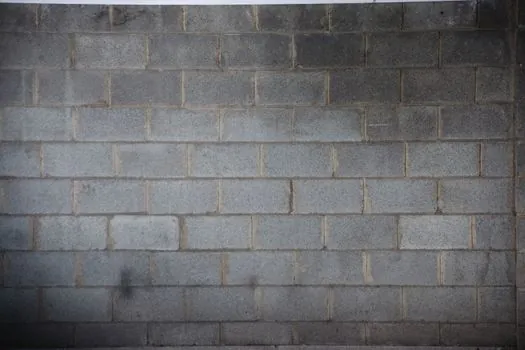
AAC block procurement should reference the governing material standard for the destination market: EN 771-4 in Europe, ASTM C1693 in the United States, IS 2185 (Part 3) in India, and GB/T 11968-2020 in China; the autoclaved aerated concrete block reference page lists the four codes side by side along with typical density, compressive-strength, and thermal-conductivity bands [S3].
On the cleanroom side, ISO 14644-1 governs air cleanliness class, VDI 2083 Part 17 governs surface cleanliness classification, and ISO 2812-1 governs chemical immersion testing; the cleanroom wall and ceiling spec map ties these three documents together with the panel leakage target of ≤0.5 m³/h/m²/Pa and 100 percent RH non-sag requirement [S1].
For plants pairing AAC peripheral walls with electric steam humidification, Steam Separator Selection: A 2026 Spec Map for Dry Steam Duty is the matching process-side reference, since dry steam into an AAC-lined corridor is a common humidification loop in Class 6 to Class 8 life-science build-outs.
A related point for process engineers balancing masonry walls against in-process handling equipment: ESD platform trolley selection for electronics handling and Platform Trolley Selection for Pharmaceutical Distribution: 316L, Ra and Load Spec Map both interface with the same corridor envelope decisions, since trolley wheel loads, cleaning chemistry, and trolley bay swing radius all need to be coordinated with the wall finish and skirting detail.
Two trackable signals to watch over the next procurement cycle: (1) whether factory-laminated panel makers expand their ISO 2812-1 chemical immersion datasheets to cover 15 percent peracetic acid and 30 percent H₂O₂ at full 24-hour immersion, since that is the binding chemical set for AAC-adjacent ISO Class 5 to Class 6 suites [S1]; (2) whether AAC block producers publish a cleanroom-specific skim-coat-and-topcoat system bulletin that ties the masonry standard (EN 771-4 / ASTM C1693 / GB/T 11968-2020) to the VDI 2083 Part 17 surface classification, because that document is the missing link between the AAC datasheet and the cleanroom envelope datasheet today [S1][S3].
For the relevant spec sheets and selection criteria, see aac block, and gauge block.