
Digital theodolites and total stations demand an angular reading the instant the instrument powers on, and that single requirement is what makes the absolute-vs-incremental choice rotary encoder decision automatic in modern surveying gear [S1][S2].
An incremental encoder only reports a change in shaft position, so after any loss of power the instrument has no idea where its circle is until it slews to an index mark; an absolute encoder reports the actual angular position at every moment, including immediately after a battery swap on a job site [S1][S3][S5].
How each type actually produces an angle
An incremental optical encoder uses an LED on one side of a transparent disc and a photo detector on the other; the disc carries a radial pattern of slits, and each slit passing the detector produces one electrical pulse, so a 4-slit disc yields 360/4 = 90° per pulse and an 8-slit disc yields 45° per pulse [S3]. To recover direction the disc carries a second track offset by a quarter of one pulse, producing phase A and phase B square waves 90 electrical degrees apart, and a third Z (index) channel fires once per revolution so the controller can verify pulse counts or define a home angle [S3][S4].
An absolute encoder, by contrast, codes every position on the disc as a unique pattern, either as multiple concentric tracks where each track contributes one bit of a Gray or binary code, or as a single track with a unique line-spacing pattern, so a 13-bit single-turn absolute disc gives 2^13 = 8192 unique positions, or roughly 158 arc-seconds per LSB, while a 19-bit disc reaches about 2.5 arc-seconds per LSB [S1][S3]. Theodolite glass circles from Heidenhain, Renishaw and similar suppliers have long used this multi-track absolute code pattern, and the theodolite's angle is read directly from the disc with no homing move [S8].
Resolution vs price: where each type earns its place
Survey-grade theodolites commonly quote 5 arc-second angular resolution, which is about 0.00139°, and a hobbyist-grade instrument with two such encoders (horizontal and vertical circles) can be built for under 1000 USD per eevblog forum contributors, but only by using absolute encoders, because homing an incremental encoder between every setup is not practical in the field [S8]. The same 5 arc-second target on a 360° circle needs 259200 counts per revolution; a 19-bit absolute encoder (524288 counts/rev) covers it with margin, while an incremental encoder has to combine high PPR (typically 5000-10000 PPR) with quadrature x4 decoding (giving 20000-40000 counts/rev) and then rely on the index Z pulse for absolute reference [S2][S8].
Cost-wise, quadrature incremental encoders deliver high pulses-per-revolution counts at a lower unit price than a multi-bit absolute disc of comparable resolution, which is why incremental types dominate on servo motors, AGVs, conveyor speed feedback and most CNC axes where power is continuous and homing is done once at machine start [S5]. For a robotic total station that may be tripod-mounted one day and pole-mounted the next, with batteries swapped in the middle of a traverse, the absolute encoder is the engineering choice because no homing move is required, no instrument rotation is needed to find an index, and the reported angle is valid the millisecond power comes back [S1][S5].
Power-loss behaviour: the field-deciding criterion
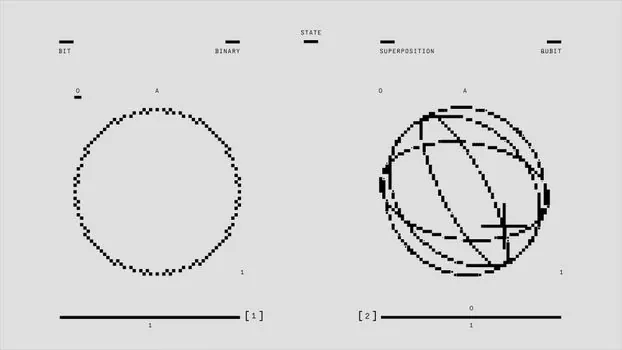
Once power is restored, an absolute encoder can report exact position without any movement, while an incremental encoder will need to find an index or home position before it can do so, and if it doesn't have an index it won't be able to tell you its position at all [S1]. A theodolite on a windy ridge, or a total station whose battery dies mid-traverse, hits exactly this scenario; with an absolute circle the operator simply powers up, compensates the tilt sensor, and shoots the next target, while an incremental-circle instrument would have to rotate both axes until each Z pulse fires, which is slow, error-prone, and unacceptable on a moving platform [S1][S5][S8].
The basicmicro engineering write-up captures the rule plainly: choose an incremental encoder for drive wheels, speed control and distance tracking, and choose an absolute encoder when the exact position must be known the moment the system powers on, such as a robotic arm joint, a steering mechanism, or a surveying instrument [S5]. For a theodolite's horizontal and vertical circles, the same logic applies, and that is why a digital theodolite's published spec sheet will almost always say "absolute encoding" rather than list PPR [S5][S8].
Decision matrix for theodolite circle selection
Compared side by side on the four criteria that actually matter to a theodolite designer: angular resolution, power-up behaviour, single-unit cost and field serviceability, the absolute encoder wins on three of the four, and the one it loses (cost) is shrinking as 16-19 bit absolute magnetic and optical ICs become commodity parts [S1][S2][S8].
Selection quick-reference: (1) Need 5 arc-second angle valid at every power-up, including cold start in the field, on a battery-swap-prone instrument: specify absolute, single-turn, 19-bit class. (2) Need a budget angle feedback channel that will only be read while power is held and a homing routine is acceptable at start: incremental quadrature with Z index is acceptable, with 5000-10000 PPR giving 20000-40000 quadrature counts/rev. (3) Need multi-turn tracking (e.g. continuous rotation of a motor): absolute multi-turn, or pair a single-turn absolute with a battery-backed counter. (4) Need high-PPR speed/distance feedback on a continuously powered servo: incremental quadrature, no index required, channel A only if direction is not needed [S2][S3][S4][S5].
Limits and failure modes you should price in
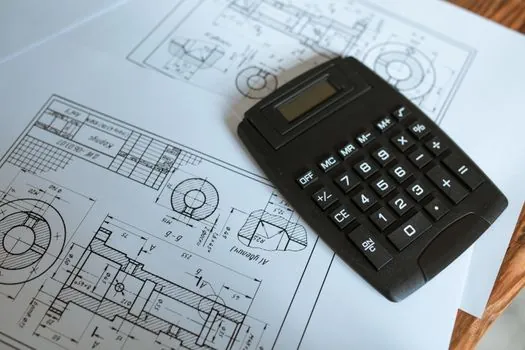
Absolute encoders are not free of failure modes: glass code discs are vulnerable to shock and condensation, the multi-track photo sensors must stay aligned, and high-bit-count absolute ICs draw more current than a simple incremental photodetector pair, which matters on a battery-only theodolite [S1][S3]. Incremental encoders, on the other hand, lose their reference silently on every power cycle, so a firmware bug that skips the homing routine will publish a wrong angle with no error flag, and that is exactly the kind of latent defect a calibration lab should test for on any incremental-circle theodolite [S1][S5].
For the survey crew in the field, the practical takeaway is short: the theodolite's data sheet is the source of truth, look for the word "absolute" (or "absolute encoder") next to the angular accuracy spec, and if the spec only quotes PPR with no index channel listed, the instrument relies on a homing move and is therefore not safe for unattended cold-start operation [S1][S5][S8]. For background on the linear encoder variants that show up on the same data sheets, the engineering principles overlap, and sourcing realities in 2026 around incremental and absolute encoder lead times for servo motor retrofit work are covered in encoder and resolver lead-time guidance.
The underlying component specifications are covered under angle grinder.