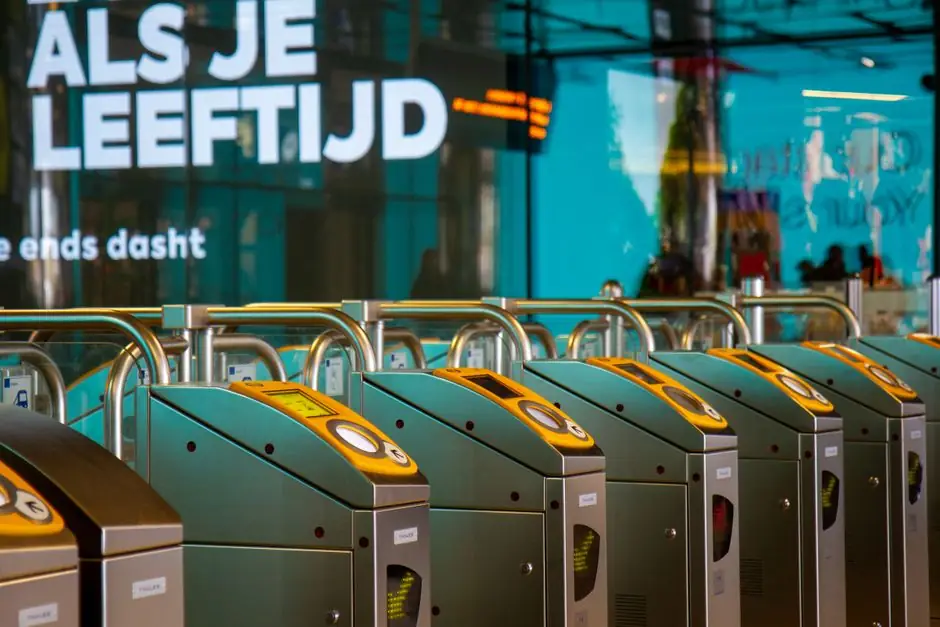
Access control system pricing in 2026 spans $500–$8,000+ per door installed for the four mainstream credential types (keypad, fob/card, mobile, biometric), with the wide range driven mostly by hardware tier and labor, not by licensing [S1][S2]. A representative single-door, first-year total lands near $3,850 when the reader, controller, electrified lock, wiring, and one year of software are added together [S2].
Hardware alone breaks out into reader ($80–$1,200), door controller ($180–$3,500), locking hardware ($20–$900), and accessories such as REX motion sensors ($10–$500), with software licenses typically $0–$50 per door per month [S2]. For an apples-to-apples budget, the dominant decision variable is the credential technology, not the panel brand, and the system architecture chosen (cloud vs on-premises) shifts dollars from capex to opex [S2][S4].
Per-Door Benchmarks by Credential Type
Keypad systems sit at the low end, ranging $500–$1,500 per door for hardware and wiring, with $1,000–$2,500 per door once installation is included [S1][S2][S3]. Key fob and key card systems overlap that band at $1,000–$3,500 per door including installation, plus a per-credential cost of $5–$10 per fob or card and software fees of $30–$100 per month [S1][S2].
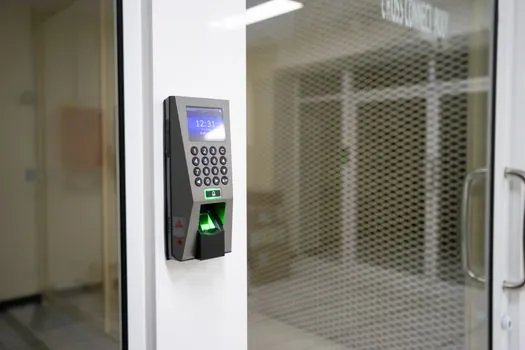
Smartphone (mobile credential) readers run $700–$1,500 per door for the reader hardware, with totals of $1,500–$3,000 per door installed once controllers and locks are added [S1][S2]. Biometric access control is the high band at $2,000–$8,000+ per door on the integrator pricing side, and $2,500–$10,000 per door on the manufacturer/installer side, the delta reflecting biometric reader cost, network connection, and PC-class software servers [S1][S3]. Intercom or buzzer systems span $750 per door for a basic audio buzzer up to $10,000 per door for a video intercom with resident access and high-quality video storage [S3][S5].
Hardware Stack: Reader, Controller, Lock, Power
Per-door reader pricing runs $80–$1,200 depending on whether the unit reads 125 kHz/13.56 MHz RFID, BLE/NFC mobile credentials, or fingerprint/face biometrics [S2][S8]. Door controllers, the IP-connected panels that arbitrate reader inputs and lock outputs, run $180–$3,500 per door, with multi-door controllers lowering the per-door electronics cost on larger deployments [S2]. Electrified locks, electric strikes, and maglocks add $20–$900 per opening, and power supplies, request-to-exit devices, and door position switches sit in the $10–$500 accessory band [S2].
Readers and keypads in the $80–$1,200 per unit range typically cover the basic 125 kHz proximity, 13.56 MHz smartcard (including DESFire and MIFARE), and Bluetooth Low Energy mobile-credential form factors; the upper end covers fingerprint, facial recognition, and dual-frequency units with keypad fallback [S2][S8]. For a typical indoor office door, the cost stack is roughly 30% reader, 25% controller, 25% lock/hardware, and 20% wiring/labor accessories, before software [S2].
Installation, Labor, and Wiring
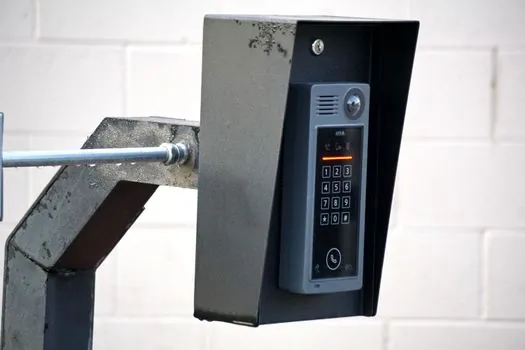
Installation without existing electrified locks runs $1,200–$2,500 per door; installation where locks are already in working condition runs $500–$1,500 per door [S2]. Biometric hardware install is typically 1–2 hours per door on the physical side, with software setup and network integration adding several additional hours per door [S3]. Intercom/buzzer installs run a minimum of 4 hours per door and scale with wiring complexity in the building [S3].
Electrical upgrades for outdated wiring, long cable runs to door controllers, and integrated video, intrusion, or fire tie-ins are the three labor multipliers most often left out of headline per-door numbers [S1][S2]. New York City labor rates are a recognized premium tier: NYC access control systems are quoted at $2,500–$4,300 per door installed, well above the national $1,500–$3,000 per door installed mid-band, driven by local prevailing-wage electrical work, conduit requirements, and DOB filing [S9]. United Kingdom installed pricing tracks a similar spread at £300–£1,200 per door [S7].
Software, Licensing, and Recurring Cost
Software license or maintenance typically runs $0–$50 per door per month, with most published ranges landing at $30–$50 per month for a non-cloud on-premises system and $0–$25 per month for cloud-managed systems that bundle access control software into a SaaS subscription [S1][S2]. A basic per-door license on the access control software side runs $600–$1,600 per year per door for feature-rich on-premises platforms, with basic door licenses at roughly $600 per year per door [S2][S4].
Total cost of ownership over a 5-year window for a single mid-spec door is roughly $4,500–$7,500 purchased plus $3,000–$6,000 in cumulative software/maintenance, putting steady-state annual cost near $1,500–$2,700 per door before admin labor [S2]. Cloud-based access control shifts the bulk of that opex to a single per-door monthly line and removes the on-site server, but the per-door subscription compounds: a $25/month cloud license over 5 years is $1,500 per door, comparable to a $25/month on-prem maintenance contract, without the server capex [S2][S4].
Who Each System Is For, and Who It Is Not For
Keypad entry fits low-traffic storage rooms, gates, and small offices with a stable user population, but it is the wrong choice where audit trails, individual accountability, or anti-passback are required, because PINs are shared and codes wear into the keypad face [S2][S3]. Key fob and card systems fit traditional offices, multi-tenant commercial, and higher-education deployments where offline operation during network outages matters, with the trade-off being card issuance logistics, lost-credential replacement, and per-credential unit cost [S1][S2].
Mobile credential systems suit greenfield offices and retrofit commercial where most users carry smartphones, and where IT wants to issue and revoke credentials from a cloud console; they are weaker for sites with poor cellular coverage, transient visitors without the app, or strict air-gapped network requirements [S1][S2]. Biometric access control is the right pick for data centers, clean rooms, pharmaceutical production, and other high-security perimeters with low to moderate throughput and supervised enrollment, but the wrong pick for high-throughput public-facing doors and for sites with hygiene constraints on fingerprint readers [S1][S3]. Access control selection criteria overlap with adjacent industrial spec work; the engineering trade-offs are similar in scope to a Two-Hand Control pricing breakdown for safety circuits, where the same reader/panel/license stack is being costed. For related plant-spec purchasing context, the same cost-driver logic (credential type, install labor, recurring license) shows up in the sprinkler system price guide and the pipe fitting TCO map, which both use the per-unit plus per-area plus recurring-fee pattern.
Hidden and Secondary Costs
Credential issuance is the most common line item left off per-door quotes: key fobs and cards at $5–$10 each, mobile credential licensing at roughly the same unit rate through some platforms, and biometric enrollment media (MIFARE DESFire cards or fobs) at the upper end of that band [S1][S2][S3]. Software features such as anti-passback, visitor management, elevator control, and API integration to HR systems are typically sold as add-on modules, often at $0–$50 per door per month per module [S1][S4].
API integration fees, credential replacement, and ongoing maintenance contracts are flagged by integrators as the three costs that most often double a quoted per-door figure within 18 months of go-live [S4]. Compliance-driven additions, including UL 294 listed power supplies, NFPA 101 fail-safe egress hardware, and ADA-compliant operator interfaces on the reader side, can add 10–20% to the hardware line for code-driven retrofits [S1][S4]. For a basic safety-tier comparison on adjacent hardware, the Safety Fence Buying Guide applies the same logic of base material plus code-driven adder to perimeter access control spec work.
Cost Drivers Ranked by Sensitivity
Volume tiering matters: many security integrators discount material cost when retrofitting a large number of doors, but the labor line item scales roughly linearly with door count, so the per-door saving is rarely proportional to the deployment size [S1]. For project context on the kind of facility these systems are being specified into, the galvanized steel sheet demand 2026–2030 map covers the structural envelope pricing that brackets a typical access control installation.
Detailed specification references: access control, linear guide, and crossed roller guide.