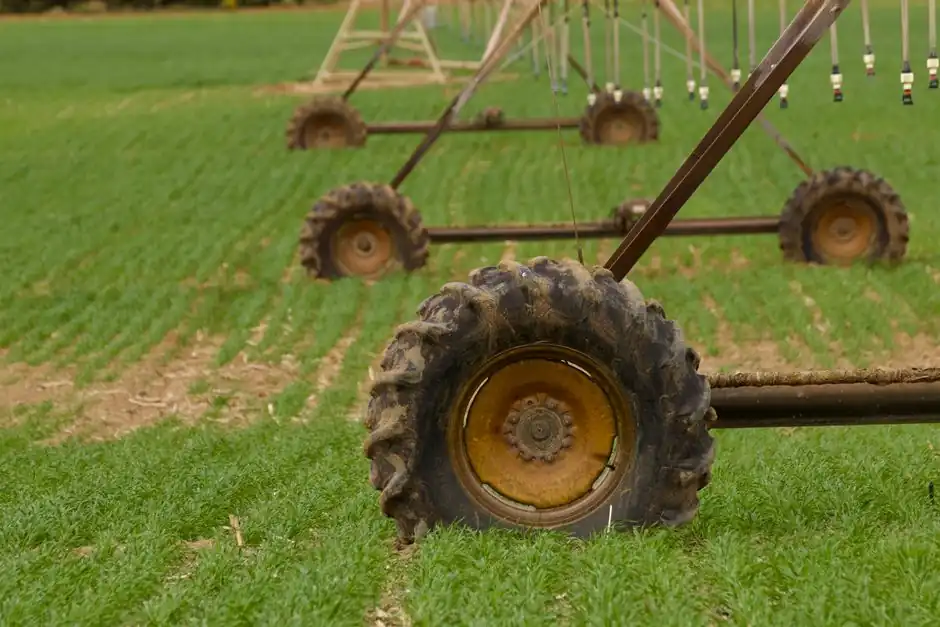
A new residential lawn sprinkler system installs for $1,636 to $3,595 in 2026, with a typical project around $2,549 and a per-square-foot range of $0.20 to $1 [S3]. Mid-size yards around 1/4 acre generally run $1,800 to $2,630 for the automatic system hardware alone, before labor and trenching [S3].
Residential fire sprinklers sit in a different cost lane: roughly $1.35 per square foot of conditioned space under NFPA 13D, which is about 1% of the average new-home build cost [S4]. For context on the wider industrial-equipment cost landscape and how price drivers are decomposed, see this pipe fitting total-cost-of-ownership breakdown.
Lawn Irrigation: What $0.20 to $1 Per Square Foot Actually Buys
Lawn sprinkler pricing scales with lot size, zone count, and head type, and three independent 2026 datasets converge on a per-square-foot band of $0.20 to $1.70 [S1][S2][S3]. NerdWallet puts a new system at $1,600 to $3,600 with an average of $2,539 [S1], while LawnStarter narrows residential in-ground installs to $0.90 to $1.70 per square foot and $4,500 to $8,500 on a 5,000 sq ft yard [S2]. Angi's calculator breaks a 1/4-acre project into $1,800 to $2,630 for the automatic system, $200 to $400 for four hours of labor, $30 to $400 for 10 to 20 heads, $35 to $200 for the permit, and $1,670 to $5,000 for 417 linear feet of trenching, totalling $3,735 to $8,630 [S3].
For 1/2 acre and 1 acre, Angi quotes $3,480 to $6,800 and $6,960 to $13,600 respectively, with 1-acre high-end projects reaching roughly $10,000 [S3]. A regional Austin-area installer reports tighter bands for small lots under 1/4 acre at $6,000 to $12,000, $11,000 to $16,000 for 1/4 to 1/2 acre, and $16,000+ above 1/2 acre, with variation driven by water pressure and backflow requirements [S5]. For a broader view of how the construction machinery and equipment supply chain feeds these site-prep costs, the linked reference covers current pricing drivers.
Per-Zone Pricing: The Cleanest Unit Cost
Per-zone pricing is the cleanest way to compare bids because it strips out lawn size and head count. LawnStarter benchmarks one zone at $585 to $1,335, two zones at $1,165 to $2,665, three at $1,875 to $5,000, and seven at $4,085 to $9,335, with each added zone averaging about $750 [S2]. LawnLove quotes $590 to $1,340 per zone, an effective overlap with LawnStarter's one-zone band [S6].
Zone count is driven by hydraulic capacity: a single residential zone typically covers 8 to 12 rotary heads or up to 18 spray heads before the working pressure and flow budget collapses. The Austin installer notes that sites with water pressure at 50 psi or below need more stations and low-flow products, which inflates the zone count and the total [S5]. On a 1/4-acre yard, the practical zone count is usually 4 to 6, putting realistic hardware-and-labor cost between roughly $2,335 and $8,165 before trenching and restoration [S2][S3].
System Type Comparison: In-Ground, Drip, and Above-Ground
Three system archetypes dominate the residential and light-commercial bid table, and they diverge sharply on both material and labor cost. In-ground automatic systems, the default for full-yard installs, run $0.90 to $1.70 per square foot installed [S2]. Drip irrigation, used for beds, trees, and slopes, runs $1,191 to $2,918 installed for a typical residential footprint because of the higher emitter and tubing cost per area [S2]. Above-ground hose-attached sprinklers are a DIY path, with a single head around $15 and a three-head kit up to $80, but they cannot replace an in-ground system on a full yard [S2].
A simple decision rule applies: pick in-ground automatic for turf areas above about 1,000 sq ft where uniform coverage matters; pick drip for planting beds, slopes, or any zone where wind drift is a problem; pick above-ground only for temporary or single-area watering. The CountBricks 2026 reference widens the residential sprinkler cost band to $2.00 to $6.00 per square foot when building-size, material choice, and local code pressure are included [S7], which mostly captures jurisdictions that mandate high-end weather-based controllers and pressure-regulated bodies.
Sprinkler Heads and Component Costs
Sprinkler heads themselves are a small share of the project total, but the type matters. Stationary spray bodies run cheaper than rotary heads, and pop-up bodies with check valves cost more than fixed risers. Heads are typically budgeted at $30 to $400 for a 10 to 20 head count on a 1/4-acre yard [S3]. Smart Wi-Fi controllers add $50 to $300 each, and most 2026 installs above 1/4 acre now spec at least one weather-based or ET-based controller to meet local watering restrictions [S3][S5].
Backflow prevention is mandatory where the irrigation system ties into a municipal potable supply, and the device cost varies with the city. Reduced-pressure zone (RPZ) assemblies are the most expensive and most common in jurisdictions with high contamination risk; double-check and pressure-vacuum breakers are cheaper but may not be accepted in all municipalities. If the supply is a private well with low pressure, a booster pump adds both hardware and electrical costs [S5]. For comparable component-level pricing logic on another utility system, the lamps and light fittings reference uses a similar driver decomposition.
Residential Fire Sprinklers: NFPA 13D Cost Benchmarks
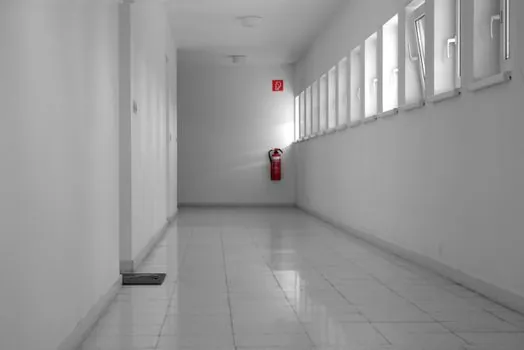
Residential fire sprinkler cost is a separate market driven by life-safety code, not irrigation. The National Fire Protection Association's NFSA puts the average installed cost at about $1.35 per square foot in new single-family construction, which is roughly 1% of the average $114 per square foot build cost reported in 2019 [S4]. That figure has trended down from $1.61 per square foot in a 2008 study, a drop attributed to installer competition, improved installation methods, and NFPA 13D itself being written to favor cost-effective home layouts [S4].
NFPA 13D governs one- and two-family dwellings and manufactured homes, and is the practical, lower-cost sibling of NFPA 13, which covers commercial and industrial installations [S4]. Bucks County, PA reported zero fire deaths in sprinklered homes over a 22-year period after adopting residential sprinkler requirements, with a 93% average reduction in property damage, a statistic that has not displaced cost as the main adoption barrier [S4]. When a home builder or buyer is sizing up life-safety budgets, comparing the $1.35 per square foot incremental cost against discretionary upgrades helps frame the decision: a kitchen remodel averages $150 per square foot and wall-to-wall carpet runs $3 to $7 per square foot [S4].
Commercial and Industrial Systems: What Changes
Commercial and industrial sprinkler systems do not price off square footage the way residential irrigation or NFPA 13D systems do. They price off hazard classification (light, ordinary group 1 and 2, extra, and storage), the required design density in gallons per minute per square foot, available water supply, and the certification path. A light-hazard office fit-out and an ESFR high-pile warehouse project are not in the same cost universe, and neither can be benchmarked against a 1/4-acre lawn bid. [S3]
For procurement teams sizing non-residential projects, the practical first step is to fix the hazard classification, confirm the available water supply curve (static pressure and residual pressure at a given flow), and decide on the certification path with the authority having jurisdiction. For projects that touch process or building services beyond fire protection, the broader lighting equipment and electric lamps reference uses a similar hazard-and-driver decomposition. The sprinkler system encyclopedia page covers the design and component logic that drives these commercial bids.
Cost Drivers and Total Cost of Ownership

Five drivers move a residential irrigation bid: lot size and shape, zone count, head count and type, controller type, and backflow or pump requirements. The labor line item is the most volatile: trenching runs $4 to $12 per linear foot and on a 1/4-acre yard totals 400+ linear feet, which is why labor can match the equipment cost on small lots [S3]. Permits run $35 to $200, water audits and inspections are sometimes billed separately, and landscape restoration after trenching is a line item many homeowners forget to budget [S3][S5].
Total cost of ownership over a 10 to 15 year horizon is dominated by water and electricity, not hardware. Smart Wi-Fi controllers, even at the $50 to $300 premium, recover that premium quickly on metered water in jurisdictions with tiered rates [S3][S5]. A well-designed rotary-only system at 1 to 1.5 inches per week uses measurably less water than a fixed-spray system on the same area, which is why head selection and hydrozoning are the highest-leverage design choices, not the controller brand.
Track municipal backflow device requirements, NFSA quarterly cost-index updates, and the 2026 IRC adoption map for residential fire sprinklers as the next procurement signals; each shifts either the installation line or the operating cost of a new system within a planning cycle.