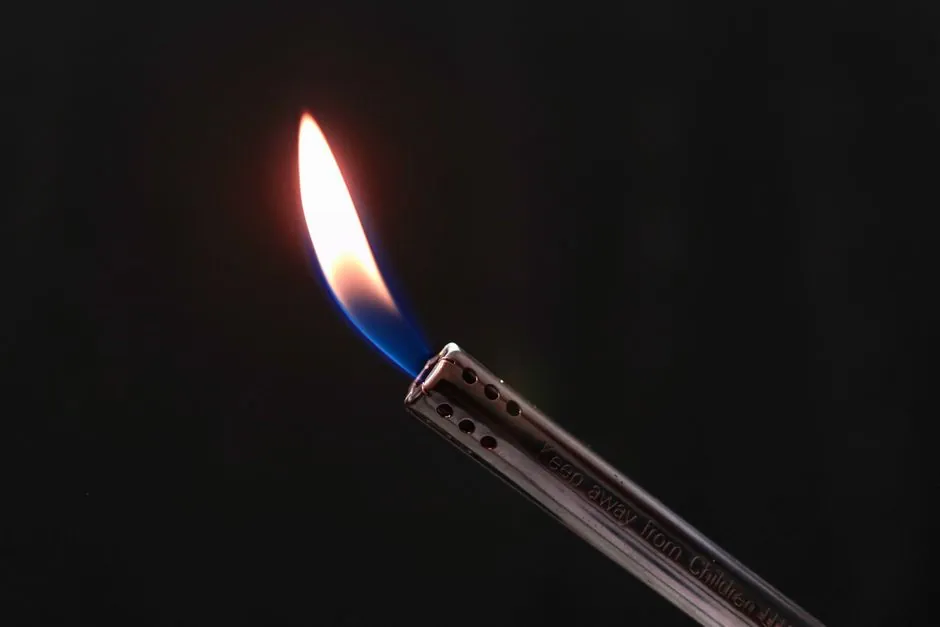
Oxy-acetylene torches reach a neutral flame temperature of roughly 5720°F in oxygen, while oxy-propane tops out near 5112–5122°F, a roughly 600°F gap that drives most of the practical selection logic between the two fuels [S2][S5].
Both gases feed the same basic oxy-fuel cutter hardware class, but cylinder pressure, flammability envelope, and BTU density differ enough that the wrong choice shows up as wasted plate, slag-bound cuts, or a flame that simply will not start on heavy steel [S1][S3].
Flame Temperature and BTU Density
Oxy-acetylene in a properly adjusted neutral flame reaches about 5720°F at the inner cone, with combined oxygen-fed combustion sources citing 5800–6300°F at the work piece depending on tip and gas ratio [S2][S3]. Oxy-propane in oxygen peaks at about 5112–5122°F, roughly 10–12% cooler than acetylene at the same oxidiser flow [S2][S5].
For a cutting machine running an automated rail, the limiting factor is heat flux at the kerf, not total BTU available, so acetylene still wins on heavy section cutting speed.
Flammability Envelope and Cylinder Pressure
Acetylene ignites over a 2.5–82% mixture range in air, an unusually wide flammability envelope that includes the upper explosive limit, while propane ignites only between 2.1% and 9.5%, roughly 8.6× narrower [S2]. The wider acetylene envelope is the main reason acetylene cylinders are shipped dissolved in acetone inside a porous mass, and why withdrawal is limited to one-tenth of cylinder volume per hour [S3].
Acetylene becomes unstable above 15 psi, so regulators must stay below that ceiling, and cylinders must remain upright with the valve cracked only one-third to one-half turn for fast shutoff [S3][S4]. Propane cylinders, by contrast, are commonly run at 30–40 psi regulator delivery and are not subject to the 15 psi instability threshold, which simplifies regulator choice on a riser-cutting machine for foundry work [S3][S4].
Cutting Performance on Steel
For plate under about 1 in. (25 mm), oxy-propane cuts cleanly with a tighter kerf and less slag, because the lower flame temperature forces correct preheat-then-cut technique instead of melting and blowing [S1]. For plate above roughly 1 in., acetylene's higher preheat temperature speeds the start of the cut and reduces walking at the pierce, especially on rusty or painted surfaces that absorb radiant heat [S1][S3].
Operators report that oxy-propane does not cut stainless, bronze, or copper any better than oxy-acetylene, and both perform poorly on heavily rusted steel without a prior angle-grinder clean-up, so the cutting chemistry, not the fuel, sets the alloy limit [S3]. A standard welding cutting tool tip chart maps tip size to plate thickness for each fuel separately, and using the wrong tip for the chosen gas is the most common cause of slag-bound cuts in shops that swap between fuels.
Welding, Brazing, and Heating Use
Acetylene is the only one of the two that can sustain true oxy-fuel welding, because the 5720°F neutral flame is hot enough to puddle mild steel, while propane's 5112°F flame cannot reach welding temperature on ferrous plate and is restricted to brazing, heating, and cutting [S2][S5]. Field users confirm that propane "will not weld" and is not recommended for oxy-fuel welding, but will braze, heat, and cut with proper tip change [S1][S5].
For shop tasks like heat-shrink fits, dropping large iron stators out of aluminum or cast-iron housings, and general preheating, a large oxy-propane rosebud puts out what users describe as "gobs of heat" thanks to the higher BTU density per cubic foot, even though the flame is cooler than acetylene [S1]. Operators who do both gas welding and cutting typically keep a small acetylene cylinder for welding and a propane cylinder for everything else, switching only the tip and regulator [S1][S4].
Safety Comparison on the Shop Floor
Propane's 2.1–9.5% ignition range versus acetylene's 2.5–82% range is the headline safety number, and it is the reason most home-shop and rescue-service guides treat propane as the default fuel for non-welding work [S2][S3]. Acetylene is also lighter than air and can pocket in ceiling spaces, where a delayed ignition has caused documented flashbacks, while propane, being heavier than air, pools low and ventilates differently [S3].
Detection favours acetylene: it carries a distinctive garlic-like odour from trace impurities even below 2% concentration, while propane's odourant is added deliberately and is harder to localise at low leak rates [S3]. For shops running a gas cabinet or a gas analyzer on the supply line, the wider acetylene envelope means a leaking regulator or hose is more likely to find an ignition source, so an installed flash-back arrestor and check valve on every hose is mandatory, not optional [S3][S4].
Cost and Cylinder Logistics
Acetylene has become harder to source and more expensive to refill in small cylinders, while propane is sold at any fuel station, which is why most shops default to propane for cutting and reserve acetylene for welding-only tasks [S2][S4]. The exact price gap varies sharply by region and cylinder size, and a 2010-era forum snapshot put an 80 cu ft acetylene refill at about $20 versus a 20 lb grill propane refill at $10–18, but the same thread noted a 10 cu ft acetylene refill at $22, indicating that small "hobby" cylinders carry a heavy per-cubic-foot premium [S1].
New torch-kit pricing shows the same inversion in capital cost: a quoted propane torch kit ran $400+ versus $160 for an acetylene kit, because propane requires a different regulator, adapter, and tip family on a standard oxy-fuel handle [S4]. For high-volume scrap cutting, propane wins on refill cost per BTU, while for shops that already own an acetylene regulator and cylinder, the marginal cost of running acetylene for a one-off thick-plate job is lower than buying a second fuel system [S1][S4].
Decision Matrix: Which Fuel to Specify

Spec acetylene when the work includes gas welding of mild steel, when plate thickness regularly exceeds 1 in. (25 mm), or when the cut must start on rusty or painted steel without prior surface prep, and pair it with a regulator locked below 15 psi and flashback arrestors on both fuel and oxygen lines [S2][S3][S4]. Spec propane when the work is cutting, brazing, and heating only, when shop safety audits prefer a narrower flammability envelope, and when 24/7 fuel access from any local supplier outweighs the need for welding-grade flame temperature [S1][S2][S4].
Do not spec propane if the scope includes any oxy-fuel welding, and do not spec acetylene if the only fuel supply is a remote welding shop with limited hours, because the safety and logistics penalty of running out mid-job is worse than the temperature penalty of switching to propane [S1][S4][S5]. For a cutting machine on an automated rail cutting plate under 25 mm, propane is the lower-risk default and pairs well with a gas analyzer leak check at shift start [S2][S3].
Trackable signals to watch over the next sourcing cycle: acetylene refill lead time at your regional supplier, the 15 psi regulator marking on every acetylene regulator in service, and the ratio of cutting to welding hours in the shop, since most fleets that cross a 70% cutting / 30% welding split have already migrated bulk work to propane on operator-safety grounds [S1][S2][S3]. For shops comparing the broader economics of gas-based processes against electric alternatives, the same buy-versus-rent logic covered in AC vs DC stick welding for cast iron selection, rods, and pitfalls applies: size the fuel to the dominant job, not the worst-case one.