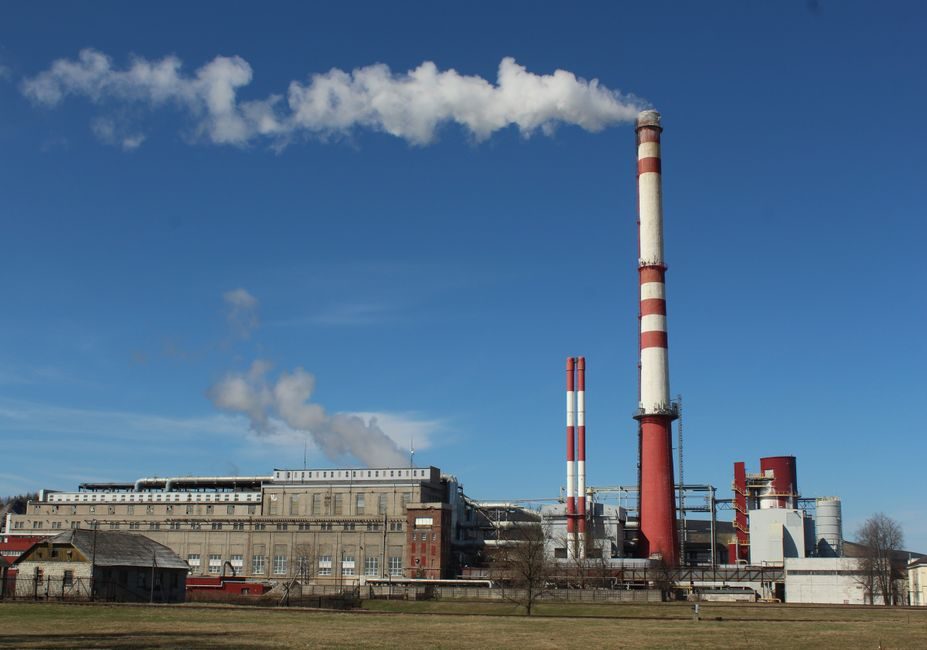
Coal-based pelletized and granular activated carbon from Chinese mills listed between US$1,200 and US$2,000 per ton on the chemical-industry channel, with food-grade coal products opening at US$800 per ton and topping out near US$1,800 per ton as of 2026-07-05 [S1][S2].
Coconut-shell activated carbon for water purification clusters tightly at US$1,500–US$4,000 per ton across the July 2026 sourcing pages, while honeycomb coal-based grades for environmental and household use drop to US$400–US$1,100 per ton, a roughly 3–4x spread that tracks feedstock rather than adsorption performance [S3].
Feedstock Architecture: Coal, Coconut, and Wood
Activated carbon splits into three raw-material families — coal-based, coconut-shell, and wood-based — and the 2026 product mix on Chinese B2B platforms is dominated by the first two, with wood-based carbons increasingly displaced in industrial tenders [S1][S2][S3]. Coal-based grades carry higher density and a more developed pore structure suited to liquid-phase polishing, while coconut-shell carbon offers higher microporosity and a cleaner ash profile for potable-water and pharmaceutical duties. The pre-2020 industry reporting put global nameplate capacity near 2.1 million tons against demand of about 1.547 million tons, with China, the United States, Japan, and Europe holding the bulk of installed capacity, a structural overhang that still defines the spot market today [S5].
Selection between feedstocks follows three rules of thumb that engineers re-derive on every project: coal for high-volume gas-phase and CIP (carbon-in-pulp) duty where attrition resistance matters, coconut for trace contaminant polishing where ash and metals washout are a problem, and wood for decolorization in sugar and chemical refining where macroporosity helps large-molecule adsorption. Buyers comparing like-for-like IV (iodine value) and CTC (carbon tetrachloride) numbers should normalize on feedstock first, because the same headline IV figure from coal and coconut carbons will not deliver identical service life.
Price Bands by Grade and Form Factor
The 2026 spot-price range across Made-in-China listings breaks down as follows: honeycomb coal-based carbon for environmental and household formaldehyde removal at US$400–US$1,100 per ton, nut-shell GAC (granular activated carbon) for power-plant and electric-utility polishing at US$900–US$2,000 per ton, powder activated carbon (PAC) for oil/water separation at US$725–US$1,985 per ton, and coconut-shell carbon for water filtration at US$1,500–US$4,000 per ton [S3][S4][S6]. Food-grade coal-based carbon sits at US$800–US$1,800 per ton with 1-ton MOQ (minimum order quantity), reflecting the wash-and-acid-treatment premium [S1].
On a normalized basis, the price-per-ton ratio between coconut-shell and honeycomb coal-based carbon runs 3x to 4x, but the cost-per-cubic-meter treated diverges less sharply because coconut carbon's higher apparent density and harder attrition index stretch bed life. A practical comparison: at IV 1000 mg/g, a 1-ton lot of coconut GAC typically services 30–50% more throughput in a fixed-bed water filter than an equivalent-mass lot of coal GAC, narrowing the procurement premium over a 12-month operating window. Powder activated carbon commands a discount versus granular equivalents because dosing plants skip the screening and backwash infrastructure, but waste-handling and dust-explosion mitigation add hidden OPEX (operating expenditure) that a like-for-like quote comparison will miss.
Quality Parameters: Iodine Value, CTC, and Surface Area
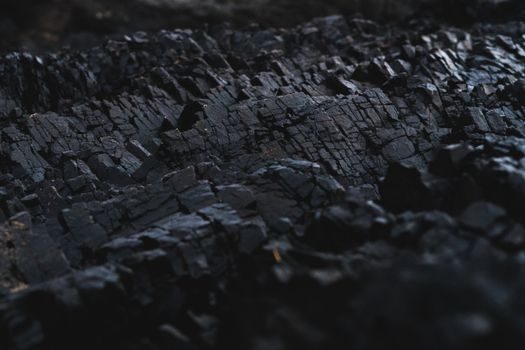
Iodine value (IV) is the headline sorption metric, and Chinese mainstream feedstock on the 2026 reference market sits in the 600–1100 mg/g band, with coconut grades typically running above 1000 mg/g and standard coal grades between 600 and 950 mg/g [S8]. Acid-base property defaults to acidic for the bulk of listed grades, and the standard appearance classification is black granular or black powder depending on form factor [S4].
Beyond IV, three other spec lines drive acceptance: CTC activity (carbon tetrachloride adsorption, typically 50–90% for premium coal grades and lower for coconut), specific surface area (BET nitrogen, commonly 900–1500 m²/g for premium coconut and 800–1100 m²/g for standard coal), and ash content (often below 5% for food- and pharma-grade coconut, versus 8–15% for run-of-mill coal carbon). Treatment-agent listings on the 2026 channel include "REACH certified, valid since 2026-01-01" annotations, signalling that the EU export market is now filtering on chemical-compliance paperwork before price [S9]. For buyers running a tender, requiring IV, CTC, ash, and moisture together on the same datasheet is the cheapest way to eliminate the bottom-quartile of offers that look low on headline price but fail on real sorption capacity.
Application Map: Water, Air, Food, and Chemical
Four end-use buckets absorb the bulk of 2026 production. Water treatment — municipal drinking, industrial process, and residential point-of-use — leads on volume and takes most of the coconut-shell output at US$1,500–US$4,000 per ton [S3]. Air purification and VOC (volatile organic compound) abatement, including catalytic variants for O3 destruction, take the next slice and increasingly require REACH-validated supply chains [S9]. Food and beverage processing takes food-grade washed coal carbon at US$800–US$1,800 per ton with customized IV [S1]. Chemical-industry and gold-recovery CIP duty takes coal pelletized carbon at US$1,200–US$2,000 per ton from Hebei and Jiangsu mills [S2].
For water-treatment plant builders comparing procurement options, the practical trade-off is straightforward: coconut carbon costs more per ton but lasts longer in potable service and meets lower ash limits, coal GAC costs less per ton and is the default for high-throughput CIP and gas-phase scrubbers, and honeycomb coal carbon is the budget choice for household and small-commercial air filtration where adsorption depth is not critical.
Sourcing Geography and Supply Concentration
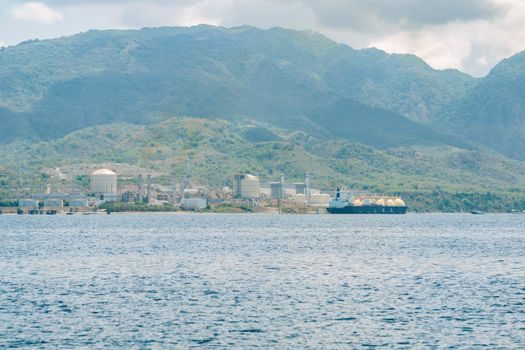
China retains a structural cost advantage in coal-based activated carbon because anthracite and bituminous feedstocks are domestic, while coconut-shell carbon pricing in 2026 still reflects Philippine, Indonesian, and Sri Lankan raw-nut import costs layered on Chinese processing capacity [S1][S2][S3]. Regional mill clusters in Hebei, Jiangsu, and Inner Mongolia dominate the pelletized and granular coal-carbon listings, with ISO 9001:2015 audited suppliers holding Diamond Member status on the major B2B channels [S2].
Outside China, Australian-owned Acticarb ACT positions itself as a specialist manufacturer and supplier with a focus on high-quality activated carbons for domestic and export customers, an indicator that downstream buyers in water, mining, and air-treatment segments continue to demand alternatives to single-source Chinese supply [S7]. For project procurement, the practical implication is that sole-sourcing from a single Chinese province is a concentration risk; a two-source strategy — one coal-grade and one coconut-grade from different regions — hedges both feedstock and logistics. The CBCIE reference market shows IV 600–1100 mg/g pricing holding steady through July 2026 with balanced supply and stable operation, suggesting no acute shortage is forcing buyers to chase single suppliers [S8].
REACH, PFAS, and the Compliance Filter
REACH (Registration, Evaluation, Authorisation and Restriction of Chemicals) certification is now a baseline filter rather than a premium feature on 2026 EU-bound quotations, with at least one treatment-agent listing carrying a "REACH certified, valid since 2026-01-01" stamp on the Made-in-China chemical-treatment-agent channel [S9]. Coconut-shell carbons bound for European potable-water and food-contact duty are also screened on heavy-metal leachability per EU food-contact regulations, and granular carbon going into pharmaceutical API (active pharmaceutical ingredient) polishing is increasingly tested against ICH Q3D elemental impurity limits.
Two trends are worth watching on the regulatory axis. First, PFAS (per- and polyfluoroalkyl substances) contamination concerns in granular activated carbon — both as a sorbent target and as a residual from fluorinated feedstock during activation — are pushing North American municipal buyers to demand certificates of analysis with PFAS reporting below 10 ng/L for effluent polishing duty. Second, end-of-life reactivation economics are improving in regions with coal-plant retirements, because the same kilns that re-activate spent GAC can co-fire with biomass, lowering the carbon footprint attached to each regenerated ton. Buyers evaluating stainless steel coil for filter housings alongside carbon procurement should factor in that ASME (American Society of Mechanical Engineers) -stamped vessels are now a default procurement spec for any carbon-contact system operating above 0.5 MPa.
Selection Criteria: A Comparison Matrix
Four criteria separate the practical 2026 options: feedstock, form factor, IV range, and price-per-ton band. Coal-based pelletized and granular carbon for chemical-industry CIP and gas-phase scrubbing runs US$1,200–US$2,000 per ton at IV 600–950 mg/g with high attrition resistance. Coconut-shell granular carbon for water filtration and potable service runs US$1,500–US$4,000 per ton at IV 1000–1100 mg/g with low ash and high microporosity. Food-grade washed coal carbon for food and beverage processing runs US$800–US$1,800 per ton at IV customized to buyer spec, with the wash premium baked in. Honeycomb coal-based carbon for household and small-commercial air filtration runs US$400–US$1,100 per ton at lower IV, with the low price reflecting low adsorption depth per unit mass. [S3]
The selection logic is: if duty is water treatment at municipal or industrial scale and ash/metals limits are tight, specify coconut GAC at IV ≥ 1000 mg/g and accept the 1.5–2x price premium; if duty is CIP gold recovery, sulfur-bearing gas scrubbing, or any high-throughput gas-phase contactor, specify coal GAC or pelletized coal at IV 800–950 mg/g for the best bed-life economics; if duty is household formaldehyde removal or small air purifier cartridges, specify honeycomb coal carbon at the budget price band and accept shorter service intervals. Buyers running pretreatment ahead of membrane water treatment skids should select on chlorine-demand reduction, not on headline IV, and require lot-level certificates of analysis.
The two trackable signals worth monitoring through the rest of 2026 are: (1) the CBCIE weekly activated-carbon reference market, which already shows stable IV 600–1100 mg/g pricing through July 2026 with balanced supply and stable operation [S8]; and (2) the count of REACH-valid treatment-agent listings on the major Chinese B2B channels, which has moved from a minority annotation to a default filter on EU-bound quotations since 2026-01-01 [S9]. A sudden spread widening on the reference market or a step-up in REACH-valid supplier count would each mark a regime change worth re-pricing against.
Spec-level background on the components involved: carbon fiber, carbon steel, and pressure transmitter.