
Global 3D printing materials demand is projected to reach USD 10.02 billion by 2030 from USD 3.88 billion in 2025, a 20.9% CAGR, with North America holding the largest regional share and the powder form segment expected to log the highest growth rate on metal-system demand [S2].
The 3D printing vendor base now splits across three distinct buying channels: desktop FDM/FFF polymer machines for prototyping, industrial polymer systems (SLA, SLS), and metal additive manufacturing platforms (DMLS, SLM, binder jetting). Materials supply remains a more concentrated market, with filament holding the largest 2024 form share and powder the fastest growing form through 2030 [S2].
Market size, material mix and growth by segment
Plastics, metals, ceramics, and other material types split the 3D printing materials market, with metals and ceramics expected to register the highest value CAGR through 2030 on aerospace and medical OEM pull [S2]. DMLS technology is forecast as the fastest growing technology segment, driven by demand for serial production of metal parts, while FDM continues to anchor prototyping workflows.
Application-wise, the manufacturing segment (serial production) is expected to register the highest CAGR, overtaking prototyping as the dominant revenue pool during the forecast window [S2]. Automotive is projected as the highest-growth end-use vertical for materials, while aerospace and defense and healthcare remain the high-margin, certified-material buyers.
Regionally, North America is both the largest 2025 market and the highest projected CAGR region, with Asia-Pacific, Europe, Latin America, and the Middle East and Africa rounding out the supply and demand footprint [S2]. Process engineers should treat North American material specs as the benchmark for aerospace and medical resin/metal qualification cycles.
Manufacturer tiers and the desktop vs industrial split
The 2017 Statista snapshot positioned Ultimaker as the leading desktop 3D printer manufacturer by global market distribution share, with the rest of the share fragmented across Formlabs, MakerBot, XYZprinting, and a long tail of regional brands [S1]. That 2017 cut is a useful historical baseline, but the 2026 vendor map has shifted: industrial metal AM and large-format polymer systems now account for the majority of revenue, while desktop FDM share has compressed.
Major 3D printing materials suppliers now pair with OEM printer builders through formal agreements. MarketsandMarkets lists GE Aerospace, 3D Systems, and Stratasys among the active partnership signers for 3D printing materials supply to aerospace, automotive, and healthcare customers [S2]. For a process engineer evaluating a metal AM cell, the printer OEM and the powder supplier are effectively a bundled spec, not two independent RFQs.
FDM technology remains the dominant desktop and prosumer printing process for thermoplastic parts, valued for accuracy and repeatability in durable prototypes [S10]. Process engineers specifying FDM should treat the FDM workflow reference for build-envelope and tolerance framing, since 3D printer manufacturer selection is often gated by the upstream digital thread rather than raw machine cost.
Selection criteria: printer type vs use case

For polymer prototyping under USD 10k machine capex, FDM (filament extrusion) and SLA (resin cure) cover roughly 80% of engineering-team demand, with FDM leading on part toughness and SLA on surface finish and feature resolution. For serial production of metal brackets, housings, or structural aerospace parts, DMLS and SLM dominate, with binder jetting entering for higher-volume runs where post-print sintering economics work. [S2]
Selection should be gated on four criteria: (1) build envelope versus largest part, (2) material certification (aerospace AS9100 powder traceability, medical ISO 13485 resin), (3) post-processing footprint (support removal, HIP for DMLS titanium), and (4) total cost per part including machine depreciation, powder reclamation loss, and labor. North American aerospace and medical OEMs typically demand the first three gates; automotive prototyping shops can trade (2) for throughput and cost.
Buyers weighing industrial robot cells alongside metal AM cells should consult the Industrial Robot Market Share 2026 spec band map, since robotic part handling and powder-bed AM integration are increasingly specified together in factory layouts.
Standards, certifications and material traceability
Aerospace and medical buyers should require powder or resin batches with full traceability documentation: ASTM F3301 for powder bed fusion process, ASTM F3091 for powder characterization, and ISO/ASTM 52900 for the AM terminology and process category framework. Material certifications per ASTM F3055 for additively manufactured parts and ASTM F42 committee standards govern the bulk of US aerospace and medical material acceptance. [S2]
For plastic filament, ASTM D638 (tensile), ASTM D790 (flexural), and ISO 527 are the standard mechanical-property test methods, while ISO 17296 covers general AM fundamentals for polymer parts. For metal powder, MPIF Standard 35 and ASTM B215 govern powder sampling and characterization, and heat-treatment cycle validation per AMS 7000-series specifications is mandatory for flight-critical parts.
Buyers should also require vendor disclosure of process parameters per ISO/ASTM 52904 for metal powder bed fusion process specification, and AM part-quality reporting per ASTM F3434. These documents are the auditable trail for First Article Inspection submissions to aerospace primes and medical OEMs.
Limitations, failure modes and sourcing traps
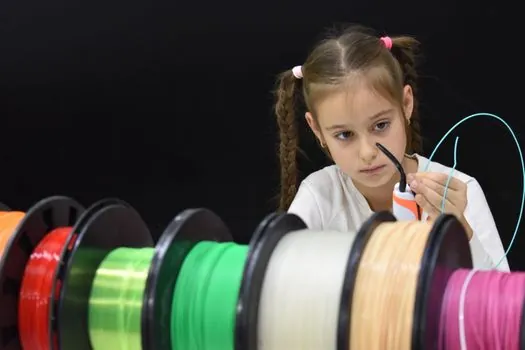
Desktop FDM machines are unsuitable for production-grade metal parts; specifying an FDM machine on a metal-part BOM is a fundamental spec error. Conversely, DMLS and SLM machines are uneconomical for one-off plastic prototypes, where FDM or SLA machines are the lower-cost options for plastics. [S2]
Metal AM failure modes include porosity above 0.5% volume fraction (typically requires HIP), residual stress causing distortion in parts over 200 mm in any single dimension, and powder oxidation if reclaim cycles exceed supplier limits (commonly 10-20 cycles for Ti-6Al-4V). Polymer FDM failure modes include delamination at layer adhesion lines under thermal cycling, and moisture-driven steam pop in nylon and PEEK filaments if drying protocols are skipped.
Sourcing traps include: (1) treating powder and printer as separate RFQs (they are not, in practice); (2) assuming desktop FDM accuracy matches DMLS (it does not, dimensional tolerance differs by an order of magnitude, roughly +/- 0.1 mm for FDM vs +/- 0.05 mm for DMLS on small features); (3) ignoring post-processing labor which often exceeds machine time for serial DMLS production. Buyers comparing AM cells should normalize cost per part on a fully-loaded basis including HIP, machining, and inspection.
Vendor landscape and reference reading
On the materials supplier side, the competitive field is led by polymer-resin giants (Covestro, Evonik, Arkema, BASF), metal powder specialists (Carpenter Additive, AP&C, GKN Hoeganaes, EOS GmbH), and integrated OEM-supplier pairs (3D Systems, Stratasys, EOS, SLM Solutions) [S2]. For desktop printers, the field is dominated by Ultimaker, Formlabs, Prusa Research, Creality, and Bambu Lab at the prosumer and entry-industrial tier, with Tiertime holding an early lead in educational desktop units in 2014 [S6].
Industrial system suppliers (EOS, SLM Solutions, GE Concept Laser, Velo3D, 3D Systems) compete on build envelope, laser count, and qualified material library, with aerospace and medical OEMs typically approving a specific OEM-material combination rather than a generic machine spec.
For a process engineer building a sourcing map, the practical signal to watch is the annual release of new qualified materials per OEM (commonly 2-4 per year for major industrial AM suppliers), and the publication of new ASTM/ISO AM standards each calendar year. Pair those signals with the Nickel Alloy Selection grade map when qualifying nickel-superalloy AM powder for aerospace or oil-and-gas service work.
Spec-level background on the components involved: pressure transmitter, and flow meter.