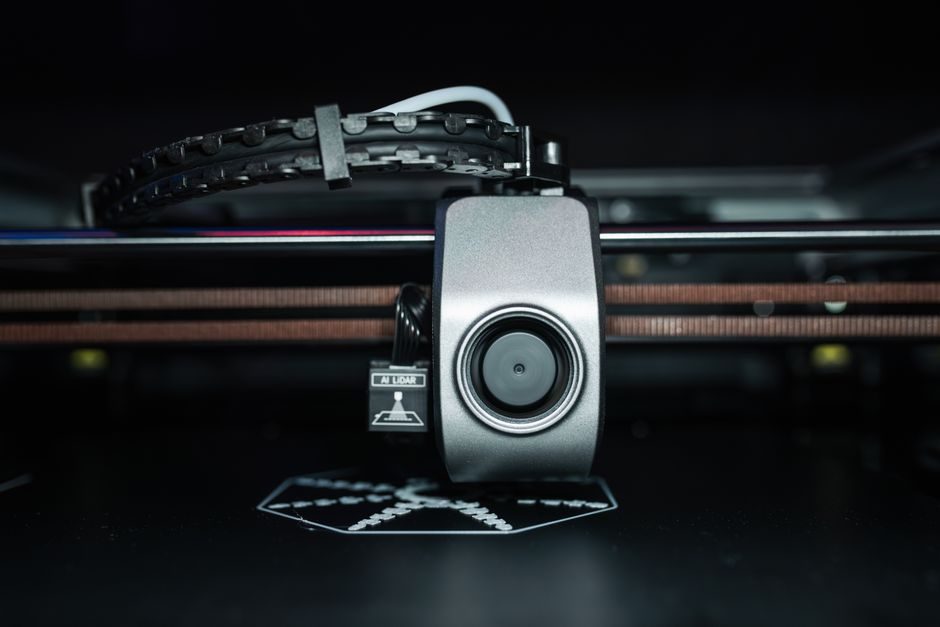
As of 2026-06-25, industrial directories categorise additive manufacturing (AM) suppliers into four operationally distinct layers — process hardware, in-process monitoring cameras, design/simulation software, and feedstock/materials — and engineers should shortlist by process family before vendor name [S1][S4][S5][S7].
A June 2026 snapshot of one industrial B2B directory lists 7 manufacturers offering 14 AM-specific camera products, with multi-frame buffer (2 vendors), intensified (2 vendors), custom lens (2) and zoom (2) as the most commonly filterable camera features, plus single-vendor options in waterproof, airborne, stand-alone, time-integration, narrow-field, wireless and small-form-factor housings [S1]. The same vertical (AM process control imaging) is where newer Chinese-language supplier catalogues are adding entries monthly, so the count drifts, but the feature taxonomy has held since 2024.
Process Hardware Suppliers and the Four Metal-AM Method Families
The peer-reviewed taxonomy of metallic additive manufacturing identifies four dominant method families: powder bed fusion (PBF), direct energy deposition (DED), binder jetting, and sheet lamination — each with different machine-builder rosters, feedstock formats and post-processing footprints [S7]. Engineers who specify a part by material (Ti-6Al-4V, Inconel 718, 17-4PH stainless, AlSi10Mg) and required tolerance usually lock the method family first, then the machine builder, because machine-to-machine variability in as-built density and surface roughness still exceeds vendor-to-vendor variability within a single OEM family.
PBF remains the most-cited method in the journal record (Elsevier's <i>Additive Manufacturing</i>, ISSN 2214-8604, 18 issues/year, indexed in SCI/SCIE) for both polymer and metal work, with 2024 volumes 86–96 carrying powder-spreadability, process-monitoring and mechanical-property papers that translate directly into supplier-qualification test plans [S3][S9]. For a process overview and a comparison of design-side considerations, see the additive manufacturing material reference.
In-Process Monitoring Cameras: What the 7-Vendor Directory Actually Lists
The DirectIndustry 2026-06-25 AM-camera category returns 7 manufacturers and 14 products, with IDS Imaging Development Systems GmbH and InfraTec GmbH Infrarotsensorik und Messtechnik as named German suppliers in the index, each carrying two listed SKUs at the snapshot date [S1]. Multi-frame buffer, intensified CCD/CMOS, custom lens mount, and motorised zoom are the four most-repeated feature tags — useful as a filter because thermal and melt-pool imaging in PBF/DED typically requires intensified low-light sensors or high-frame-rate mid-wave infrared cameras with custom optics to fit inside the build-chamber envelope.
Feature counts in the directory are small (n=1–2 vendors per feature) and should be read as a snapshot, not a market share statement: single-source tags such as waterproof, airborne, stand-alone and wireless indicate niche chamber-side or in-line OEM cameras, not mainstream PBF/DED monitoring units [S1]. When you pull a shortlist, validate sensor resolution, frame rate at full resolution, thermal load on the build platform, and SDK support for the printer's own process-control software — those four parameters are where the directory tags do not tell you enough.
Design and Simulation Software Suppliers: Autodesk, Ansys, ESI and the Open-Source Tier
Design-side AM software is a separate supplier layer from machine builders and is dominated by CAD-vendor add-ins (Autodesk's additive-manufacturing product line covers design-for-AM, lattice generation and print-prep), physics-simulation suites (Ansys for thermal, residual-stress and build-distortion prediction), and dedicated print-preparation tools (slicing, support generation, build-time estimation) [S4][S6]. SourceForge's 2026 best-of list groups the category into CAD import, slicing for layer-by-layer printing, material selection, print-job monitoring, and performance optimisation — five functional modules that engineers should map to their in-house workflow before evaluating any single tool [S5].
Ansys's published commentary on COVID-era AM supply-chain response is a useful reference case: digital design plus on-demand 3D printing was used to bypass disrupted PPE and medical-device logistics, and the simulation-to-print loop (design → thermal/structural sim → print) is the same loop being specified today for serial-production metal parts [S6]. ESI Group's Additive Manufacturing 2019.5 release is one historical example of vendor-specific simulation tooling for AM process modelling — the version is old, but the workflow (welding/laser heat-source definition, layer-by-layer thermal-mechanical solve) is the template still in use across the 2026 vendor set [S8].
Feedstock and Material Suppliers: Powder, Wire, Resin and Sheet
Feedstock specification is the second hard gate after method family: PBF needs plasma-atomised or gas-atomised metal powder in defined particle-size distributions (commonly 15–45 µm or 20–63 µm bands), DED accepts powder or wire, binder jetting uses a wider PSD plus a separate binder chemistry, and sheet lamination consumes metal or composite foils [S7]. For B2B sourcing, the most cited metal alloys in 2024–2026 journal volumes are Ti-6Al-4V, Inconel 718, 316L and AlSi10Mg, with 17-4PH and CoCrMo common in medical and aerospace [S3][S9].
Material standards governing these feedstocks are written around chemistry, PSD and flow rate, not around a single OEM; the supplier directory entry therefore typically lists atomisation process, nominal PSD range, and whether the lot is certified to common AM-specific material standards. A reference page for material selection is the additive manufacturing material entry, which frames the material-method fit.
Journal and Research Indices as a Supplier-Qualification Source
The Elsevier journal <i>Additive Manufacturing</i> (ISSN 2214-8604, eISSN 2214-7810) is an 18-issue-per-year SCI/SCIE-indexed venue that catalogues the process-science basis every serious supplier will reference — including 2024 volumes 86–96 covering powder-spreadability modelling, discrete-element method work and mechanical-property evaluation [S3][S9]. Volume 86–96 in 2024 alone gives a buyer enough process data to write an internal supplier-qualification test plan based on published test methods rather than vendor marketing.
The historical review record (e.g. the 2017 review of metallic AM covering PBF, DED, binder jetting and sheet lamination) is still the cleanest taxonomy for training junior buyers, because the four-family split has not changed even as individual machine builders have merged or rebranded [S7]. Treat the journal record as a free supplier-qualification input — if a vendor cannot point to a paper in <i>Additive Manufacturing</i> or a comparable venue validating their process window for your alloy, that is a data point.
Decision Frame: Which Supplier Layer Owns Your Risk
A practical 2026 selection map compares the four supplier layers against the four buyer-side risk owners: [S1]
• Machine builder (PBF/DED/binder jetting/sheet lamination) — owns geometric accuracy, repeatability, build envelope, service network; compare on part-cost per cm³, lead time, installed-base density in your region, and material library breadth [S7].
• Process-monitoring camera vendor — owns melt-pool/thermal data integrity; compare on sensor type (visible vs MWIR vs SWIR), frame rate at full resolution, SDK openness, and chamber-side thermal tolerance [S1].
• Design/simulation software vendor — owns design-for-AM lattice/topology output and process-simulation fidelity; compare on CAD-native workflow (Autodesk, Dassault, Siemens), solver throughput (Ansys, ESI, Altair), and print-prep integration [S4][S5][S6][S8].
• Feedstock/material vendor — owns chemistry, PSD, flow, recycled-powder degradation; compare on atomisation process (plasma vs gas), PSD band, batch-to-batch C/O/N traceability, and AM-specific material certification [S7].
This four-layer split is the same frame used in the 3D printing supplier and manufacturer directory, which lines each layer against MOQ, lead time and price band for 2026 B2B sourcing.
Trackable Signals to Watch Through 2026 H2
Three concrete signals are worth tracking in the second half of 2026: (1) the count of suppliers in industrial directories under the AM-camera tag — it is a leading indicator for chamber-side monitoring adoption as PBF and DED move from research to serial production [S1]; (2) <i>Additive Manufacturing</i> journal output volume and topic mix, since 2024 saw 11 volumes (vol.86–96) and a 2025–2026 surge in powder-spreadability papers is the cleanest indicator of where machine builders are investing in process control [S3][S9]; (3) software-vendor M&A activity in the CAD-native AM space, which has historically shifted pricing and licensing terms within a single procurement cycle [S4][S5]. A more general view of serial-production metal feedstock supply sits in the nickel market 2026 spec map, which is the most relevant adjacent buying signal for Inconel-class alloy sourcing.
For component-level specifications, see pressure transmitter, and flow meter.